

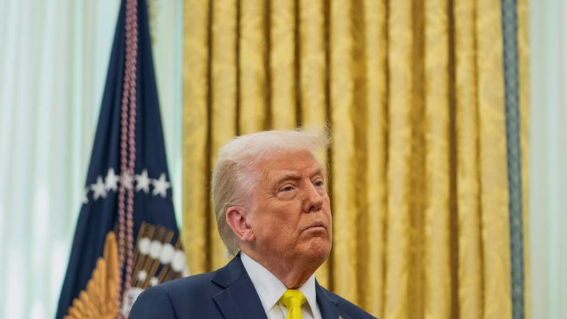
27 October 2026 Punjab Khabarnama Bureau : US President Donald Trump has announced a $1 million reward for information about voter fraud in past elections or the upcoming 2026 midterm elections, saying the payment would be made if the information leads to the arrest and conviction of those responsible.
Trump announced the proposed reward in a post on his Truth Social platform on October 26, just days before Americans are scheduled to vote in the November 3 midterm elections. The announcement has renewed attention on election integrity, voter fraud allegations and the administration’s approach to election oversight.
In his post, Trump said anyone reporting voter fraud in previous elections or the upcoming midterms would receive $1 million following the arrest and conviction of those responsible. He later reiterated the proposal while speaking to reporters before travelling to Mississippi for a campaign rally.
However, the president did not provide details about how the reward would be funded, which agency would administer the programme, how reports should be submitted or who would determine whether a tip qualified for payment. The White House had not immediately provided further clarification following the announcement.
Reward announced ahead of crucial midterm elections
The timing of the announcement has drawn attention because the midterm elections are approaching. The November 3 vote will determine the composition of the US House of Representatives and Senate for the remainder of the congressional term, influencing the president’s ability to advance his legislative agenda.
Republicans are seeking to retain control of Congress, while Democrats are attempting to gain seats and challenge the Republican majority. Election-related issues, including voter eligibility, ballot security and allegations of fraud, have become part of the political debate in the run-up to voting.
Trump has repeatedly raised concerns about election integrity and made claims of widespread voter fraud in previous elections. His latest reward proposal places additional emphasis on encouraging members of the public to report suspected wrongdoing.
The announcement also comes amid broader disputes over the federal government’s role in election administration. Elections in the United States are largely administered by state and local authorities, while federal laws establish requirements relating to voting rights, eligibility and election offences.
The proposed reward has not yet been accompanied by publicly available operational guidelines explaining how reports would be evaluated or how payments would be authorised.
Trump does not explain funding mechanism
One of the major unanswered questions concerns the source of the money. Trump did not specify whether the proposed $1 million reward would come from federal government funds, his personal resources or another source.
The announcement also did not outline a formal application process or identify an official body responsible for investigating claims submitted under the proposal.
For a reward to be paid under the terms described by Trump, a report would need to lead to an arrest and conviction. This condition distinguishes the proposal from a general payment for information that merely raises suspicion about an election-related incident.
Nevertheless, without published rules, it remains unclear how authorities would determine whether a tip directly contributed to a successful prosecution or how competing claims would be handled.
The lack of details leaves questions about implementation, eligibility and oversight unanswered. Any formal programme would need a clear process for receiving information, assessing evidence and determining whether the conditions for a reward had been met.
Previous voter fraud claims under scrutiny
Trump has repeatedly alleged widespread voter fraud in past US elections, particularly following his defeat in the 2020 presidential election. However, those claims were not supported by evidence of fraud on a scale that would have changed the outcome, according to reporting by Reuters and other news organisations.
Election officials, court proceedings and audits following the 2020 election did not establish widespread fraud sufficient to overturn the result. Reports of individual election offences do occur, but they do not by themselves demonstrate systematic fraud across an election.
A Reuters report published on October 23 also noted that ineligible voting and election fraud are rare in the United States. Its review of cases involving alleged non-citizen voting found relatively few federal prosecutions compared with the overall number of votes cast. <Cite refs={[“turn266514news7″,”turn266514search3”]} />
The distinction between an allegation and a proven offence is particularly important in election-related matters. A report or accusation does not establish that fraud occurred; the relevant evidence must be investigated and assessed through the applicable legal process.
Election oversight becomes a major political issue
The reward announcement comes amid continuing disagreements over the federal government’s role in election administration. The Trump administration has sought greater scrutiny of voter eligibility, while some state officials and voting-rights advocates have raised concerns about the potential impact of federal intervention.
On October 26, a federal appeals court rejected a Justice Department effort to prevent California from counting ballots cast by approximately 20,000 registered voters whose citizenship status had been questioned by the administration. The dispute illustrates the legal and administrative challenges surrounding voter eligibility checks ahead of the midterms. <Cite refs={[“turn266514news8”]} />
Election authorities face the task of investigating credible allegations while protecting eligible voters from wrongful challenges or exclusion. Clear procedures, reliable evidence and independent legal review remain central to resolving such disputes.
What happens next?
Trump’s announcement has raised several questions that remain unanswered: where the reward money would come from, which authority would oversee the process, how people should submit information and what standards would determine eligibility for payment.
Until further details are released, the practical operation of the proposed reward remains uncertain. Its effectiveness will depend on whether a formal process is established and whether reports result in legally substantiated cases.
With the November 3 midterm elections approaching, the announcement adds another dimension to the debate over election security and public confidence in the US voting system. The central issue will be whether credible evidence of wrongdoing is identified and investigated through established legal procedures.