

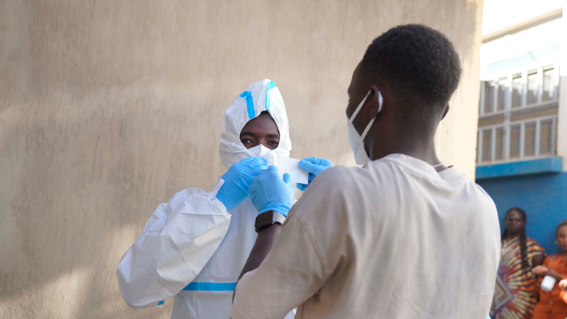
16 November 2026 Punjab Khabarnama Bureau : The Ebola outbreak in the Democratic Republic of the Congo (DR Congo) continues to spread into remote rural communities, with the death toll surpassing 5,500 and hundreds of new infections being reported every week. Six months after the outbreak was declared, escalating violence, armed attacks and difficulties in accessing affected areas are creating serious challenges for health workers attempting to contain the deadly disease.
According to the latest figures released by Congolese health authorities, the country had recorded 11,254 confirmed Ebola cases, including 5,505 deaths, as of November 12, 2026. The outbreak has a case fatality rate of approximately 48.9 per cent, highlighting the severity of the public health emergency.
The outbreak began in May 2026 and is caused by the Bundibugyo strain of the Ebola virus, a relatively rare variant. Despite considerable efforts by the government and international health organisations, the virus continues to spread into new geographical areas, particularly communities that are difficult to reach because of insecurity and poor infrastructure.
The World Health Organization (WHO), along with other humanitarian agencies, has warned that approximately 400 to 500 new cases continue to emerge every week. Although transmission has declined in some of the initial outbreak hotspots, the emergence of infections in remote areas has made the overall response increasingly complicated.
Children Among the Worst Affected
Children have been particularly vulnerable during the outbreak. According to a joint statement issued by the WHO and international humanitarian partners on November 15, children account for more than one-quarter of confirmed cases and approximately one-third of reported deaths.
The situation is especially concerning among children under five years of age. Around seven out of every 10 confirmed Ebola cases in this age group have resulted in death, underlining the urgent need for early diagnosis, treatment and improved access to healthcare.
Health agencies are working to bring medical services closer to affected communities. However, families living in isolated villages often face difficulties reaching treatment centres, particularly when roads are blocked or security conditions prevent medical teams from travelling safely.
Violence Creates Major Obstacles
Rising insecurity has emerged as one of the biggest challenges to controlling the outbreak. Armed violence in eastern provinces, particularly Ituri and North Kivu, has disrupted surveillance activities, contact tracing and the delivery of essential medical supplies.
According to humanitarian agencies, more than 80 attacks on healthcare facilities and medical workers have been recorded since the outbreak began. These incidents have forced response teams to suspend operations in certain areas and have made it difficult to identify people who may have come into contact with infected individuals.
A particularly serious attack in the Cantine-Aloya area of North Kivu killed 66 civilians, including three healthcare workers. Three health facilities were also looted during the violence.
The attack disrupted Ebola response operations, leaving more than 1,000 contacts unmonitored and three confirmed patients unaccounted for. Another attack was reported in the same area on November 11.
These incidents have increased concerns among international health agencies that the virus could spread further if medical teams cannot safely reach affected communities.
WHO Reports Progress but Warns of Continuing Spread
Despite the difficult circumstances, international organisations have reported progress in certain parts of the country. Transmission has been brought under control in several earlier hotspots, including Butembo and Mongbwalu.
In Bunia, one of the initial centres of the outbreak, the number of new infections has reportedly fallen by approximately half. However, health officials have cautioned that improvements in individual locations should not be interpreted as an end to the wider outbreak.
WHO officials have emphasised that the response must expand beyond the original centres of infection. The emergence of cases in rural communities requires stronger surveillance, better access to medical facilities and increased cooperation with local communities.
The number of laboratories available for Ebola testing has also increased significantly, from just two at the beginning of the response to more than two dozen. Nearly 2,000 treatment beds are now available across 104 treatment and transit centres.
Approximately 3,000 patients have recovered, providing some encouragement amid the continuing crisis.
Cross-Border Spread Raises Concerns
The outbreak has also created concerns beyond DR Congo’s borders. Recent imported cases in Kenya and Nigeria have highlighted the possibility of further international transmission.
Health authorities are strengthening cross-border surveillance and information-sharing to identify suspected infections quickly. Countries in the region are being encouraged to improve preparedness, strengthen screening arrangements and ensure that suspected cases can be referred for medical assessment without delay.
The international response is particularly challenging because the Bundibugyo strain is different from the Ebola variants targeted by some existing vaccines. There are currently no approved vaccines or specific treatments for this strain, making supportive medical care, infection prevention and early diagnosis especially important.
Research efforts are continuing, including clinical trials and the evaluation of potential vaccine and treatment candidates.
International Agencies Call for Greater Access
United Nations officials have called for improved humanitarian access to conflict-affected areas so that health workers can carry out essential operations without facing threats or attacks.
Julien Harneis, the UN’s senior Ebola coordinator, has highlighted the importance of protecting medical personnel and ensuring that response teams can reach communities where infections are being reported.
Health agencies have also stressed the importance of community participation. Residents need accurate information about symptoms, transmission risks, treatment facilities and safe burial practices to prevent further infections.
The outbreak has demonstrated that medical resources alone cannot control the disease if healthcare workers cannot reach patients and trace their contacts.
As DR Congo enters another critical phase of the outbreak, authorities and international partners are facing the difficult task of balancing emergency healthcare operations with the security challenges affecting large parts of the country.
With more than 11,000 confirmed cases and 5,500 deaths already reported, the coming weeks will be crucial. International health organisations have warned that sustained funding, improved security, stronger surveillance and cooperation from local communities will be essential to prevent the outbreak from spreading further.