

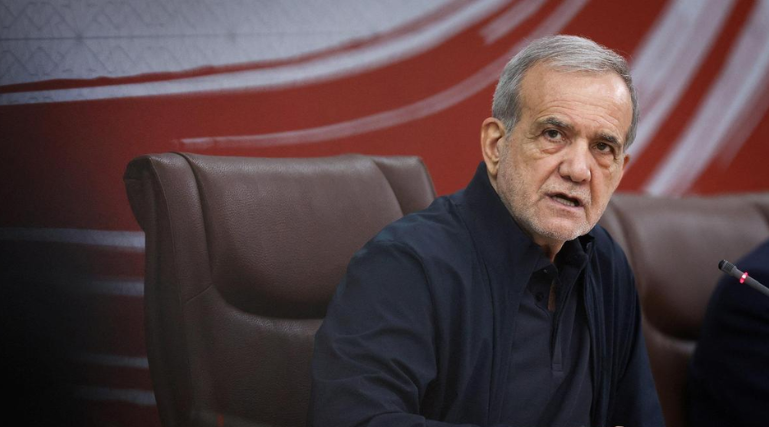
24 Aug 2026 Punjab Khabarnama Bureau : Iranian President Masoud Pezeshkian has defended a memorandum of understanding with the United States, calling it the best available path for moving beyond the current situation of “neither war nor peace” between the two countries.
Pezeshkian Rejects Claims of Capitulation
Pezeshkian said the agreement does not amount to surrender and argued that Iran’s Supreme National Security Council viewed it as the best possible arrangement based on national interest, wisdom and dignity.
He also stressed that Iran’s supreme leader sets the country’s policies and that the government would follow that direction.
60-Day Deadline Has Expired
The memorandum, signed by U.S. President Donald Trump in June, established a 60-day period intended to halt hostilities and lead to negotiations over a broader agreement, including Iran’s nuclear programme.
That deadline expired last week without a breakthrough, leaving the two sides far apart on key issues.
Strait of Hormuz Remains a Major Issue
One of the biggest obstacles is the Strait of Hormuz, a crucial route for global oil and gas shipments.
The reopening of the strait has remained a major point of disagreement, with Iran and the United States maintaining sharply different positions over the issue.
Iran’s Economy Under Pressure
Pezeshkian linked the stalled situation to Iran’s economic difficulties, saying the uncertainty was making it difficult to attract investment.
Iran is already facing heavy sanctions and disruption to oil shipments, adding to pressure on an economy that was struggling even before the latest escalation.
Hardliners Warn of Retaliation
While Pezeshkian has promoted the memorandum as a possible diplomatic route, Iran’s newly appointed top security official Mohsen Rezaei has taken a tougher position.
Rezaei warned neighboring countries against supporting new U.S. sanctions and said Iran could retaliate against oil-shipping routes in the Persian Gulf if countries joined Washington’s economic pressure campaign.
U.S. Pressure Intensifies
The comments come as the United States prepares additional sanctions targeting Iran.
U.S. Treasury Secretary Scott Bessent has described the forthcoming measures in extremely forceful terms, while Tehran has rejected the sanctions as ineffective and accused Washington of escalating economic pressure.
Pakistan Pushes for Diplomacy
Diplomatic efforts have continued despite the deadlock.
Pakistan has been involved in mediation efforts, with army chief Asim Munir scheduled to visit Tehran to discuss regional peace and security and the broader Iran-U.S. confrontation.
A Narrow Window for Negotiations
Pezeshkian’s comments suggest that at least some elements of Iran’s civilian leadership remain interested in finding a diplomatic way forward.
However, the gap between Tehran and Washington remains substantial, particularly over sanctions, Iran’s nuclear programme and the future of the Strait of Hormuz.
What Happens Next
The coming weeks could determine whether the memorandum becomes the basis for renewed negotiations or remains a failed attempt at de-escalation.
For now, Iran is simultaneously signalling openness to diplomacy while warning that further economic pressure could trigger a stronger response.