

1 july 2026 Punjab Khabarnama Bureau : The debate surrounding Punjab’s proposed anti-sacrilege legislation has entered a crucial phase, with constitutional principles emerging as the central point of discussion amid differing views expressed by religious institutions and the state government. As the Akal Takht and the Punjab government articulate their respective positions on the proposed law, legal experts have stressed that constitutional supremacy must remain the guiding principle for all stakeholders.
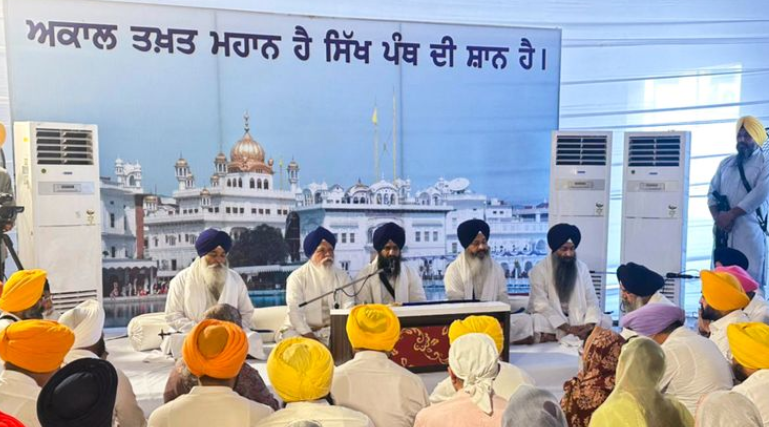
The latest developments come after the Akal Takht directed the Shiromani Gurdwara Parbandhak Committee (SGPC) to examine the proposed legislation and recommend amendments to ensure that the interests and concerns of the Sikh community are adequately addressed. A day later, Punjab Chief Minister Bhagwant Mann defended the draft law, maintaining that it is intended to protect the sanctity of all religions and preserve communal harmony in the state.
The differing positions have sparked a wider debate over the balance between religious sentiments and constitutional governance. While religious institutions have every right to express concerns and offer suggestions on legislation affecting matters of faith, the authority to enact criminal laws ultimately rests with the legislature operating within the framework of the Constitution.
Legal experts point out that India is governed by the Constitution, which is the supreme law of the land. Every law passed by Parliament or a state legislature must conform to constitutional provisions, including the guarantees of equality before the law, freedom of religion, freedom of speech and expression, and due process. Any legislation found inconsistent with these principles can be reviewed by the judiciary.
Punjab’s proposed anti-sacrilege law seeks to prescribe stringent punishment, including life imprisonment, for deliberate acts of desecration involving holy scriptures and sacred objects associated with recognised religions. The state government has argued that the law is designed to deter incidents that have repeatedly disturbed public order and deeply hurt religious sentiments.
However, constitutional experts caution that criminal law falls under the Concurrent List of the Constitution, meaning both Parliament and state legislatures have powers to legislate in this field. Where a state law differs from an existing central law, it may require the assent of the President before becoming enforceable. This constitutional requirement makes legal scrutiny an essential part of the legislative process.
The Akal Takht’s intervention is being viewed as part of a consultative process rather than a legislative one. As the highest temporal authority of the Sikh community, the institution commands significant religious influence, particularly on matters concerning Sikh faith and traditions. Its recommendations may carry considerable moral and social weight but do not replace the constitutional process required for lawmaking.