

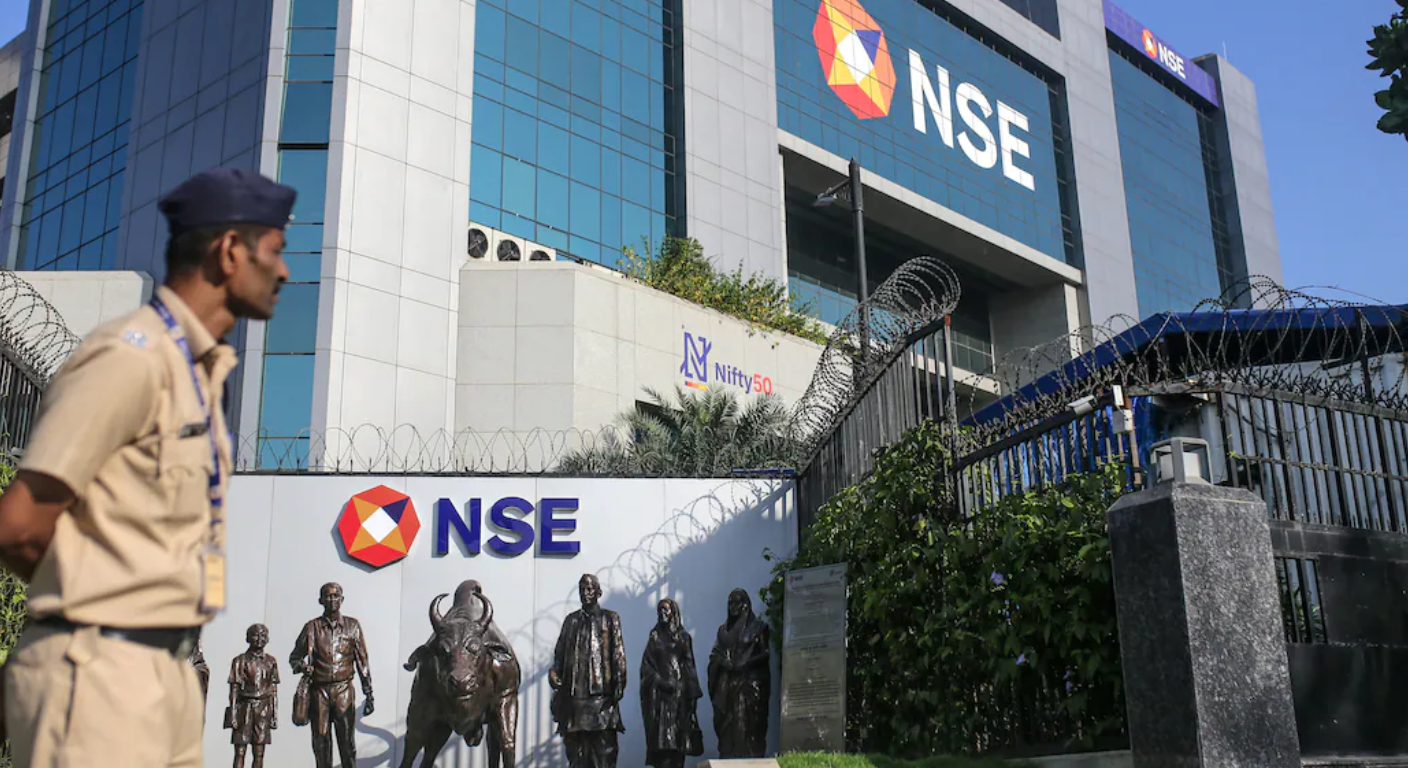
18 May 2026 Punjab Khabarnama Bureau : Indian equity markets ended largely flat on Monday after a volatile trading session influenced by rising geopolitical tensions in the Middle East following US President Donald Trump warning Iran that the “clock is ticking” amid stalled negotiations and escalating regional uncertainty.
The benchmark BSE Sensex and NSE Nifty witnessed sharp fluctuations throughout the day before settling near the flatline, as investors balanced concerns over rising crude oil prices with selective buying in defensive sectors. Markets initially opened sharply lower amid weak global cues and fears surrounding the ongoing Iran-related tensions, but recovered part of the losses during later trading hours.
According to market data, the Sensex had opened more than 800 points lower, while the Nifty slipped over 200 points in early trade after Brent crude prices surged above the $110-per-barrel mark.
Analysts said investor sentiment remained cautious after Trump issued a strong warning to Iran, saying “the clock is ticking” as diplomatic efforts regarding regional conflict and nuclear negotiations showed little progress.
Global markets also reacted negatively to the developments, with several Asian indices trading lower and oil prices rising amid concerns about possible disruptions in the Strait of Hormuz, a critical route for global crude supplies.
In India, sectors heavily dependent on crude oil imports such as aviation, oil marketing, paints, and logistics came under pressure during the session. Shares of several energy-intensive companies witnessed selling due to fears that higher crude prices could increase input costs and inflationary pressures.
At the same time, defensive sectors including information technology, pharmaceuticals, and telecom attracted selective buying as investors shifted toward relatively safer stocks amid uncertainty. Market experts noted that companies with strong dollar earnings received support due to the weakening Indian rupee against the US dollar.
The rupee also remained under pressure and touched fresh lows against the dollar during the session, adding to concerns over imported inflation and foreign fund outflows.
Traders said the Indian market showed resilience despite global volatility, as domestic institutional investors continued selective buying at lower levels. Foreign institutional investors were also seen limiting aggressive selling in some large-cap stocks.
Throughout the day, markets witnessed multiple swings as investors reacted to developments linked to the Middle East crisis, crude oil movement, and global bond yields. Rising international bond yields further added to concerns about inflation and interest rate pressures worldwide.
Technical analysts stated that the Nifty managed to hold key support levels despite early weakness, which helped markets recover partially from intraday lows. However, they warned that continued geopolitical uncertainty could keep volatility elevated in the near term.
Experts also observed that sentiment remains highly sensitive to developments involving Iran and the Strait of Hormuz because India is one of the world’s largest crude oil importers. Any prolonged disruption in oil supplies or further spike in crude prices could affect India’s inflation outlook, fiscal balance, and corporate profitability.
Meanwhile, global investors continued monitoring diplomatic signals from Washington and Tehran after reports suggested peace negotiations remained stalled. Trump’s remarks intensified fears that tensions in the region could escalate further if talks fail to progress.
On the broader market front, mid-cap and small-cap shares witnessed mixed trends as investors preferred fundamentally strong companies amid uncertainty. Banking and financial stocks also traded cautiously due to concerns about global risk sentiment and rising energy costs.
Commodity-linked stocks, however, attracted some buying interest as higher oil and metal prices boosted expectations of stronger revenues for select companies. Analysts noted that volatility in global commodities markets could continue influencing sector-specific movements in Indian equities.
Market participants are now expected to closely watch upcoming global developments, crude oil trends, US policy signals, and foreign investment activity for further direction. Investors will also monitor any escalation in the Middle East situation that could affect global trade and energy markets.
Despite the uncertainty, several analysts believe India’s long-term economic fundamentals remain stable, though short-term market movement may continue to depend heavily on external geopolitical events and energy price fluctuations.
As trading concluded, the Sensex and Nifty ended with marginal changes after recovering from steep early losses, reflecting cautious investor sentiment amid growing global uncertainty linked to the Iran crisis and rising crude oil prices.