

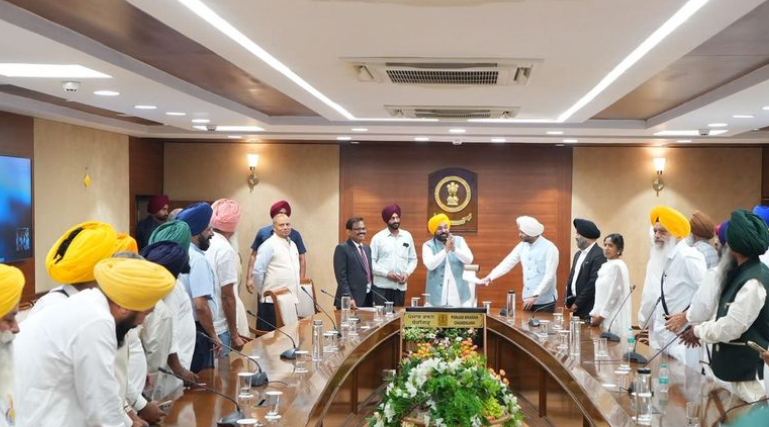
13 October 2026 Punjab Khabarnama Bureau : The Punjab government has assured that law and order will be maintained if Jagtar Singh Hawara is granted parole to meet his ailing mother. The assurance comes amid attention surrounding the request for Hawara to be allowed to visit his mother, raising questions about humanitarian considerations, legal procedures and security arrangements.
The matter has drawn public interest because of Hawara’s high-profile criminal history and the security concerns that could arise during any temporary release. The state government’s position, as reflected in the reported assurance, focuses on maintaining peace and ensuring that the situation is handled in accordance with the applicable legal framework.
Hawara’s Request to Meet His Ailing Mother
The request for parole is centred on Hawara’s desire to meet his ailing mother. Parole is a form of temporary release that may be considered under applicable rules and legal conditions, depending on the circumstances of an individual case.
Requests involving seriously ill family members often raise humanitarian considerations. However, approval is not automatic and depends on the relevant authorities, the applicable legal provisions, security assessments and any conditions imposed on the prisoner.
In Hawara’s case, the issue has attracted particular attention because of his background and the sensitivity surrounding his custody. Any decision would need to balance the circumstances of his family with legal requirements and public safety considerations.
Punjab Government’s Assurance on Law and Order
The chief minister’s reported assurance indicates that the state government is prepared to address law-and-order concerns if parole is granted. Maintaining public peace would be an important consideration in any arrangements involving a high-profile prisoner.
Depending on the terms of an approved release, authorities may need to assess security requirements, the proposed location of the visit, transportation arrangements and the potential for public gatherings. Police deployment and coordination among relevant agencies could also be considered where necessary.
However, an assurance that law and order will be maintained should not be interpreted as confirmation that parole has already been approved. The final decision rests with the competent authority under the applicable rules and legal process.
Who Is Jagtar Singh Hawara?
Jagtar Singh Hawara is a convicted figure associated with the assassination of former Punjab chief minister Beant Singh in 1995. The case remains one of the most significant and sensitive criminal cases in Punjab’s recent history.
Hawara’s legal status and custodial arrangements have remained subjects of public and political attention. Any request involving temporary release therefore attracts scrutiny from legal observers, political representatives and members of the public.
The parole question is distinct from the underlying criminal proceedings and sentence. A request for temporary release on humanitarian grounds does not, by itself, alter a conviction or remove the legal obligations associated with custody.
Humanitarian Considerations and Legal Procedures
Parole requests involving an ailing parent can present difficult questions for authorities. On one hand, the circumstances may call for consideration of family and humanitarian needs. On the other, officials must follow the relevant legal framework and assess any security implications.
The decision-making process may involve reviewing medical documentation concerning the family member, the prisoner’s eligibility, applicable parole rules and any restrictions necessary to protect public safety.
Authorities must also determine the appropriate conditions and duration of any release if it is approved. Such conditions can vary according to the governing rules and the facts of the individual case.
The government’s reported assurance on law and order addresses one part of the issue, but it does not replace the formal process required to determine eligibility and grant parole.
Security Remains an Important Consideration
Given the sensitivity of Hawara’s case, security planning would be a significant factor if the competent authority approves the request. Officials would need to consider how to facilitate any authorised visit while preventing disturbances and complying with the conditions of release.
The scale and nature of any security arrangements would depend on the final decision, the location of the proposed visit and the assessment made by the relevant authorities.
At the same time, security concerns and humanitarian considerations are not necessarily mutually exclusive. The authorities’ task would be to assess whether a lawful and manageable arrangement can be made under the applicable rules.
What Happens Next?
The key issue is whether the competent authority grants Hawara parole and, if so, under what conditions. The Punjab government’s assurance regarding law and order may form part of the broader public discussion, but the formal decision must follow the relevant legal procedure.
Until an official order is confirmed, it would be premature to treat the proposed visit as finalised. Further details about the duration, location and conditions of any parole would depend on the decision issued by the competent authority.
The case highlights the intersection of humanitarian concerns, prison regulations and public security. For now, the central question remains whether Hawara will be permitted to meet his ailing mother while all applicable legal and security requirements are observed.