

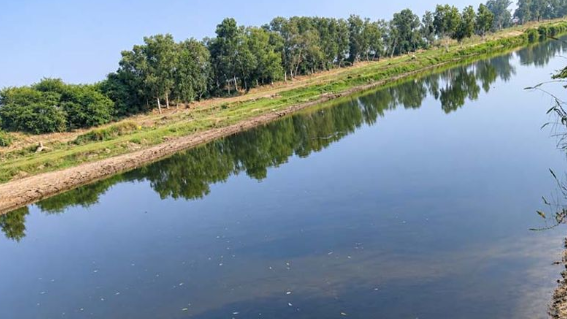
23 November 2026 Punjab Khabarnama Bureau : The flow of untreated black and allegedly toxic water into the Sutlej River has triggered serious concern among residents of several villages in Punjab’s Fazilka district. People living along the international border have raised alarms over the deteriorating water quality, reporting the death of fish in large numbers and expressing fears of possible health risks due to contamination.
The situation has become particularly worrying for residents who depend on river water and groundwater for their daily needs, agriculture and livestock. Villagers have alleged that contaminated water has been flowing through the river channels, raising concerns about the safety of drinking water sources and the impact on the surrounding environment.
According to residents, the pollution has been visible near Kawan Wali Pattan, where contaminated water was seen mixing with the Sutlej. They claimed that the water had turned black and appeared highly polluted.
Balwant Singh, husband of Jhangar Bhaini village sarpanch Seema Rani, alleged that a large number of fish had died over the past two to three days because of the contaminated water. He expressed concern that the pollution could also affect groundwater supplies and create serious problems for people living in nearby villages.
Residents Report Fish Deaths and Contaminated Water
Villagers said the continuous flow of black water into the Sutlej has created anxiety among communities living in the border region. The reported deaths of fish have raised questions about the condition of aquatic life and the possible presence of harmful substances in the river.
Residents fear that if the contamination continues, it could affect other aquatic organisms and damage the local ecosystem.
They also expressed concern about the possible impact on agricultural activities, as farmers in the region depend on available water resources for irrigation.
Shubeg Singh, another local resident, said black water was continuing to flow into the river. He alleged that industrial and municipal pollution from upstream areas, along with untreated wastewater from Pakistani tanneries and other sources on the Indian side, could be contributing to the problem.
However, the exact source of the latest contamination has not yet been officially established.
Residents have demanded that the authorities conduct an immediate investigation, collect water samples and identify the agencies or industries responsible for releasing untreated wastewater into the river.
Drinking Water Facilities Add to Villagers’ Concerns
Apart from environmental damage, the availability of safe drinking water has emerged as another major concern for people living in the affected villages.
Balwant Singh said Jhangar Bhaini village did not have a government-installed reverse osmosis (RO) water purification system. He also pointed out that an RO plant in neighbouring Ram Singh Bhaini village had remained non-functional for a long time.
As a result, some households have been forced to install individual water purification systems, while other residents depend on them for access to drinking water.
Villagers believe that the absence of reliable drinking water facilities could increase their difficulties if groundwater sources are also affected by pollution.
They have urged the administration to arrange safe drinking water supplies and restore non-functional purification plants without further delay.
Nearly Half-a-Dozen Villages Raise Alarm
Residents said several villages located along the international border were facing concerns due to the contaminated water entering the Sutlej channels.
The affected communities fear that pollution could spread further through the natural flow of the river, increasing the number of people exposed to potentially unsafe water.
The issue has also raised concerns among farmers and families who depend on local water resources for their livelihoods.
Villagers have demanded coordinated action from the district administration, the Punjab Pollution Control Board and other concerned departments.
They want officials to inspect the affected areas, monitor water quality and take immediate measures to stop the discharge of untreated wastewater.
Residents have also stressed that temporary inspections will not be enough unless authorities identify the actual sources of contamination and ensure that pollution does not continue.
Pollution Control Board Responds to Complaints
When contacted about the matter, HB Singh, Sub-Divisional Officer (SDO) of the Punjab Pollution Control Board, expressed ignorance about the reported contamination.
However, he said that no major hazardous pollution incident had been reported in the border belt so far.
The officer assured that the matter would be looked into and efforts would be made to identify the source of the contamination.
The response has left residents waiting for concrete action and a detailed assessment of the water quality.
Villagers want the authorities to conduct scientific testing rather than relying only on visual inspections. They believe laboratory analysis is necessary to determine whether the water contains industrial chemicals, untreated sewage or other harmful pollutants.
Long-Standing Pollution Concerns in the Fazilka Border Region
The latest incident has brought renewed attention to the long-standing problem of water pollution in the Fazilka region.
Earlier reports have highlighted concerns about polluted water entering the area through the Sutlej and associated drainage channels. Industrial wastewater, municipal discharge and pollution from upstream sources have repeatedly been raised as possible contributors.
The region has also witnessed concerns regarding wastewater from tanneries located across the international border in Pakistan’s Kasur district.
However, the source responsible for the latest black water discharge near Kawan Wali Pattan remains unconfirmed.
Environmental concerns in the wider Malwa region have also highlighted the need for stronger wastewater treatment systems, regular monitoring and stricter enforcement of pollution-control regulations.
Experts and residents have repeatedly stressed that untreated industrial and municipal wastewater should not be allowed to enter rivers and other natural water bodies.
Residents Demand Immediate Government Intervention
Residents of Fazilka’s border villages have appealed to the Punjab Government and concerned authorities to take urgent steps to address the situation.
Their demands include identifying the source of the black water, stopping the discharge of untreated wastewater, conducting laboratory tests and ensuring the availability of safe drinking water.
They have also called for regular monitoring of the Sutlej and nearby groundwater sources to prevent further environmental damage.
For families living along the international border, the issue is not limited to the appearance of polluted river water. It concerns their health, drinking water, agricultural activities and the future of the local environment.
With reports of fish deaths and concerns over groundwater contamination, villagers are demanding that authorities move beyond assurances and take effective action.
The immediate priority remains establishing the source of the pollution and ensuring that untreated wastewater does not continue flowing into the Sutlej.