

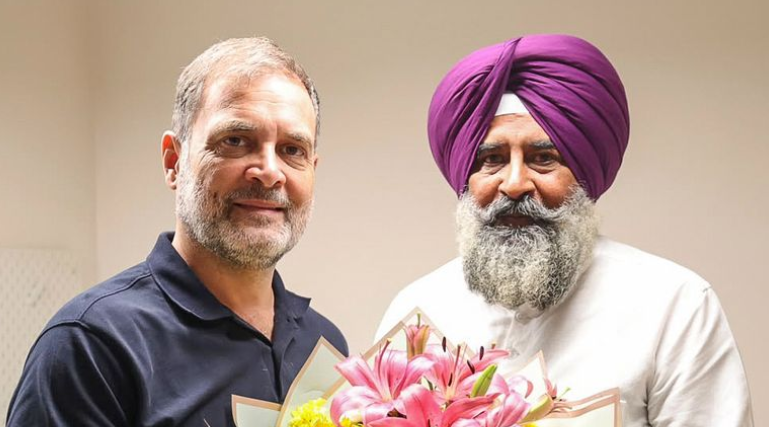
6 October 2026 Punjab Khabarnama Bureau : Punjab Pradesh Congress Committee (PCC) chief Pargat Singh has begun efforts to strengthen unity within the party, with plans to meet leaders associated with the Charanjit Singh Channi camp in Delhi. The move comes as the Punjab Congress prepares to face an increasingly competitive political environment and seeks to put internal differences behind it.
Pargat Singh’s initiative is being viewed as an attempt to bring different factions of the state Congress leadership onto a common platform. The party has witnessed differences among senior leaders on several occasions, with factionalism and competing political interests posing challenges to its efforts to rebuild its organisation in Punjab.
The proposed meeting with the Channi camp is significant because Channi remains an important face in Punjab Congress politics. As a former Punjab chief minister, his political influence and connections within the party make his camp an important stakeholder in any broader effort to strengthen Congress in the state.
Pargat’s outreach is expected to focus on improving coordination among senior leaders and addressing differences that could affect the party’s organisational preparations. The PCC chief is likely to emphasise the need for collective action, particularly as Congress works to consolidate its position among voters and strengthen its grassroots network.
The move also comes at a time when Punjab’s political landscape remains highly competitive. The ruling Aam Aadmi Party, Bharatiya Janata Party and Shiromani Akali Dal are all seeking to expand their influence in the state. Congress, which has traditionally maintained a strong organisational presence in Punjab, faces the challenge of retaining its support base while rebuilding confidence among party workers.
Internal unity has therefore emerged as a key priority for the state leadership. Party leaders have repeatedly stressed that differences within the organisation should not weaken the Congress campaign or create confusion among workers and supporters.
Pargat Singh’s meeting with the Channi camp could provide an opportunity to discuss these concerns directly. Rather than allowing disagreements to remain unresolved, the PCC chief appears to be pursuing a strategy of direct engagement with different groups within the party.
The Delhi meeting is also important from the perspective of coordination with the central Congress leadership. Delhi remains a key centre for discussions concerning Punjab Congress strategy, especially when senior state leaders are involved. Any understanding reached during the outreach could help the party establish a more coordinated approach ahead of upcoming political challenges.
For Congress, maintaining unity among its senior leadership is particularly important because political competition in Punjab is no longer limited to a traditional contest between a few established parties. The AAP has built a significant organisational base, while the BJP has been attempting to expand its independent political footprint in the state. The Shiromani Akali Dal is also working to regain political ground.
Against this backdrop, Congress leaders are expected to focus increasingly on organisational strengthening, communication with workers and a unified political narrative. Differences among senior leaders can make it difficult for the party to present a consistent message, particularly during election campaigns.
Pargat’s unity initiative could consequently mark an important step toward reducing factional tensions. His engagement with the Channi camp suggests that the PCC leadership is willing to reach out to leaders and groups that may have differing political positions but continue to remain part of the wider Congress structure.
The success of the initiative, however, will depend on whether the outreach translates into sustained coordination at the organisational and political levels. A meeting alone may not resolve longstanding differences, but it could create space for dialogue and help rebuild trust among competing camps.
Party workers are likely to watch the developments closely, as greater coordination among senior leaders could provide renewed momentum to the state organisation. A united leadership would also allow Congress to focus more effectively on issues affecting Punjab and on challenging its political rivals.
The proposed interaction between Pargat Singh and the Channi camp therefore carries significance beyond a routine political meeting. It represents an effort to bring different sections of Punjab Congress closer together at a time when the party is seeking to strengthen its position.
If the unity push gains momentum, it could pave the way for greater cooperation among senior leaders and help Congress present a more cohesive political front in Punjab. The coming weeks are likely to indicate whether the outreach develops into a broader reconciliation effort within the party.