

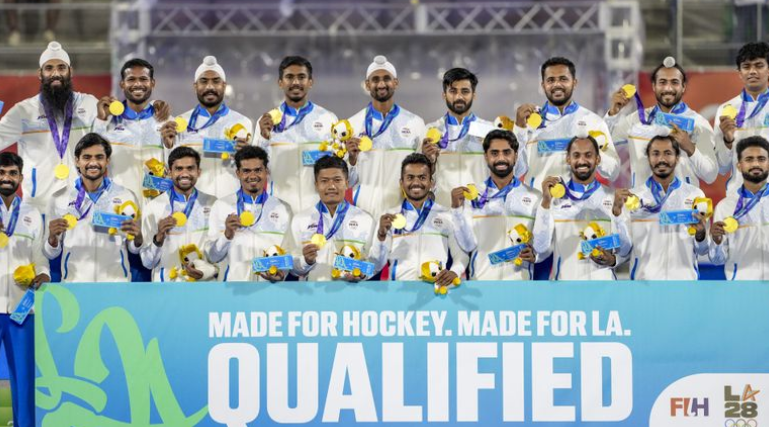
5 October 2026 Punjab Khabarnama Bureau : Punjab’s performance at the Asian Games has witnessed a significant decline, with the state’s medal contribution falling from 19 medals in 2022 to just 9 in the latest edition. The sharp drop has renewed attention on Punjab’s sporting ecosystem and the challenges faced by athletes across different disciplines.
Punjab has traditionally been regarded as one of India’s major sporting states, particularly for its contribution to hockey, athletics, wrestling, boxing, shooting and other competitive sports. The state has produced numerous international athletes who have represented India at the Olympic Games, Asian Games, Commonwealth Games and world championships.
The 2022 Asian Games in Hangzhou marked a particularly successful campaign for Punjab’s athletes. The state contributed 19 medals to India’s overall tally, reflecting the strong presence of Punjabi athletes across several sports. The achievement was seen as a continuation of Punjab’s long association with elite sport.
However, the medal contribution has since declined substantially. From 19 medals in 2022, Punjab’s tally has fallen to 9, representing a reduction of more than half. The change has prompted renewed discussion about athlete development, sporting infrastructure, financial support and the availability of sustained training opportunities.
The decline is significant because medals at multi-sport events such as the Asian Games are often the result of years of preparation. Athletes typically require access to qualified coaches, modern training facilities, sports science support, nutrition, equipment and regular exposure to high-level competition.
Punjab’s sporting identity has historically been closely connected with hockey. The state has produced a large number of players for India’s national hockey teams, with several Punjab-based athletes playing important roles in international competitions. Beyond hockey, the state has also developed prominent athletes in weightlifting, boxing, athletics, shooting, wrestling and other disciplines.
The state’s rural sporting culture has also played an important role in identifying and developing talent. Villages across Punjab have traditionally provided young athletes with access to sports such as kabaddi, wrestling, hockey and athletics. Many successful athletes have emerged from modest backgrounds after receiving opportunities to compete at district, state and national levels.
The fall in the medal tally, therefore, has raised questions about whether this traditional pipeline is producing enough elite athletes capable of competing successfully at the continental level.
One factor often discussed in elite sport is continuity. Athletes who reach international level require long-term support rather than assistance only around major competitions. Training programmes, injury management, competition exposure and financial backing can all influence an athlete’s ability to remain competitive.
The Asian Games also feature a broad range of disciplines, meaning a state’s medal tally can fluctuate depending on the sports included, athlete qualification and individual performances. A lower medal count in one edition does not necessarily indicate a complete decline across every sporting discipline.
Nevertheless, the reduction from 19 medals to 9 represents a notable change and has brought Punjab’s sports policies and athlete-support mechanisms back into focus.
The state has several established sporting institutions and training centres, but athletes and sports administrators have periodically highlighted the need for better infrastructure and modern facilities. Access to specialised coaching and sports science is particularly important as international competition becomes increasingly competitive.
Nutrition and recovery have also become essential parts of modern elite sport. International athletes increasingly work with physiotherapists, strength-and-conditioning specialists, psychologists, nutritionists and sports scientists. Ensuring that athletes have access to these services throughout their development can help them prepare for the physical and mental demands of major competitions.
Another challenge is retaining talented athletes. Young sportspersons often face difficult choices between pursuing competitive sport and securing education or employment. Without predictable financial support and career opportunities, some promising athletes may leave high-performance sport before reaching their peak.
Punjab’s sporting landscape also extends beyond the disciplines traditionally associated with the state. Athletes in badminton, shooting, weightlifting, archery, table tennis and other sports have increasingly contributed to India’s international success. Developing a broader base across disciplines could provide more opportunities for Punjab to contribute medals at future multi-sport events.
The Asian Games medal figures also highlight the importance of grassroots development. Elite success usually begins with talent identification at schools, academies, clubs and district-level competitions. A strong pathway from grassroots sport to state and national teams can help ensure a consistent supply of athletes.
For Punjab, rebuilding that pathway could involve stronger school-level competitions, better district facilities, regular talent identification programmes and closer coordination between academies and high-performance centres.
The state’s sporting history provides a strong foundation, but maintaining international success requires continuous investment and adaptation. Competition from other Indian states has also increased as sports infrastructure and professional training systems have expanded across the country.
The decline in Punjab’s Asian Games medal contribution does not erase the achievements of its athletes. The nine medals in the latest campaign still represent significant accomplishments by individual sportspersons who competed against some of Asia’s strongest athletes.
However, the difference between nine and 19 medals provides a clear numerical indicator of the change in Punjab’s contribution between the two editions. It also provides an opportunity to examine which sports produced medals, where Punjab lost representation and what support athletes need to reach the next level.
As India continues to expand its sporting ambitions, states remain important contributors to the national medal programme. Punjab’s future performance will depend not only on individual champions but also on the strength of its wider sporting ecosystem.
The focus now is likely to shift toward identifying the reasons behind the reduced medal tally and ensuring that talented athletes receive sustained support. With its deep sporting culture and history of producing international competitors, Punjab will be looking to strengthen its performance in future Asian Games and other major championships.