

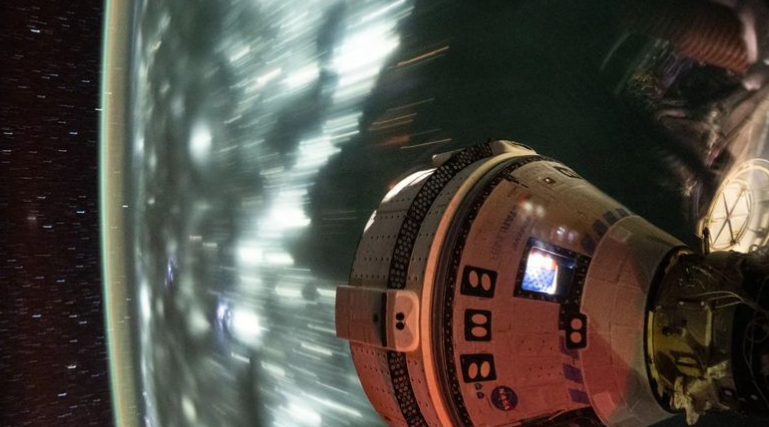
29 September 2026 Punjab Khabarnama Bureau : NASA and Boeing have outlined a phased plan to return the Starliner spacecraft to flight, beginning with an uncrewed mission to the International Space Station before astronauts are again transported aboard the spacecraft.
NASA said the agency plans to use the uncrewed Starliner-1 mission to validate technical improvements and gather additional flight data before moving toward a crewed return to service.
Uncrewed Starliner-1 Comes First
The first step in the new plan is an uncrewed Starliner-1 mission to the International Space Station.
NASA said the mission could launch as early as December 2026 or January 2027. Its purpose will be to test improvements made following problems identified during Starliner’s first crewed flight in 2024.
Crewed Starliner-2 Targeted for 2028
NASA currently plans to return astronauts aboard Starliner-2 in 2028.
The agency said it will use data from Starliner-1, along with additional testing and certification, before approving the spacecraft for crewed missions.
Thermal Issues Identified
NASA’s investigation into Starliner’s 2024 crewed test flight identified problems involving the spacecraft’s service-module reaction-control thrusters.
The investigation found that the thrusters had operated outside their engineering qualification and that thermal conditions and design characteristics contributed to performance problems.
NASA said Boeing has since introduced thermal modifications to the spacecraft’s service module.
Thruster Valve Modification Planned
NASA and Boeing have also agreed to introduce an additional thruster-valve design modification.
The change is intended to address issues involving poppet-seal extrusion and its potential effect on thruster performance.
The agency said the modification will support future spacecraft certification and crewed missions.
Other Starliner Improvements
Boeing is also expected to implement additional changes to the spacecraft.
These include new crew-module thrusters, upgraded batteries and modifications to the parachute system aimed at improving performance and reliability.
NASA said these improvements will form part of the wider certification process.
Lessons From the 2024 Crew Flight Test
Starliner’s first crewed test flight launched astronauts Butch Wilmore and Suni Williams toward the International Space Station in 2024.
Technical problems involving the spacecraft’s propulsion system ultimately resulted in the spacecraft returning to Earth without its crew aboard.
NASA’s subsequent Program Investigation Team identified 61 recommendations addressing technical and programme-related issues.
NASA Wants Multiple Crew Transportation Options
NASA said maintaining multiple crew transportation systems remains important to the agency’s long-term human-spaceflight strategy.
The agency intends to exercise options for a fifth and sixth Starliner flight to and from the space station, while also working with Boeing and United Launch Alliance to certify the Vulcan rocket for crew transportation.
A Step-by-Step Return
NASA’s latest plan places testing and certification ahead of another crewed flight.
The approach means Starliner must first demonstrate that its propulsion and other systems perform reliably during an uncrewed mission before astronauts are cleared to fly again.