

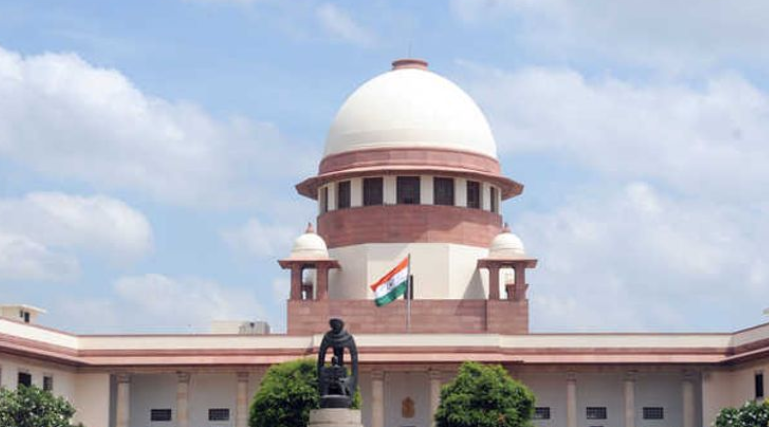
21 September 2026 Punjab Khabarnama Bureau : The Punjab Government is preparing to approach the Supreme Court against the Kishau Multipurpose Project agreement, arguing that the state was excluded from the decision-making process despite claiming a share in the Yamuna’s waters.
The move comes days after Himachal Pradesh, Uttarakhand, Uttar Pradesh, Haryana, Rajasthan and Delhi signed an agreement to take forward the long-delayed 422 MW Kishau project on the Tons River, a major tributary of the Yamuna.
Punjab Objects to Exclusion
Punjab’s Water Resources Department has argued that the Centre proceeded with the project without adequately consulting Punjab or taking the state on board.
Sources said the Advocate General’s office has been asked to approve a draft plaint for filing before the Supreme Court. The draft has already been vetted by a senior advocate who previously served as Punjab’s Advocate General.
Why Punjab Is Claiming Yamuna Water
Punjab’s case is based partly on historical agreements concerning the Yamuna.
According to the state government, a March 12, 1954 agreement between undivided Punjab and Uttar Pradesh entitled Punjab to two-thirds of the Yamuna waters. Punjab argues that the reorganisation of the state in 1966 did not automatically extinguish that entitlement.
Punjab also points to the 1972 Irrigation Commission report, which, according to state officials, recognised Punjab as falling within the Yamuna basin.
Dispute Over the 1994 Yamuna Agreement
A central part of Punjab’s argument concerns the May 12, 1994 Yamuna water-sharing agreement.
That arrangement was signed by Delhi, Haryana, Uttar Pradesh, Himachal Pradesh and Rajasthan, but Punjab was not a signatory.
Punjab maintains that the 1994 agreement therefore cannot be treated as a final settlement of Yamuna water allocation when the state itself was excluded from the arrangement.
Kishau Project Agreement Signed by Six States
The six participating states signed the latest agreement on September 15, ending an eight-year stalemate over the project.
The proposed dam will be built on the Tons River along the Himachal Pradesh-Uttarakhand border. It is planned as a multipurpose project involving water storage, irrigation, drinking and industrial water supply and hydropower generation.
The project has a proposed storage capacity of around 1,562 million cubic metres, according to the government’s account of the agreement.
Punjab Had Already Approached Centre
Punjab’s challenge follows an earlier attempt to have its Yamuna water claim adjudicated.
The state had submitted a complaint to the Centre in April 2025 under Section 3 of the Inter-State River Water Disputes Act, 1957, seeking the constitution of a tribunal to examine its claim to Yamuna waters.
According to the Punjab government, no action was taken on that complaint, prompting it to consider judicial intervention.
Punjab Invokes Successor-State Argument
Punjab is also expected to argue that the principle used for allocating inter-state river waters should be applied consistently.
State officials have compared the Yamuna issue with the allocation of Ravi-Beas waters, arguing that if Haryana can receive water from rivers associated with undivided Punjab despite questions surrounding riparian status, Punjab should similarly be considered a successor state in relation to the Yamuna.
Project Benefits for Participating States
The Kishau project is expected to provide irrigation potential for about 97,000 hectares and generate approximately 1,476 million units of hydropower, according to the Union government’s September 15 statement.
The Centre has declared the project a national project and will bear about 90% of the financial burden for its water component, with the remaining 10% shared by the participating states.
Legal Battle Ahead
Punjab’s proposed Supreme Court petition could add another layer to the long-running inter-state water disputes involving northern Indian states.
The court will have to consider the legal basis of Punjab’s claim, the relevance of historical agreements and the implications of the state’s exclusion from the 1994 Yamuna water-sharing arrangement.
Punjab’s Stand
Punjab maintains that its claim is not limited to the Kishau project itself but concerns its broader entitlement to Yamuna waters.
The state government is therefore seeking judicial scrutiny of both the project agreement and the underlying water-sharing framework on which the participating states have relied.