

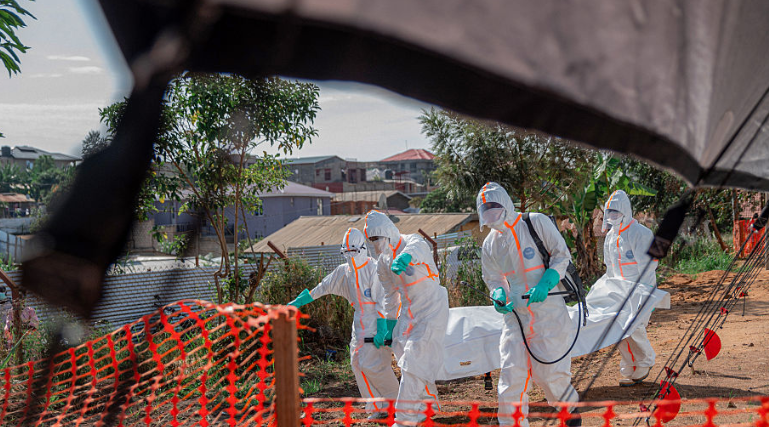
18 June 2026 Punjab Khabarnama Bureau : The response to the ongoing Ebola outbreak in the Democratic Republic of Congo (DRC) is coming under increasing strain just one month after the World Health Organization declared the crisis a Public Health Emergency of International Concern (PHEIC).
Health officials and humanitarian organizations warn that rising case numbers, logistical challenges and funding pressures are stretching response efforts as authorities race to contain the deadly virus.
Response Teams Under Pressure
Since the emergency declaration, medical workers have intensified surveillance, contact tracing, vaccination campaigns and treatment operations. However, the outbreak continues to spread in several regions, placing heavy demands on healthcare personnel and resources.
Aid agencies report that response teams are struggling with:
- Limited healthcare infrastructure
- Difficult terrain and remote communities
- Shortages of trained personnel
- Funding and supply constraints
- Population movement across affected areas
Cases Continue To Rise
Public health experts have warned that the outbreak may not yet have reached its peak.
The continued emergence of new infections has complicated efforts to break chains of transmission and protect vulnerable communities.
Vaccination Efforts Expanded
Authorities are deploying Ebola vaccines to high-risk populations and contacts of confirmed cases.
Vaccination remains one of the most effective tools available to contain the disease, alongside rapid testing, isolation of patients and community education programs.
Community Engagement Critical
Health workers emphasize that community trust is essential to controlling the outbreak.
Efforts are focused on:
- Raising awareness about symptoms
- Encouraging early reporting of suspected cases
- Promoting safe burial practices
- Countering misinformation
Experts say cooperation from local communities will play a decisive role in determining how quickly the outbreak can be brought under control.
International Support Continues
Several international organizations, including the WHO and the International Federation of Red Cross and Red Crescent Societies, continue to support Congo’s response through funding, logistics and technical expertise.
However, humanitarian groups warn that sustained international assistance will be needed if the outbreak persists for many months.
Understanding Ebola
Ebola Virus Disease is a highly infectious disease that spreads through direct contact with bodily fluids of infected individuals or contaminated materials.
Symptoms commonly include:
- Fever
- Fatigue
- Muscle pain
- Vomiting
- Diarrhea
- Bleeding in severe cases
Early treatment significantly improves survival rates.
Outlook
Health authorities remain hopeful that expanded vaccination coverage and stronger surveillance efforts will eventually slow transmission. Nevertheless, officials caution that the outbreak could continue for months and requires a sustained response.
Key Takeaway
One month after the WHO declared the Congo Ebola outbreak an international public health emergency, response efforts are facing mounting pressure from rising cases, logistical difficulties and resource constraints. Health agencies warn that continued international support and community cooperation will be crucial to bringing the outbreak under control.