

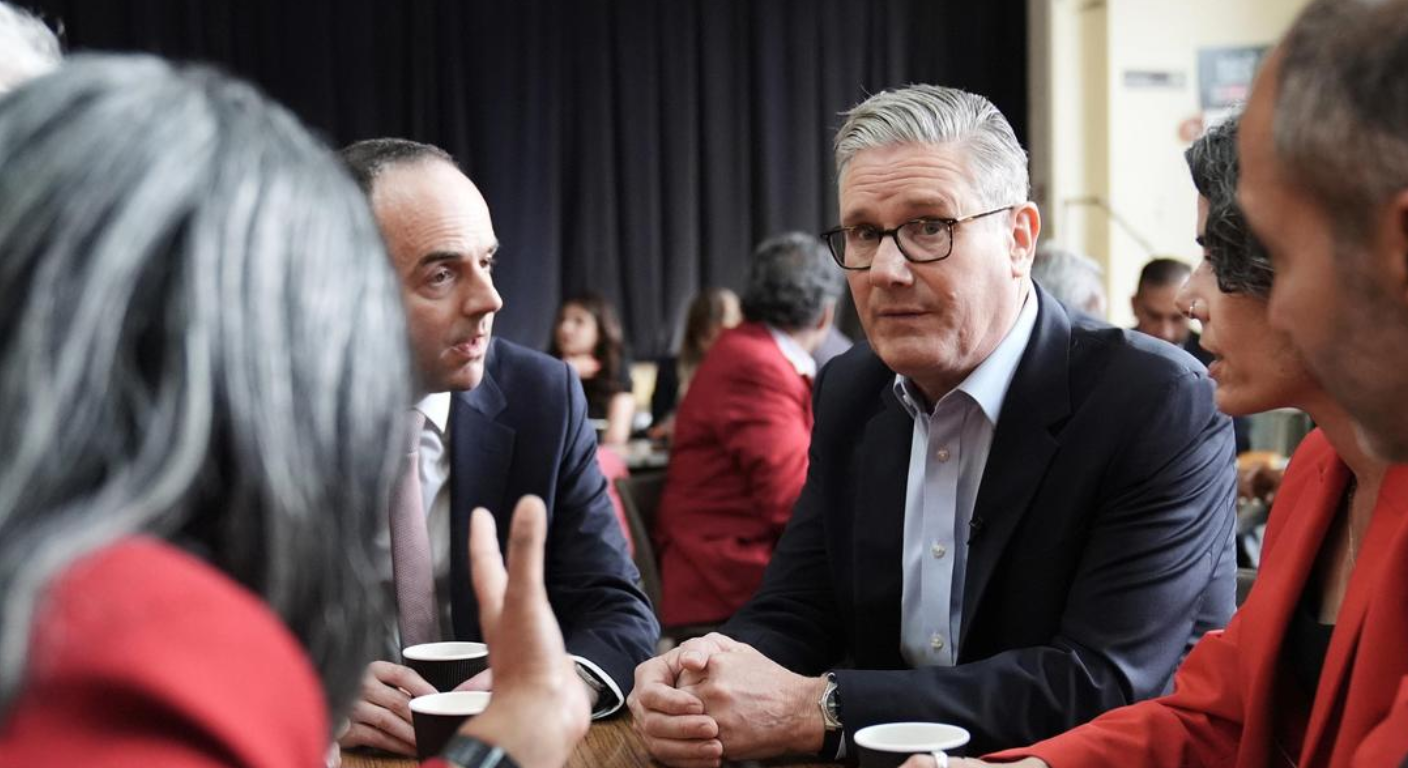
8 May 2026 Punjab Khabarnama Bureau : Keir Starmer has firmly stated that he will not step down despite disappointing early election results for the Labour Party, signaling his determination to continue leading the government through growing political challenges.
The remarks came after initial vote counts and local election outcomes indicated setbacks for Labour in several key regions, prompting criticism from political opponents and speculation about internal pressure within the party.
Starmer Stands Firm
Addressing reporters after the early results emerged, Starmer acknowledged that the outcomes were “disappointing” but insisted they did not justify leadership change or political instability.
The British Prime Minister said his government remained focused on long-term priorities including economic recovery, public services, and national security.
“I was elected to deliver change, and that work continues,” Starmer reportedly said, dismissing suggestions that he should resign following Labour’s electoral setbacks.
Labour Faces Electoral Pressure
The early results showed Labour underperforming in several areas where the party had expected stronger support. Political analysts noted losses in local councils and weaker-than-anticipated performances in some constituencies.
The setbacks have fueled criticism from opposition parties, particularly the Conservative Party, which accused Labour of failing to maintain voter confidence.
Some commentators also questioned whether economic concerns and voter dissatisfaction over policy decisions may have contributed to the results.
Political Significance of the Results
Although the elections were not national parliamentary polls, the outcomes are widely viewed as an important political indicator ahead of future national contests.
Local election performances often influence public perception, party morale, and internal leadership dynamics in British politics.
The disappointing early figures have therefore intensified scrutiny on Starmer’s leadership strategy and Labour’s electoral positioning.
Starmer Defends Government Agenda
Despite criticism, Keir Starmer defended his administration’s direction and argued that difficult reforms require time to produce visible results.
He highlighted government efforts related to:
- Economic stabilization
- Public healthcare improvements
- Energy policy reforms
- Infrastructure investment
- International diplomacy
Starmer also warned against “short-term political panic,” emphasizing that governing requires persistence even during politically challenging moments.
Opposition Senses Opportunity
Opposition leaders quickly reacted to the election results, portraying them as evidence of declining confidence in Labour.
The Conservative Party argued that voters were becoming frustrated with Labour’s handling of economic pressures and public policy challenges.
Some opposition figures even suggested that the results could trigger deeper divisions within Labour if dissatisfaction grows among party members and lawmakers.
Internal Party Reactions Mixed
Within Labour, reactions appear mixed. Some party members publicly defended Starmer, arguing that leadership changes after difficult election cycles would create instability and weaken the party further.
Others reportedly expressed concern over the party’s messaging, campaign strategy, and voter engagement efforts.
Political analysts note that leadership pressure often intensifies when expectations are high and results fall short.
Economic Issues Influence Voters
Economic concerns remain central to British politics, with voters continuing to focus on:
- Inflation
- Cost of living pressures
- Energy prices
- Public spending
- Employment and wages
Experts believe these issues likely influenced voter sentiment during the elections.
The government’s ability to manage economic recovery may therefore become the defining factor in future political support.
International Attention on British Politics
The developments are also being closely watched internationally, as political stability in the United Kingdom has implications for global markets, European relations, and diplomatic partnerships.
Starmer’s refusal to resign suggests that the government intends to project continuity and stability despite electoral setbacks.
Challenges Ahead for Labour
Labour now faces the challenge of rebuilding momentum and reconnecting with voters ahead of future elections.
Political strategists say the party may need to:
- Refine campaign messaging
- Address public frustrations more directly
- Strengthen local outreach
- Clarify economic priorities
How the government responds in the coming months could significantly shape political narratives moving forward.
Starmer’s Leadership Style
Keir Starmer has often presented himself as a disciplined and pragmatic leader focused on long-term governance rather than short-term political reactions.
Supporters argue that stability and consistency are essential during periods of economic and geopolitical uncertainty.
Critics, however, claim Labour has struggled to inspire voters and maintain momentum under his leadership.
Conclusion
Keir Starmer’s refusal to step down after early election setbacks signals that he intends to remain firmly in control despite mounting political pressure.
While Labour faces difficult questions following disappointing results, Starmer has made clear that he believes leadership continuity and policy delivery are more important than reacting to short-term electoral setbacks. The coming months will likely determine whether voters regain confidence in Labour’s direction or whether political challenges deepen further
Summary:
U.K. Prime Minister Keir Starmer said he will not resign despite Labour’s disappointing early election results, defending his government’s agenda and pledging to continue leading through political challenges.