

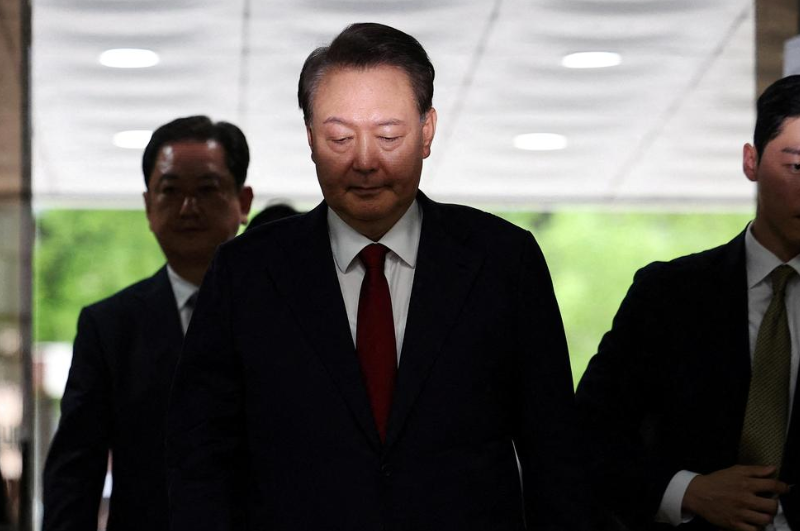
29 April 2026 Punjab Khabarnama Bureau : A South Korean appeals court has sentenced former President Yoon Suk Yeol to seven years in prison in a case related to obstruction of arrest, marking a significant development in the country’s political and legal landscape.
According to court officials, the verdict upheld serious charges that Yoon had interfered with legal processes during an investigation, effectively obstructing law enforcement authorities. The appeals court found sufficient evidence to support the conviction and imposed a seven-year jail term.
The case stems from allegations that Yoon used his position and influence to delay or hinder arrest proceedings linked to an ongoing probe. Prosecutors argued that such actions undermined the rule of law and eroded public trust in institutions.
Legal experts note that the ruling reflects South Korea’s strong judicial system, where even high-ranking officials are held accountable. The country has seen several former leaders face legal action, highlighting its commitment to upholding constitutional principles.
Supporters of Yoon have criticised the verdict, calling it politically motivated, while opponents have welcomed the decision as a step toward accountability and justice. The case has further deepened political divisions within the country.
The defence team is expected to challenge the ruling in the Supreme Court, seeking relief from the sentence. Until then, the verdict stands as a major legal setback for the former president.
The decision is also likely to have broader political implications, influencing public opinion and shaping future political alignments in South Korea. It may impact the strategies of major political parties as they navigate the evolving landscape.
Observers say the case underscores the importance of transparency and adherence to legal norms, particularly for those in positions of power. It also sends a message about the consequences of interfering with judicial processes.
Internationally, the development has drawn attention, with analysts noting its significance in demonstrating the strength of democratic institutions in South Korea.
As the legal process continues, the focus will remain on the next steps in the case and its impact on the country’s political environment.
Summary
A South Korean appeals court sentenced former President Yoon Suk Yeol to seven years in prison for obstructing arrest proceedings, a ruling that has sparked political debate and legal challenges.