

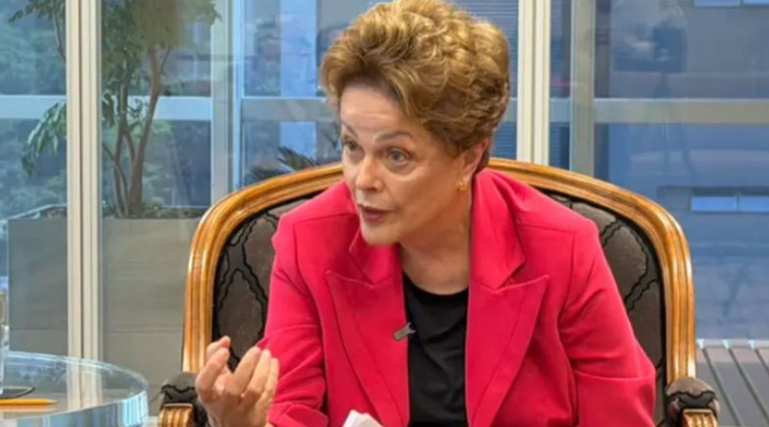
12 October 2026 Punjab Khabarnama Bureau : Brasilia: New Development Bank (NDB) President Dilma Rousseff has highlighted Brazilian President Luiz Inácio Lula da Silva’s role in strengthening BRICS and the bank, emphasising the importance of international cooperation, development financing and technological innovation in advancing the interests of emerging economies.
In a recent interview with journalists Leonardo Attuch and Fernando Morais on TV 247, Rousseff discussed the NDB’s financing activities in Brazil, its development priorities and the growing influence of Global South countries in shaping a more multipolar international order.
Rousseff said the bank had approved approximately 23.95 billion Brazilian reais in financing operations for Brazil since March 2023, when she assumed leadership of the Shanghai-based institution. The financing has supported initiatives involving sustainable infrastructure, sanitation, urban mobility, energy transition and climate-related projects. <Cite refs={[“turn286262search1″,”turn286262search2”]}/>
Lula’s role in strengthening BRICS
Rousseff underscored the importance of Lula’s leadership in advancing cooperation among BRICS countries and strengthening the group’s development agenda. Brazil has been an influential participant in the bloc, which brings together major emerging economies and provides a platform for discussions on economic cooperation, development and global governance.
BRICS was initially established by Brazil, Russia, India and China, with South Africa joining later. The group has subsequently expanded its membership, increasing its geographical reach and its role in international economic discussions.
Rousseff’s remarks reflect Brazil’s emphasis on multilateral cooperation and the need for emerging economies to have a stronger voice in international institutions. Supporters of this approach argue that developing countries should have greater influence over decisions concerning trade, finance, technology and sustainable development.
Under Lula, Brazil has continued to promote cooperation with developing countries and advocate reforms to international governance arrangements. Rousseff has similarly emphasised the importance of institutions such as the NDB in financing projects that address the development needs of emerging and developing economies.
NDB financing supports Brazil’s development priorities
The NDB was established by the BRICS founding members to mobilise resources for infrastructure and sustainable development projects in emerging markets and developing countries.
According to Rousseff, approximately 23.95 billion reais in financing operations for Brazil had been approved since she became the bank’s president in March 2023. The projects cover several sectors considered important for economic growth, public services and environmental sustainability.
These include sanitation, urban mobility, sustainable infrastructure, electricity transmission and renewable energy. The bank has also supported cooperation with Brazil’s National Bank for Economic and Social Development, known as BNDES.
Investments in these sectors can help improve public infrastructure, expand access to essential services and strengthen economic resilience. Sustainable infrastructure financing is also important as countries seek to modernise their economies while responding to climate change.
Rousseff has emphasised that the NDB follows a demand-driven approach, supporting development priorities identified by member countries. The approach is intended to give governments greater flexibility in determining how financing can contribute to their economic and social objectives.
Greater emphasis on local-currency financing
Another key theme in Rousseff’s remarks was the importance of expanding the use of local currencies in international financing.
Developing countries can face exchange-rate risks when borrowing in foreign currencies. If their domestic currencies weaken, the cost of servicing foreign-currency debt can increase, placing additional pressure on public finances and project budgets.
By raising funds and providing loans in member-country currencies, development banks can help reduce some of these currency mismatches. The approach can also encourage the development of domestic financial markets and diversify funding sources.
Rousseff has advocated reducing excessive dependence on a single international reserve currency in development finance. Her position forms part of a wider BRICS discussion about financial cooperation, payment systems and the role of emerging economies in international monetary arrangements.
However, expanding local-currency lending requires functioning domestic bond markets, adequate liquidity and effective management of financial risks. The pace of progress will depend on the capacity of participating countries and institutions.
Smart Hospital project highlights technological cooperation
Rousseff also discussed plans for a Smart Hospital within Brazil’s public health system. The proposed initiative would integrate advanced technologies, including artificial intelligence and surgical robotics, into healthcare delivery.
The project involves cooperation with Brazil’s Health Ministry and international partners, including India’s Narayana Health, according to reports cited in the interview coverage.
The initiative highlights how international development financing and technical cooperation can extend beyond conventional transport and energy infrastructure. Healthcare technology can also become an important area for collaboration among developing countries seeking to improve public services.
Artificial intelligence and robotic systems may support clinical workflows, medical procedures and hospital management when implemented appropriately. Their effectiveness will depend on infrastructure, training, patient safety standards and sustainable operating arrangements.
The proposed hospital initiative reflects a broader interest in applying technological innovation to public services and improving access to advanced healthcare.
NDB seeks a stronger role in the Global South
The NDB aims to finance infrastructure and sustainable development while expanding its reach among emerging markets and developing countries. Its activities cover areas including clean energy, transport, water management, sanitation, social infrastructure and technological development.
Rousseff has also discussed the bank’s strategic priorities for 2027–2031, including institutional expansion and new opportunities for development financing.
A larger membership base could broaden the bank’s geographical reach and create opportunities for additional projects. However, expansion also requires effective governance, sufficient capital and careful evaluation of financial and operational risks.
The bank’s work is particularly relevant for developing countries that need long-term investment but face constraints in accessing affordable financing. By supporting infrastructure and climate-related projects, the NDB seeks to complement the work of existing multilateral and regional development institutions.
BRICS cooperation and the changing global economy
Rousseff’s comments come amid continuing discussions about the role of emerging economies in international affairs. BRICS members have sought to deepen cooperation on development finance, trade, energy, technology and other shared priorities.
The group’s expanding membership has increased its diversity, but members also have different economic interests and foreign-policy priorities. Turning broad commitments into practical cooperation therefore requires sustained negotiations and agreement on specific projects.
For Brazil, Lula’s engagement with BRICS and the NDB forms part of a broader strategy to strengthen international partnerships and support development priorities. Rousseff’s leadership of the bank provides an institutional link between Brazil’s development agenda and the wider cooperation framework involving BRICS members.
The NDB’s future impact will depend on its ability to mobilise financing, support viable projects and demonstrate measurable development outcomes.
Rousseff’s remarks underline the importance Brazil places on development finance, technological progress and multilateral cooperation. As BRICS members continue to explore new avenues for collaboration, the NDB is expected to remain an important platform for financing infrastructure and sustainable development across emerging economies.