

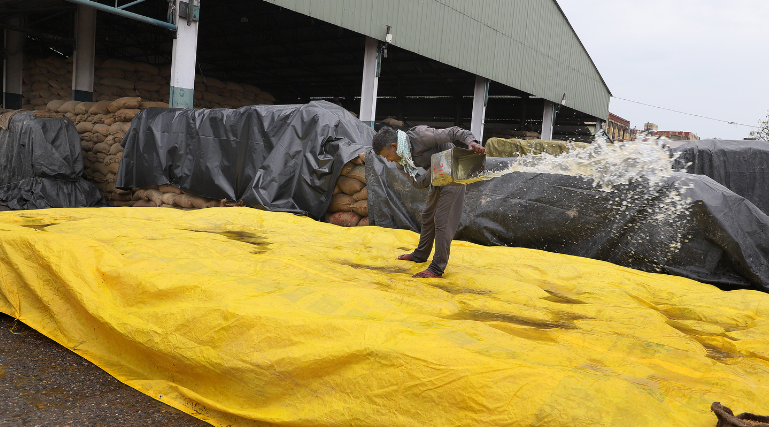
12 October 2026 Punjab Khabarnama Bureau : Doaba: Rainfall has caused concern among farmers in Punjab’s Doaba region after flattening standing paddy crops in fields and soaking harvested stocks lying in grain markets. The rain has raised fears of crop losses, deterioration in grain quality and possible disruptions to the ongoing paddy procurement process.
Farmers in the region depend heavily on paddy cultivation for their livelihoods, making adverse weather during the harvesting and procurement season particularly worrying. With crops at different stages of harvesting, rainfall can affect both standing plants and the grain already brought to mandis for sale.
Standing paddy crops flattened by rain
The rainfall has reportedly flattened paddy plants in parts of Doaba, raising concerns among farmers about reduced yields and additional harvesting costs. When mature paddy crops lodge, or bend towards the ground, harvesting can become more difficult, particularly when fields remain wet.
Lodged crops may also be more vulnerable to grain quality deterioration if wet conditions persist. Depending on the intensity of rainfall, the stage of crop maturity and the duration of waterlogging, farmers could face difficulties in harvesting the produce efficiently.
Wet fields can delay the movement of harvesting machinery and make it harder for workers to access affected areas. Farmers may also have to spend additional time and money collecting grain from flattened plants, increasing the overall cost of cultivation.
The extent of damage, however, can vary from one field to another. A proper assessment of the affected acreage and crop losses would be necessary to determine the overall impact of the rainfall on the region’s paddy harvest.
Paddy stocks soaked in Doaba mandis
Apart from standing crops, harvested paddy lying in mandis has also reportedly been exposed to rain. Grain arriving at procurement centres is often temporarily stored in open areas while farmers wait for weighing, quality checks and procurement-related formalities to be completed.
When rain reaches these stocks, moisture levels can rise and grain quality may be affected. Wet paddy may require additional drying before it can be processed or stored safely. If the grain remains exposed to damp conditions for an extended period, the risk of deterioration can increase.
The situation can create additional pressure on farmers who have already spent months investing in seeds, fertilisers, pesticides, irrigation and labour. Any delay in selling their produce or receiving payment can further complicate their financial planning.
Farmers therefore need timely arrangements for covering harvested stocks and moving them to protected storage wherever possible. Adequate tarpaulins, covered platforms, drainage facilities and prompt handling can help limit weather-related losses at procurement centres.
Procurement operations face additional challenges
Rain during the procurement season can also complicate the work of market committees, procurement agencies and other officials responsible for managing paddy arrivals.
Wet grain may need to be dried before it meets the applicable quality specifications for procurement. This can slow down handling and increase the time stocks remain at mandis. If arrivals continue while weather conditions remain unfavourable, storage space and arrangements for protecting grain become especially important.
Officials and procurement agencies may need to coordinate closely to ensure that harvested produce is inspected, handled and moved without unnecessary delays. Keeping market yards clear of standing water and providing sufficient covered space can also help reduce the risk of further damage.
Farmers will be watching closely for timely procurement and practical assistance if their produce has suffered losses. Clear communication about quality requirements and procurement procedures can help them understand what steps are needed before their grain is accepted.
Financial concerns for farmers
For farmers in Doaba, the rainfall comes at a crucial stage of the agricultural season. Paddy is a major crop in Punjab, and the income generated from its sale plays an important role in meeting household expenses and preparing for the next cropping cycle.
Damage to standing crops can reduce the quantity of marketable grain, while wet stocks may require additional handling and drying. These problems can affect farmers’ returns even when the produce is eventually sold.
Smaller farmers may be particularly concerned because they often have limited resources to absorb unexpected expenses. Delays in harvesting or procurement can also increase labour costs and put pressure on the management of agricultural loans and other seasonal obligations.
Farmers facing losses may seek assistance from the relevant authorities, including an assessment of crop damage and guidance on any relief measures available under applicable rules. The availability of compensation would depend on the relevant schemes, eligibility conditions and official assessment.
Need for precautionary measures and damage assessment
The reported impact of the rain highlights the importance of weather preparedness during harvesting and procurement. Farmers can reduce some risks by covering harvested grain, ensuring adequate drainage and following local agricultural advisories on harvesting and drying.
Market authorities can help by checking protective arrangements at mandis, ensuring that tarpaulins are available where required and prioritising the movement of exposed stocks. Procurement agencies can also coordinate with market committees to minimise delays when weather conditions permit operations to resume normally.
Agriculture officials should assess the extent of damage to standing crops and identify areas where lodging or waterlogging has affected harvesting. Such an assessment would provide a clearer picture of the losses and help determine whether additional support or interventions are necessary.
For now, the rainfall has raised concerns across Doaba over the condition of standing paddy and harvested stocks at mandis. Farmers will be hoping for improved weather, effective protection of grain and timely procurement so that further losses can be minimised.
The overall impact will depend on the duration of wet conditions, the condition of affected crops and how quickly exposed stocks can be dried and moved. A detailed official assessment would be required to establish the scale of damage across the region.