

9 October 2026 Punjab Khabarnama Bureau : India is confident of achieving its ambitious $1 trillion exports target in the financial year 2026–27, despite a slowdown in global trade and continuing international economic uncertainties, Union Commerce and Industry Minister Piyush Goyal has said. The minister expressed optimism about the country’s export performance, citing encouraging first-half figures, expanding international trade partnerships and the growing capabilities of Indian businesses.
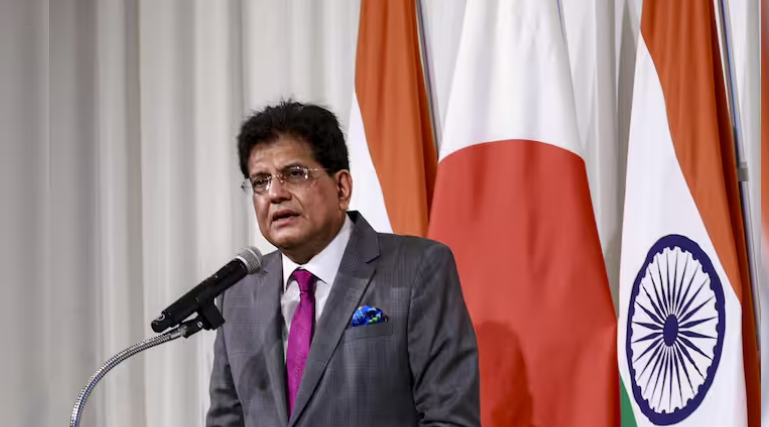
Speaking at an event organised by the Confederation of Indian Industry (CII) in New Delhi on October 8, Goyal said India was on track to meet its target of exporting goods and services worth $1 trillion during the current financial year. He said the performance recorded during the first half had strengthened his confidence that the country could achieve the ambitious goal.
The government is targeting a substantial increase from the $863 billion in combined merchandise and services exports recorded in FY26. Achieving the $1 trillion milestone would require an increase of approximately 16 per cent over the previous financial year’s record performance.
India Targets Strong Export Growth Despite Global Challenges
India’s export ambitions come at a time when international trade faces several challenges, including geopolitical tensions, economic uncertainty and slower growth in global demand. Despite these headwinds, the government believes the country’s diversified export base and expanding access to international markets can support further growth.
Goyal has maintained that India’s economic potential, entrepreneurial strength and industrial capabilities provide a solid foundation for achieving the target. The government is also seeking to strengthen the country’s position in global supply chains while encouraging domestic companies to explore new markets.
According to government targets outlined earlier this year, merchandise exports are expected to reach approximately $530 billion in FY27, while services exports are projected to contribute around $470 billion. The combined target reflects the importance of both manufacturing and services in India’s international trade strategy.
Services exports, which include information technology, business services and other professional activities, have become an important component of India’s export earnings. Meanwhile, merchandise exports remain central to the government’s efforts to strengthen domestic manufacturing, create employment and expand industrial production.
Free Trade Agreements Expected to Open New Opportunities
A key element of India’s export strategy is the expansion of its network of free trade agreements (FTAs). These agreements are intended to improve market access, reduce trade barriers and provide Indian exporters with greater opportunities to compete internationally.
Goyal said the nine free trade agreements finalised by India in recent years offer significant opportunities for domestic businesses. As more agreements become operational, exporters could benefit from improved access to overseas markets and stronger commercial partnerships.
The minister has also urged the Confederation of Indian Industry to establish FTA utilisation cells across its state councils. These facilities could help businesses, particularly micro, small and medium enterprises (MSMEs), understand the benefits available under trade agreements and make better use of preferential market access.
For many smaller exporters, navigating international trade rules, documentation requirements and product-specific regulations can be challenging. Greater awareness of trade agreements could help companies identify new buyers, improve competitiveness and increase shipments to overseas destinations.
India has been pursuing trade partnerships with multiple economies and economic blocs to diversify its export destinations. The strategy is also aimed at reducing excessive dependence on individual markets and creating more opportunities for Indian products and services.
MSMEs and Domestic Industry at the Centre of the Strategy
Small businesses are expected to play a significant role in achieving India’s export ambitions. MSMEs contribute to employment, manufacturing and regional economic development, making their participation important for expanding the country’s export base.
Improving access to finance, simplifying regulatory procedures, strengthening logistics and supporting quality certification could help smaller enterprises become more competitive in international markets.
The government has also emphasised reducing compliance burdens and simplifying business processes. Easier procedures can help businesses spend less time on administrative requirements and focus more on production, innovation and international expansion.
Better coordination between the Centre, state governments, industry associations and exporters will be important for addressing practical challenges. These may include transportation costs, customs procedures, infrastructure gaps, access to export credit and compliance with overseas standards.
The government has previously called for stronger state-level export promotion efforts, including regular reviews of district-level performance and measures to resolve bottlenecks affecting businesses.
International Trade Partnerships and Investment
India is also seeking to strengthen its position as a global trade and investment destination. Goyal has highlighted the importance of building international partnerships at a time when several economies are reassessing their supply chains and commercial relationships.
The government’s approach involves expanding trade ties, attracting investment and encouraging Indian businesses to participate more actively in international markets. Stronger partnerships could help domestic manufacturers access new technologies, improve productivity and establish relationships with global buyers.
However, achieving faster export growth will depend on several factors, including international demand, exchange-rate movements, commodity prices, trade restrictions and the ability of Indian companies to deliver competitive products and services.
Exporters will also need to adapt to changing consumer preferences, environmental requirements and quality standards in major overseas markets.
$1 Trillion Milestone Could Strengthen India’s Global Position
Achieving $1 trillion in exports would mark a significant milestone for India’s economy and strengthen its position in global commerce. Higher exports could support industrial expansion, generate employment, attract investment and contribute to economic growth.
Nevertheless, the target represents a considerable increase over the previous year’s record and will require sustained growth across both merchandise and services exports. The global economic environment remains an important variable, particularly if trade growth slows further or geopolitical developments disrupt major markets.
Goyal’s confidence is based on the country’s recent export performance and the opportunities expected from trade agreements and stronger business participation. The coming months will be crucial in determining whether India can maintain the momentum needed to meet its FY27 objective.
The government’s emphasis remains on expanding market access, improving the ease of doing business and enabling exporters of different sizes to compete internationally. If these efforts translate into stronger orders and higher shipments, India could move closer to its $1 trillion exports ambition.
For now, the minister’s message is clear: India intends to pursue its export target despite global uncertainties, relying on domestic business strength, international partnerships and continued efforts to improve competitiveness.