

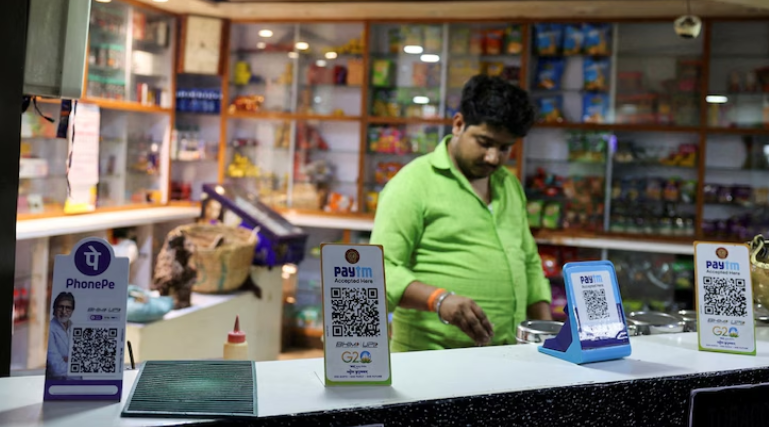
8 October 2026 Punjab Khabarnama Bureau : The National Payments Corporation of India (NPCI) has received requests from merchant organisations, fintech companies and payments firms to postpone the implementation of the new Merchant Discount Rate (MDR) framework for Unified Payments Interface (UPI) transactions to January 2027. The proposed delay would push the rollout from the earlier scheduled date of October 15, 2026.
According to people familiar with the matter, the industry has sought additional time to resolve confusion surrounding the applicable MDR rates, transaction categories and implementation policies. NPCI is expected to take a decision soon, with discussions also taking place with the Finance Ministry.
The proposed postponement comes just days before the scheduled implementation and ahead of India’s major festive shopping season. Industry representatives have argued that introducing a new fee structure during the peak period could create operational challenges for merchants, payment companies and other participants in the digital payments ecosystem.
Under the new framework, a 0.4% MDR is proposed for specified person-to-merchant UPI transactions above ₹2,000. The charge would be capped at ₹300 for transactions of ₹75,000 and above. Person-to-person transactions will continue to remain free, while payments to small merchants covered by the zero-MDR framework will also remain exempt.
The government has previously clarified that the revised framework would not affect the vast majority of UPI merchant transactions. According to the Finance Ministry, around 96% of person-to-merchant UPI transactions will remain unaffected because payments up to ₹2,000 and transactions covered under the small-merchant exemption will continue without MDR.
However, payment industry participants have raised questions about how different categories of transactions should be classified. Unlike card payments, where merchant category codes and established fee structures are widely used, UPI has different MDR rates for several types of transactions.
The industry has particularly sought clarity on utility payments, loan repayments, capital-market transactions and other financial-service payments. Differences in how such transactions are classified could create complications for banks, payment aggregators, merchants and fintech companies once the framework becomes operational.
Loan repayments are one example of the issue. Under the framework, certain loan payments made through autopay mandates attract a flat fee, while manually initiated payments can fall under a different category. Payment companies have sought greater clarity on how these transactions should be identified and processed.
Capital-market transactions have also raised questions. Participants in the securities ecosystem have argued that certain payments made by customers to fund brokerage accounts may resemble person-to-person transfers rather than conventional merchant transactions. This has prompted calls for greater clarity over whether such payments should attract MDR.
The proposed postponement would provide the payments ecosystem with additional time to address these operational questions before the fee structure becomes effective. The festive season is another major factor behind the industry’s request. Retail activity and digital payment volumes generally increase sharply during the festive period, making businesses particularly sensitive to changes in transaction costs.
Retail trader organisations had previously raised objections to the introduction of MDR and had even announced plans for a “No UPI Day” protest. The planned protest was later withdrawn following discussions with Union Finance Minister Nirmala Sitharaman.
The issue has also been subject to legal scrutiny. The Supreme Court recently declined to stay the implementation of the MDR framework while issuing notices to the Centre, the Reserve Bank of India and NPCI in connection with a challenge to the decision.
Payment aggregators are separately discussing how the MDR revenue will be distributed among participants in the payment ecosystem. Industry sources have indicated that payment aggregators are negotiating with sponsor banks over their share of the acquiring banks’ portion of the MDR.
The introduction of MDR marks a significant change for India’s UPI ecosystem, which has operated largely without merchant transaction fees for several years. Authorities have said the new framework is intended to support the long-term sustainability of the payment network and provide resources for technology, cybersecurity and infrastructure investment.
The government has also said that MDR is not a tax collected by the government or NPCI. Instead, the fee is distributed among participants in the payments ecosystem, including banks and payment application providers.
The possible January 2027 rollout would give merchants and payment companies more time to prepare their systems and communicate any changes to customers. It would also allow regulators and industry participants to resolve outstanding questions about transaction classification and fee applicability.
For consumers, the proposed delay means that the existing zero-MDR environment would continue for longer, assuming the postponement is formally approved. However, the framework itself would remain unchanged unless authorities announce modifications.
The final decision now rests with NPCI and the relevant government authorities. Until an official announcement is made, the October 15 implementation date remains the formally announced schedule, while January 1, 2027 is being considered as a possible revised date.
The decision will be closely watched by banks, fintech companies, payment aggregators, merchants and consumers as India continues to expand its digital payments infrastructure