

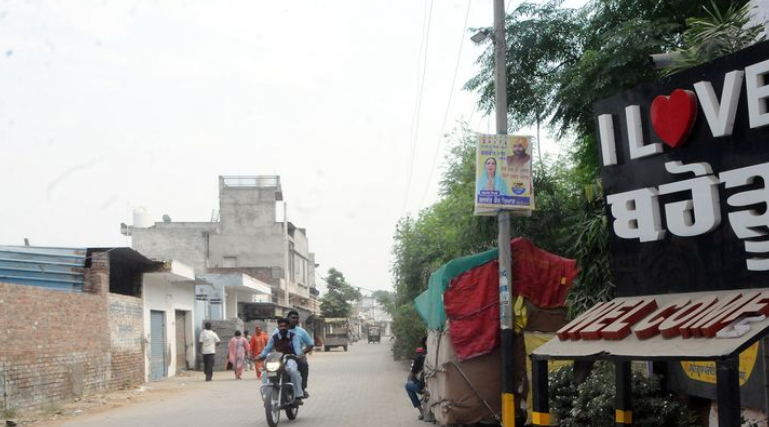
30 September 2026 Punjab Khabarnama Bureau : Bohru village in Amritsar has a remarkable history of social reform, religious activism, education and participation in India’s freedom struggle. Over the decades, residents and natives of the village have contributed to important movements ranging from the Gurdwara Reform Movement to the development of educational and healthcare institutions.
The village’s history is particularly associated with personalities who combined education with social and national causes, giving Bohru a distinctive place in the historical landscape of Amritsar.
Connection With Saka Nankana Sahib
One of the most significant chapters in Bohru’s history is its connection with the Saka Nankana Sahib of 1921.
During the Gurdwara Reform Movement, Sikh reformers fought to free historic gurdwaras from the control of mahants. The movement saw several devotees sacrifice their lives in the struggle.
Bhai Ishar Singh, a native of Bohru, was among those martyred in the Nankana Sahib tragedy on February 20, 1921. He had studied Sikh religion and history and remained involved in religious service.
His sacrifice remains an important part of the village’s historical memory.
Master Sunder Singh Lyallpuri
Perhaps the most prominent personality associated with Bohru is Master Sunder Singh Lyallpuri, who played an important role in the Gurdwara Reform Movement, education and the freedom struggle.
Born in Bohru in the late 19th century, Lyallpuri became a teacher, journalist, educationist and political activist. He was among the founding members of the Gurdwara Sudhar Lehar and later became associated with wider nationalist activities.
His educational achievements were notable. He completed his BA Honours from Khalsa College and later obtained a BT from Government College, Lahore. Contemporary accounts of his life describe him as a highly accomplished student.
A Stand Against British Authority
Lyallpuri’s life also reflected his strong sense of self-respect.
According to accounts of his early career, he appeared for an interview for a government post as a tehsildar. During the interaction with a British commissioner, he sat on a chair without seeking permission. The incident contributed to his decision not to pursue a career serving the colonial administration.
He subsequently devoted himself to education, journalism, social causes and political activism.
Role in the Gurdwara Reform Movement
Lyallpuri became closely associated with the movement for reform and liberation of Sikh gurdwaras.
He founded the Khalsa Bhujhangi Dal, which became associated with the struggle for gurdwara reform and India’s independence.
His work reflected the close connection between religious reform and the broader anti-colonial movement in Punjab during the early decades of the 20th century.
Anand Marriage Act Connection
Lyallpuri also contributed to social and legal reform.
According to the historical account published by The Tribune, he prepared the draft of the Anand Marriage Act in 1909 and helped advance it through the legislative process.
The legislation eventually provided legal recognition to Sikh marriage ceremonies performed according to the Anand tradition.
Journalism as a Tool for Reform
Lyallpuri also used journalism to raise political and social issues.
In 1914, he started the weekly newspaper Sachcha Dhandora, through which he addressed questions relating to gurdwara reform, India’s independence and Sikh affairs.
His work demonstrates how newspapers and education were used by reformers to build political awareness during the colonial period.
Contribution to Education
Bohru’s legacy is not limited to political and religious movements.
The village also produced people who contributed directly to education and public welfare.
One notable figure was Atma Singh, who helped establish both a school and a healthcare facility in the village. He donated around 2.5 acres of land near the entrance to Bohru for the two institutions.
The school later became the Government Senior Secondary School, while the health facility developed into the government-run secondary health centre.
Education and Social Awakening
The story of Bohru reflects the wider importance of education in Punjab’s social transformation.
Figures such as Lyallpuri viewed education not simply as a route to employment but as a means of creating social awareness and encouraging people to participate in reform and national movements.
This emphasis on education helped shape generations of residents and contributed to the village’s reputation for producing educators and socially engaged individuals.
Bohru’s Story Also Includes Migration
The village’s history has also been shaped by migration.
According to residents quoted in a recent account, families from Bohru began moving towards the Baar areas of Punjab during the late 19th century after the British encouraged agricultural settlement in forested regions.
Some families from Bohru moved towards areas including Lyallpur, Sheikhupura and Sialkot, where they were allotted agricultural land.
The upheaval of Partition in 1947 later forced many families to return to India, adding another major chapter to the village’s history.
A Village With a Continuing Legacy
Today, Bohru remains a village whose history extends beyond agriculture and rural life.
Its association with the Nankana Sahib tragedy, the Gurdwara Reform Movement, the freedom struggle and educational development has given it a distinctive historical identity.
The contributions of figures such as Bhai Ishar Singh, Master Sunder Singh Lyallpuri and Atma Singh continue to form an important part of Bohru’s story.
History Preserved Through Generations
The significance of Bohru lies not only in the personalities associated with it but also in the values represented by their work—education, social reform, community service and resistance to colonial rule.
From a martyr at Nankana Sahib to an educationist who challenged colonial authority and a community leader who helped establish a school and hospital, Bohru’s history reflects several important strands of Punjab’s modern past.