

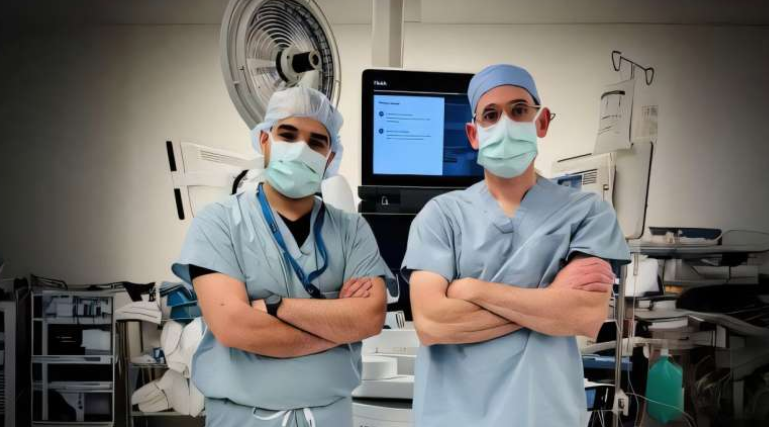
2 September 2026 Punjab Khabarnama Bureau : A new approach developed at UCLA Health is bringing several traditionally separate steps in the management of suspected early-stage lung cancer into a single minimally invasive procedure.
The approach combines diagnosis, cancer staging, tumor localization and surgical treatment during one operating-room session, potentially allowing selected patients to complete what can otherwise take weeks or months in just a few hours. UCLA Health reported performing its first such procedure in August 2026.
Q: Why can diagnosing lung cancer take so long?
A: Suspected lung cancer often requires several stages of evaluation. Imaging may identify a suspicious lung nodule, but doctors generally need tissue to establish a definitive diagnosis. Staging then determines whether cancer has spread to nearby lymph nodes or distant organs and helps guide treatment.
Traditionally, these steps may involve different appointments, procedures and specialists. A patient might undergo a biopsy first, receive pathology results later and then return for additional staging or surgery.
Q: What is different about the new UCLA approach?
A: UCLA Health has brought interventional pulmonology, thoracic surgery and pathology into a coordinated procedure performed during a single anaesthetic event.
For carefully selected patients with suspected early-stage lung cancer, doctors can obtain tissue for diagnosis, assess disease spread, locate the tumor precisely and proceed to surgical treatment during the same operating-room session.
Q: How is the cancer diagnosed?
A: A minimally invasive procedure can be used to obtain tissue from a suspicious lung lesion.
Depending on the tumor’s location, doctors may use bronchoscopy or other image-guided techniques to reach the lesion and collect a sample. Tissue is then examined by pathology to determine whether cancer is present and, where appropriate, what type of cancer it is.
Q: Why is staging so important?
A: Finding a lung tumor is only part of the treatment decision.
Doctors need to establish whether the disease remains confined to the lung or has spread to lymph nodes or elsewhere. The stage can determine whether surgery is appropriate and whether additional treatments such as chemotherapy, radiation, immunotherapy or targeted therapy should be considered.
Q: How does tumor localization fit into the procedure?
A: Small lung nodules can sometimes be difficult for surgeons to identify accurately once an operation begins, particularly when they are deep inside the lung.
The UCLA approach incorporates tumor localization into the same treatment pathway, helping surgeons identify the precise area that needs to be removed. This is particularly relevant as CT screening detects smaller lung lesions at earlier stages.
Q: Does minimally invasive surgery mean a smaller operation?
A: Minimally invasive surgery generally refers to how surgeons access the chest rather than automatically meaning that less cancerous tissue is removed.
Techniques such as video-assisted thoracic surgery use small incisions and a camera to operate inside the chest. For selected lung nodules, minimally invasive removal can provide both tissue for diagnosis and definitive treatment when the clinical situation is appropriate.
Q: Who could benefit from this approach?
A: The combined procedure is intended for carefully selected patients with suspected early-stage lung cancer, rather than everyone with a suspicious lung lesion.
Whether a patient is suitable depends on factors including the tumor’s location and characteristics, evidence of possible spread, lung function, overall health and whether surgery is considered appropriate.
Q: Could it reduce the number of hospital visits?
A: Potentially, yes.
By combining several steps into one operating-room session, the approach could reduce the time between diagnosis and treatment for appropriate patients. UCLA Health says procedures that traditionally may take weeks or months could potentially be completed within hours for selected cases.
However, the approach does not eliminate the need for pathology, multidisciplinary decision-making or follow-up care.
Q: What are the potential advantages?
A: The main potential advantages include:
- Fewer separate procedures.
- One anaesthetic event instead of multiple ones.
- Faster movement from diagnosis to treatment.
- More precise localization of small tumors.
- Coordination between pulmonology, thoracic surgery and pathology.
- Potentially less delay between identifying cancer and treating it.
Q: Does this mean every lung cancer patient can have surgery immediately?
A: No.
Surgery is not appropriate for every lung cancer patient. The decision depends heavily on the cancer’s stage and the patient’s overall health.
Early-stage, localized disease may be treated surgically in suitable patients, while more advanced disease may require combinations of systemic therapy, radiation or other treatments.
Q: What happens after the operation?
A: The removed tissue is examined by pathologists to confirm the diagnosis and assess the cancer’s characteristics.
The final pathology findings can help determine whether additional treatment is required and guide follow-up. Patients still need postoperative monitoring and long-term cancer surveillance.
Q: Why is this development important?
A: Lung cancer care involves several interconnected decisions: Is the lesion cancer? What type is it? Has it spread? Where exactly is it? Can it be removed safely?
Combining these steps could make the treatment pathway more streamlined for selected patients, while also reducing the delays that can occur when diagnosis, staging and surgery are performed separately.
A New Model for Early Lung Cancer Care
The UCLA approach represents an effort to redesign the patient journey around a single coordinated procedure rather than a series of disconnected steps.
It is still a new approach and will require broader clinical experience and evaluation to determine how widely it can be applied. But for appropriately selected patients, bringing diagnosis, staging, localization and treatment together could make early lung cancer care faster and more efficient.