

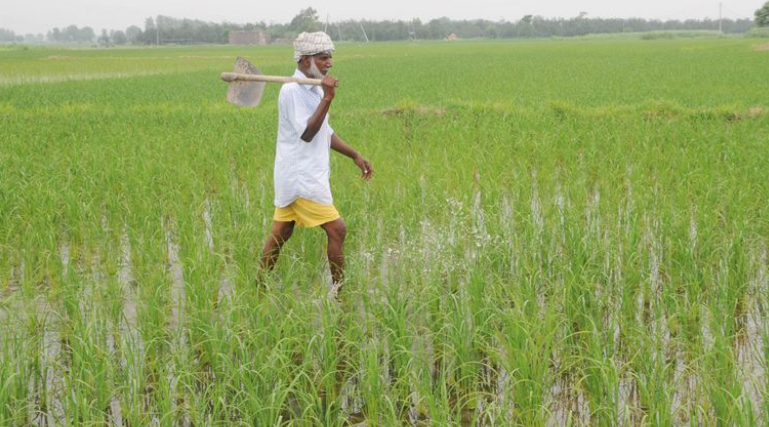
30 June 2026 Punjab Khabarnama Bureau : The Kisan Mazdoor Morcha (KMM) has issued a stern warning to the Punjab government, announcing a statewide ‘chakka jam’ if immediate steps are not taken to resolve the worsening power crisis that has been affecting farmers across the state. The farmers’ organization alleged that prolonged electricity outages during the crucial paddy cultivation season have disrupted agricultural operations and caused significant financial losses to cultivators.
Addressing a press conference, KMM leaders expressed deep concern over the frequent power cuts in rural Punjab. They claimed that despite repeated assurances from the state government, uninterrupted electricity supply remains a distant promise. According to the organization, farmers are struggling to irrigate their fields at a time when continuous water supply is essential for paddy transplantation.
The Kisan Mazdoor Morcha stated that if the situation does not improve in the coming days, it will organize a statewide ‘chakka jam’, blocking major highways and roads to draw attention to the issue. The organization emphasized that the proposed protest is intended to pressure the authorities into taking immediate corrective measures rather than creating inconvenience for the general public.
Farm leaders alleged that several villages have been receiving electricity for far fewer hours than officially promised. They argued that erratic power supply has forced farmers to operate diesel-powered generators, leading to a sharp increase in cultivation costs. Rising fuel prices have further aggravated the financial burden on small and marginal farmers.
The organization also accused the Punjab government and the state power utility of failing to manage electricity demand during the peak agricultural season. KMM leaders said the government should have anticipated the increase in power consumption and made adequate arrangements to ensure uninterrupted supply.
According to the farmer leaders, agriculture remains the backbone of Punjab’s economy, and any disruption in electricity supply directly impacts crop productivity. They warned that if timely irrigation is not ensured, paddy yields could decline significantly, ultimately affecting both farmers’ incomes and the state’s agricultural output.
The Kisan Mazdoor Morcha further claimed that the power crisis is not limited to agricultural consumers but has also affected rural households, small businesses, and educational institutions. Frequent outages, they said, have disrupted daily life and created hardships for people living in villages across the state.
The organization urged the Punjab government to immediately increase power availability, improve transmission infrastructure, and ensure that farmers receive the promised electricity supply without interruptions. It also demanded greater transparency regarding power distribution schedules so that cultivators can plan irrigation activities more effectively.
KMM leaders reiterated that peaceful democratic protests remain their preferred method of expressing public grievances. However, they warned that continued government inaction would leave farmers with no option but to intensify their agitation through statewide demonstrations, including the proposed ‘chakka jam’.
The announcement comes at a sensitive time, with Punjab witnessing high electricity demand due to soaring summer temperatures and increased agricultural activity. Experts have pointed out that peak demand often puts pressure on the state’s power infrastructure, resulting in scheduled and unscheduled outages in several districts.
Political observers believe the proposed protest could put additional pressure on the Punjab government, which has repeatedly assured farmers of uninterrupted electricity during the paddy season. Any large-scale road blockade could also affect transportation, trade, and daily commuting if negotiations between the government and farmer representatives fail.
Meanwhile, the Punjab government has maintained that it is making every possible effort to ensure adequate electricity supply across the state. Officials have stated that power demand has reached record levels in recent weeks, but measures are being taken to strengthen supply and minimize disruptions. Authorities have also appealed to consumers to use electricity judiciously during peak hours.
Farmer organizations, however, remain unconvinced by these assurances. They argue that repeated promises have not translated into improved ground-level conditions. Many cultivators claim they continue to face uncertainty regarding irrigation schedules, making it difficult to protect their crops during the critical transplantation period.
As tensions rise, all eyes are now on possible talks between the government and representatives of the Kisan Mazdoor Morcha. If a mutually acceptable solution is reached, the threatened ‘chakka jam’ could be avoided. However, if the power supply situation remains unchanged, Punjab may witness another major farmers’ protest in the coming days.
The unfolding developments highlight the continuing challenges of balancing rising electricity demand with agricultural needs in one of India’s leading farming states. The coming days will be crucial in determining whether dialogue prevails or the dispute escalates into a statewide agitation.