

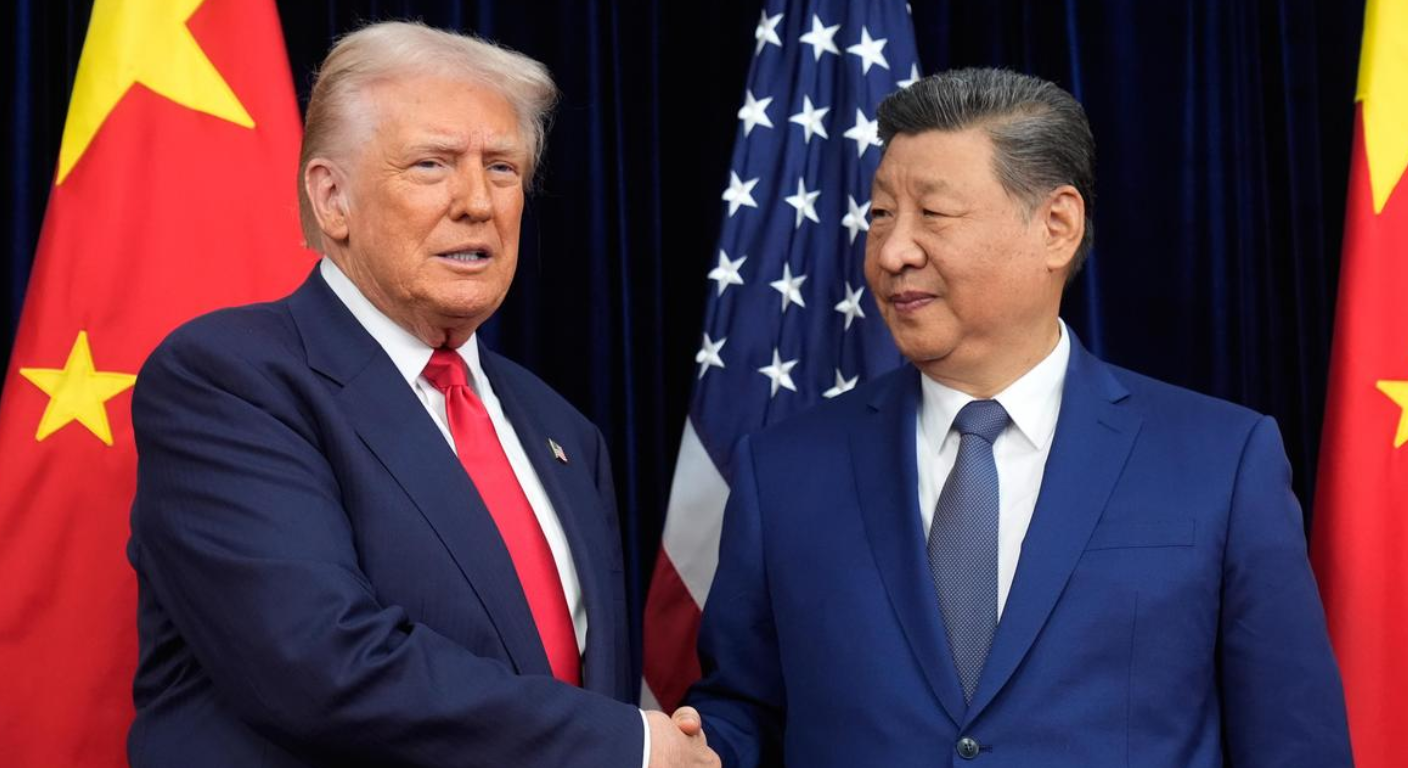
11 May 2026 Punjab Khabarnama Bureau : Donald Trump is reportedly seeking a major strategic understanding with China as leaders in Beijing closely assess what they view as signs of shifting American global influence and internal political uncertainty.
The evolving diplomatic dynamic comes amid heightened geopolitical competition, economic tensions, trade negotiations, and growing debate over the future balance of power between the world’s two largest economies.
Trump Signals Interest in Agreement
Reports suggest that Trump and his advisers are exploring possibilities for broader engagement with China on issues including:
- Trade and tariffs
- Technology access
- Supply chains
- Manufacturing investments
- Strategic stability
- Global economic coordination
The discussions are believed to reflect an effort to stabilize relations after years of friction between Washington and Beijing.
Trump has frequently emphasized his belief that direct negotiations and transactional diplomacy can produce better outcomes than prolonged confrontation.
China Watching U.S. Closely
At the same time, Chinese policymakers are reportedly studying political and economic developments inside the United States with growing interest.
Analysts say officials in Beijing are evaluating factors such as:
- Political polarization
- Rising national debt
- Economic uncertainty
- International conflicts
- Domestic social divisions
Some Chinese strategists reportedly interpret these developments as signs of relative American decline compared to China’s long-term ambitions.
Trade Remains Central Issue
Trade tensions continue to shape the relationship between the two countries.
During previous years, the U.S. and China imposed extensive tariffs on each other’s goods, disrupting global supply chains and affecting industries ranging from technology to agriculture.
While economic competition remains intense, both countries also remain deeply interconnected through trade and manufacturing networks.
Business groups in both nations have repeatedly urged leaders to avoid prolonged instability that could damage global economic growth.
Strategic Competition Continues
Despite interest in possible agreements, analysts caution that broader rivalry between the two powers remains unresolved.
Major areas of tension still include:
- Taiwan
- Semiconductor technology
- Military influence in the Indo-Pacific
- Cybersecurity
- Artificial intelligence
- Global alliances
Experts note that any potential deal would likely focus on managing competition rather than fully resolving strategic differences.
China’s Long-Term Calculations
Chinese leadership has increasingly emphasized long-term strategic planning, technological self-reliance, and expanding global influence through trade and infrastructure initiatives.
Observers say Beijing is carefully analyzing whether the United States can maintain its dominant global position amid internal political divisions and international pressures.
At the same time, Chinese officials remain cautious about economic slowdown risks within China itself, including:
- Property sector instability
- Youth unemployment concerns
- Slower industrial growth
- Trade disruptions
This creates incentives for both cooperation and competition simultaneously.
Global Markets Watching Closely
Financial markets and multinational corporations are monitoring developments closely because U.S.-China relations heavily influence:
- Global trade flows
- Energy markets
- Technology investment
- Manufacturing supply chains
- Currency stability
Even limited diplomatic progress between Washington and Beijing can affect investor confidence worldwide.
Trump’s Diplomatic Style
Donald Trump has long portrayed himself as a leader capable of securing large-scale international deals through direct negotiation.
Supporters argue that his willingness to engage personally with world leaders allows for unconventional diplomatic breakthroughs.
Critics, however, contend that transactional diplomacy can create unpredictability and may overlook deeper strategic concerns.
China-U.S. Relationship Remains Complex
The relationship between the United States and China is often described as one of simultaneous cooperation and rivalry.
The two nations rely heavily on each other economically while competing for technological, military, and geopolitical influence.
This dual reality makes negotiations particularly sensitive and complex.
International Implications
Any major shift in U.S.-China relations could have broad global consequences.
Countries across Asia, Europe, and the Middle East closely watch interactions between Washington and Beijing because:
- Trade policies affect exports and imports globally
- Security alliances may shift
- Financial markets react rapidly to tensions
- Supply chains depend on both economies
Diplomatic stability between the two powers is therefore viewed as critical for broader international stability.
Questions About Global Power Balance
The debate over American “decline” versus continued U.S. dominance remains highly contested among global analysts.
While some argue China is rising steadily relative to the United States, others point to ongoing American strengths including:
- Innovation leadership
- Military capabilities
- Financial influence
- Global alliances
- Higher education and technology sectors
Experts caution that geopolitical transitions are rarely straightforward and often unfold over decades.
Conclusion
Donald Trump’s reported interest in reaching a strategic understanding with China comes at a time when Beijing is carefully reassessing America’s political and economic trajectory.
While both sides remain locked in intense competition, the possibility of renewed negotiations reflects the reality that cooperation and rivalry continue to coexist in one of the world’s most important geopolitical relationships. The outcome of these interactions could significantly shape global economics and international politics in the years ahead.
Summary:
Donald Trump is reportedly pursuing broader engagement with China as Beijing evaluates America’s political and economic trajectory, highlighting the complex mix of rivalry, trade dependence, and strategic diplomacy.