

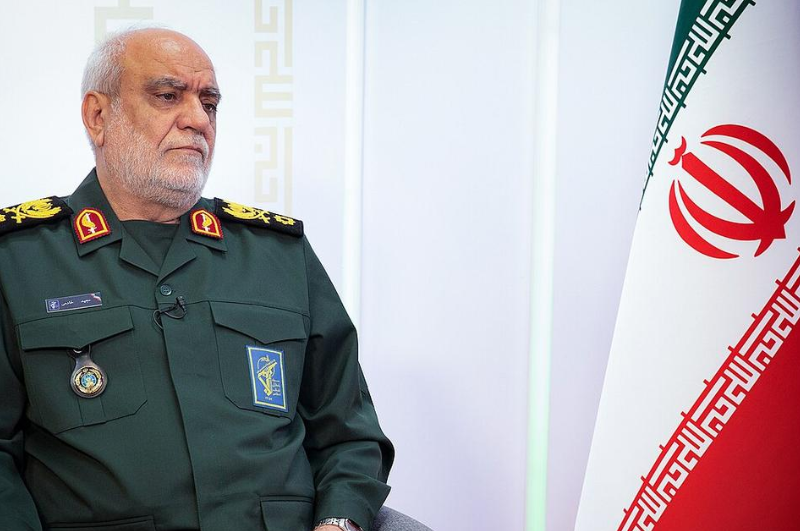
6 April 2026 Punjab Khabarnama Bureau : The ongoing conflict in West Asia escalated sharply after the intelligence chief of Iran’s elite military force was killed in a coordinated strike attributed to the United States and Israel. Iranian authorities confirmed that Major General Majid Khademi, head of intelligence for the Islamic Revolutionary Guard Corps (IRGC), was killed in the attack, marking one of the most significant high-level losses for Tehran in the current war.
According to statements released by the IRGC, Khademi was killed in what it described as a “targeted attack” carried out by what it called “American-Zionist forces.” The strike reportedly took place during a wave of air raids that hit multiple locations, including areas around the Iranian capital, Tehran.
Khademi was considered a key figure within Iran’s security and intelligence apparatus, having spent decades in strategic roles within the country’s military and intelligence community. His position as head of the IRGC intelligence organisation made him one of the most influential figures responsible for overseeing intelligence operations, both domestically and across the region.
The killing is being seen as a major escalation in the conflict, which has already seen sustained missile exchanges, airstrikes, and rising casualties on both sides. Analysts believe that targeting such a high-ranking official signals a shift toward more aggressive tactics aimed at weakening Iran’s command and control structure.
Reports indicate that the strike formed part of a broader campaign targeting senior Iranian leadership and infrastructure. The attack has intensified fears of further escalation, with the possibility of retaliatory actions by Iran looming large.
Iran has responded with strong rhetoric, warning of severe consequences and vowing retaliation. Officials have indicated that such attacks will not go unanswered and have hinted at a broader response that could involve both direct and indirect actions across the region.
The broader conflict between the U.S., Israel, and Iran has already disrupted regional stability and global markets. The Strait of Hormuz, a crucial oil transit route, remains a focal point of tension, with fears that any further escalation could severely impact global energy supplies.
Khademi’s death is particularly significant because of his role in coordinating intelligence and security operations. Experts say that losing such a figure could temporarily disrupt Iran’s strategic capabilities, although the country is expected to quickly appoint a successor to maintain continuity.
The strike also underscores the increasing use of targeted operations in modern warfare. By focusing on key individuals, military forces aim to weaken leadership structures and reduce the effectiveness of adversaries without engaging in full-scale ground conflicts.
At the same time, the move carries significant risks. Targeted killings of high-ranking officials can provoke strong retaliatory responses and escalate conflicts further. In this case, the already volatile situation in the Middle East could become even more unpredictable.
International reactions have been mixed, with several countries calling for restraint and urging all sides to avoid further escalation. Diplomatic efforts are reportedly ongoing, with mediators attempting to broker a ceasefire or at least reduce hostilities.
The economic impact of the conflict has also been significant. Oil prices have surged amid fears of prolonged disruption, while global markets remain sensitive to developments in the region. The killing of a senior Iranian official is likely to add to this uncertainty.
The humanitarian consequences of the conflict are also a growing concern. Continued airstrikes and missile exchanges have resulted in civilian casualties and damage to infrastructure, raising fears of a broader crisis if the situation deteriorates further.
Despite the escalation, there are indications that diplomatic channels remain open. Proposals for temporary ceasefires and negotiations have been discussed, though progress remains uncertain. The coming days will be crucial in determining whether the conflict intensifies or moves toward de-escalation.
The killing of Majid Khademi highlights the high stakes involved in the ongoing conflict and the willingness of both sides to take bold actions. It also reflects the complex nature of modern warfare, where intelligence, strategy, and precision strikes play a central role.
In conclusion, the death of Iran’s IRGC intelligence chief in U.S.-Israeli strikes marks a major turning point in the conflict. As tensions rise and the risk of retaliation grows, the situation remains highly volatile, with global implications for security, diplomacy, and economic stability.
Summary
IRGC intelligence chief Majid Khademi was killed in U.S.-Israeli strikes, escalating tensions with Iran, which has vowed retaliation, raising fears of wider conflict and global economic impact.