

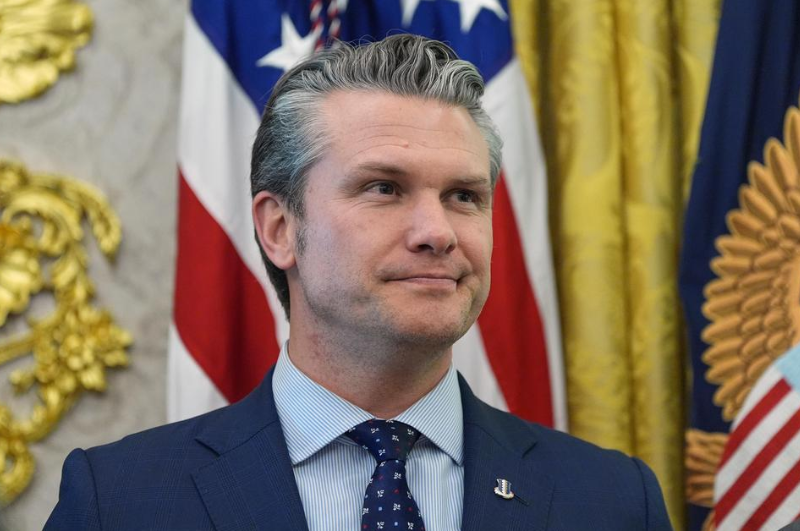
31 March 2026 Punjab Khabarnama Bureau : A fresh controversy has emerged in the United States amid the ongoing Iran–US conflict, after a report claimed that a broker linked to US Defence Secretary Pete Hegseth explored investing in a defence-related fund shortly before military action against Iran.
According to reports citing sources familiar with the matter, the broker—allegedly associated with Hegseth—approached financial institutions to discuss a potential multi-million-dollar investment in defence companies. The timing of this move, reportedly just weeks before a major US-Israel strike on Iran, has raised questions about possible conflicts of interest and the use of sensitive information.
The investment under discussion was linked to a defence-focused exchange-traded fund managed by major asset firms. The broker is said to have contacted institutions such as BlackRock through intermediaries, exploring the possibility of gaining exposure to companies that could benefit from rising geopolitical tensions.
However, the reported investment did not go through. Sources indicate that the fund in question was not yet accessible to certain clients at the time, effectively halting the transaction before it could be completed.
Despite the absence of a completed deal, the timing of the inquiry has sparked intense scrutiny. Financial activities that closely precede major geopolitical or military developments often draw attention from regulators and political observers, as they may indicate potential insider knowledge or ethical breaches.
The situation has been further complicated by strong denials from the Pentagon. Officials have categorically rejected the report, calling it “false” and “fabricated.” A spokesperson stated that neither Hegseth nor any representative acting on his behalf made such an investment inquiry, dismissing the allegations as misleading.
The Pentagon’s response reflects the seriousness of the accusations. Any suggestion that a senior defence official—or individuals linked to them—may have attempted to profit from advance knowledge of military actions could have significant legal and political consequences.
At the same time, the report has intensified broader concerns about the intersection of politics, finance, and national security. In recent years, there has been growing scrutiny of financial trades that appear to align closely with major policy decisions or geopolitical events. Such cases often raise questions about transparency, accountability, and the safeguarding of confidential information.
Experts note that even the perception of impropriety can be damaging. In high-stakes environments like defence and national security, maintaining public trust is crucial. Allegations involving financial activities tied to military decisions risk undermining confidence in government institutions.
The controversy also comes at a time of heightened global tension. The ongoing conflict involving Iran has already had far-reaching consequences, including rising oil prices, disrupted trade routes, and increased geopolitical instability. In such a context, any additional controversy involving senior officials can further complicate the situation.
Political reactions to the report have been mixed. Some critics have called for a thorough investigation to ensure transparency and rule out any wrongdoing. Others have urged caution, noting that the claims remain unverified and have been strongly denied by authorities.
The financial aspect of the story has also drawn attention to defence sector investments. Typically, defence stocks tend to gain during periods of conflict due to increased demand for military equipment and services. This makes them an attractive option for investors seeking to capitalize on geopolitical developments. However, this dynamic also increases the risk of ethical concerns when investment decisions coincide with policy actions.
In this case, analysts point out that the defence sector’s performance has not been uniformly positive during the current conflict. Market fluctuations, changing warfare strategies, and broader economic factors have influenced stock movements, making outcomes less predictable than in previous conflicts.
For Hegseth, the controversy adds to the challenges of managing a high-profile and sensitive role during a major international conflict. As Defence Secretary, his decisions and actions are subject to intense scrutiny, both domestically and globally.
The incident also highlights the importance of clear boundaries between public office and private financial interests. Regulations and ethical guidelines are designed to prevent conflicts of interest, but their effectiveness depends on strict enforcement and transparency.
Looking ahead, it remains to be seen whether the matter will lead to formal investigations or fade amid the larger geopolitical developments. Much will depend on whether additional evidence emerges and how authorities respond to the allegations.
In conclusion, the report about Pete Hegseth’s broker exploring a defence fund investment before the Iran attack has triggered a significant political and ethical debate. While the Pentagon has firmly denied the claims, the episode underscores the حساس nature of financial activities linked to national security decisions. As the situation unfolds, the focus will remain on transparency, accountability, and maintaining public trust during a time of global uncertainty.
Summary
Report claims Pete Hegseth’s broker explored defence investment before Iran strike, raising ethical concerns. Pentagon denies allegations, calling them false, as scrutiny grows over financial activities linked to military decisions.