

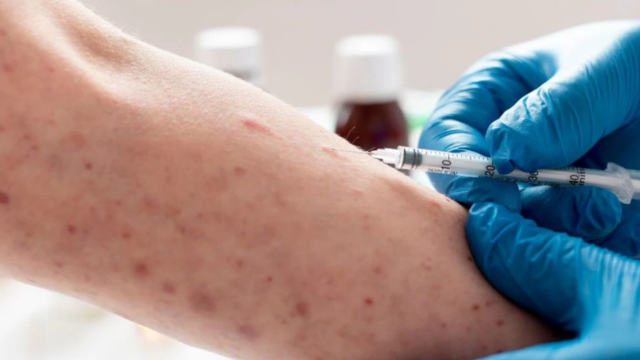
October 18, 2025 (Punjab Khabarnama Bureau) : Health officials in the United States have confirmed two new cases of Mpox (formerly known as monkeypox) with no history of international travel, raising concerns about potential local transmission of the virus. Both cases were identified in separate states, prompting the Centers for Disease Control and Prevention (CDC) to monitor the situation closely while reassuring the public that the overall risk remains low.
Mpox, caused by the mpox virus, is a viral zoonotic disease that spread globally in 2022, leading the World Health Organization (WHO) to declare a public health emergency. Since then, most countries, including the US, have contained large outbreaks through vaccination and awareness campaigns. However, sporadic cases continue to appear.
What We Know About the New Cases
According to preliminary CDC reports, both patients had no recent travel history or known exposure to infected individuals, indicating possible community transmission. Local health departments are conducting contact tracing to identify potential exposure sources and test those who may have been in contact with the patients.
Health officials stated that both individuals are in stable condition and are being isolated while receiving supportive care. Laboratory testing confirmed the infection as part of the Clade IIb strain, the same variant responsible for most cases during the 2022 outbreak.
While the emergence of non-travel-related cases is noteworthy, CDC experts emphasized that this does not suggest a widespread outbreak. Dr. Jennifer McQuiston, deputy director of the CDC’s Division of High-Consequence Pathogens and Pathology, said, “We are keeping a close eye on these cases. At this stage, there is no evidence of a large-scale community spread.”
How Mpox Spreads
Mpox primarily spreads through close physical contact with an infected person’s rash, scabs, or body fluids. It can also spread via respiratory droplets during prolonged face-to-face interaction or through contaminated materials such as bedding or towels.
Unlike highly contagious respiratory viruses like influenza or COVID-19, mpox transmission is slower and requires close contact. Health authorities have reassured the public that casual contact, such as being in the same room, poses minimal risk.
Symptoms of Mpox
According to the CDC and WHO, mpox symptoms usually appear within 6 to 13 days after exposure but can take up to 21 days. Early symptoms often resemble flu-like illness, followed by a characteristic rash.
Common symptoms include:
- Fever and chills
- Swollen lymph nodes
- Headache and muscle aches
- Fatigue
- Rash that starts as flat lesions, then turns into blisters or pustules before scabbing over
The rash can appear on the face, hands, genitals, or other parts of the body, and typically lasts for 2 to 4 weeks. Most people recover without complications, though severe cases can occur in immunocompromised individuals.
What the CDC Recommends
Following the new cases, the CDC reiterated its recommendations for healthcare providers and the public:
- Healthcare professionals should stay alert for patients presenting with unexplained rashes or symptoms consistent with mpox.
- Vaccination with the JYNNEOS vaccine remains effective in preventing infection or reducing severity. The vaccine is available for individuals at higher risk, such as those with multiple sexual partners or known exposure to confirmed cases.
- Good hygiene and avoiding close contact with symptomatic individuals are key preventive measures.
The CDC has not recommended any travel restrictions or broad public measures at this time.
A Reminder of Global Patterns
The two locally acquired cases mirror similar reports from other countries, including Spain, Canada, and the UK, where health agencies have observed isolated cases with no travel history. Epidemiologists say such cases are expected occasionally, as mpox has become endemic in some regions and can persist at low levels through human-to-human transmission.
Dr. Rosamund Lewis, WHO’s technical lead for mpox, explained, “We are not seeing the large-scale outbreaks of 2022, but sporadic cases remind us that the virus still exists and can re-emerge if surveillance weakens.”
Should Americans Be Worried?
Experts agree that the risk to the general US population remains low. The virus is not easily transmissible and outbreaks can usually be contained through quick identification, isolation, and vaccination of close contacts.
However, awareness remains essential. Individuals with flu-like symptoms followed by rash are advised to seek medical advice promptly. Early diagnosis and isolation can prevent further spread.
Preventive Measures
To minimize the risk of mpox infection, public health experts suggest:
- Avoiding close contact with people showing skin rashes or lesions
- Practicing safe sexual behaviors
- Washing hands frequently with soap and water
- Cleaning bedding, clothing, and surfaces that may be contaminated
Those at higher risk or with potential exposure should consider the JYNNEOS vaccine, available through public health departments.
Conclusion
The detection of two local Mpox cases without travel history underscores the need for continued vigilance but not alarm. US health authorities are equipped with testing tools, vaccines, and treatment protocols to manage isolated infections effectively.
For now, experts urge Americans to stay informed, recognize symptoms early, and maintain preventive habits—ensuring that Mpox remains a controlled and manageable health concern rather than a public threat.
Summary
The US reported two Mpox cases with no travel history, hinting at local transmission. Officials stress vigilance but confirm the infection risk remains low, emphasizing awareness and early prevention.