

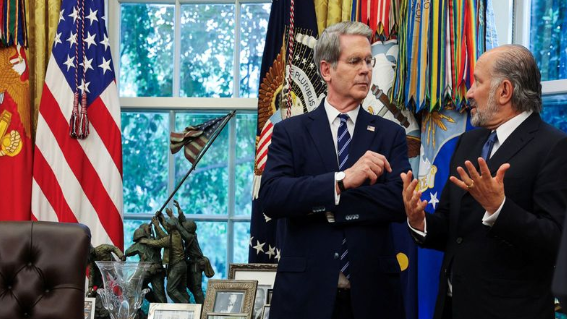
12 November 2026 Punjab Khabarnama Bureau : A disagreement has reportedly emerged within US President Donald Trump’s administration over national security concerns involving Nvidia’s advanced artificial intelligence (AI) chips and their possible diversion to China. US Treasury Secretary Scott Bessent confronted Commerce Secretary Howard Lutnick over his department’s reluctance to designate Singapore-based technology company Megaspeed as a potential national security threat.
According to reports by CNN and Axios published on November 11, 2026, the confrontation took place during a meeting in the White House Situation Room last week. Bessent questioned why the Commerce Department had not taken stronger action against Megaspeed despite concerns that the company may have helped transfer advanced American semiconductor technology to China.
The disagreement highlights growing differences among senior US officials over how Washington should handle China’s access to advanced American technology while maintaining broader economic and diplomatic relations with Beijing.
Bessent Questions Commerce Department’s Decision
During the meeting, Bessent reportedly pressed Lutnick to explain why Megaspeed had not been placed on the Commerce Department’s Entity List, which identifies foreign companies and organisations considered potential national security risks.
According to people familiar with the discussions, Treasury officials believe that the available intelligence and concerns surrounding Megaspeed justify restrictions on its access to American technology.
However, Lutnick did not immediately commit to taking specific action against the company. Reports indicated that he said he would look into the matter.
The issue has reportedly been under discussion among senior administration officials for several months. Officials from different departments have raised concerns about the possibility of advanced Nvidia chips reaching Chinese companies through third-party technology businesses.
Axios reported that President Donald Trump had approved efforts to crack down on suspected diversion of advanced Nvidia chips to China on multiple occasions. However, disagreements within the administration have delayed the implementation of certain restrictions.
The Commerce Department has denied that the reported confrontation between Bessent and Lutnick took place.
Why Megaspeed Has Come Under Scrutiny
Megaspeed is a Singapore-based cloud computing and data centre company that has emerged as a major buyer of Nvidia semiconductors in Asia.
The company was originally incorporated in 2015 as a Chinese video game developer under the name 7Road International. It later changed its business identity and became involved in purchasing advanced computing hardware.
According to CNN, Megaspeed has purchased more than $4 billion worth of Nvidia semiconductors, based on estimates cited in its report.
US authorities have reportedly been investigating suspicions that the company may have helped divert advanced American chips to China, potentially bypassing restrictions imposed by Washington.
The investigation has raised concerns because powerful AI chips can be used for applications involving military technology, intelligence gathering, advanced computing and cybersecurity.
Megaspeed, however, has denied allegations of wrongdoing and described itself as a compliant and legally operating company.
There has been no publicly established finding that the company deliberately violated US export regulations.
Connection With Nvidia CEO Jensen Huang
The controversy has received additional attention following reports about Nvidia CEO Jensen Huang’s alleged relationship with Alice Huang, a former executive associated with Megaspeed.
According to reports, US intelligence officials suspected Alice Huang of having connections with China’s Ministry of State Security. These concerns reportedly formed part of a classified intelligence assessment circulated among senior American officials.
Secretary of State Marco Rubio reportedly oversaw the preparation of a confidential memo detailing the intelligence concerns surrounding Alice Huang and her association with Jensen Huang.
The document also drew on surveillance information and an investigation into suspected semiconductor smuggling involving Megaspeed.
According to media reports, several senior officials, including Commerce Secretary Howard Lutnick, had received information about the matter months earlier.
The disclosures have raised questions about whether the US government adequately considered the potential national security implications associated with Megaspeed’s business activities.
Jensen Huang has acknowledged having an affair, while the intelligence allegations involving Alice Huang remain separate from any established finding of wrongdoing by the Nvidia chief.
Nvidia’s board has also initiated an investigation into the matter. The company has indicated that it has no reason to believe that Nvidia’s confidential information or national security interests were compromised.
What Is the US Entity List?
The US Commerce Department maintains an Entity List containing foreign individuals, companies and organisations considered to pose potential national security or foreign policy risks.
Companies placed on the list face restrictions on receiving certain American products, software and technologies.
US exporters generally need special licences to supply controlled items to entities included on the list. Such licences may be subject to strict conditions or denied altogether.
For companies dealing in advanced semiconductors, the restrictions can have major financial and operational consequences.
Washington has increasingly used export controls to prevent sensitive American technology from reaching Chinese military and strategic industries.
The possible addition of Megaspeed to the list would therefore represent a significant step in the ongoing effort to control the international distribution of advanced AI chips.
Growing Tensions Over US-China Technology Competition
The disagreement comes at a time when the United States and China are competing for leadership in artificial intelligence, semiconductor manufacturing and advanced computing.
Nvidia’s processors are widely used to develop and operate sophisticated AI systems. Their computing capabilities also make them strategically important for industries involving defence, research and data processing.
The US government has maintained restrictions on direct sales of certain advanced chips to China since 2022. However, concerns have continued over whether third-party companies and data centres in other countries could provide Chinese businesses with indirect access to restricted computing resources.
Singapore and other Southeast Asian countries have become important locations for data centre operations and international technology infrastructure.
American officials are concerned that weaknesses in export-control enforcement could allow restricted technology to reach organisations in China despite existing regulations.
At the same time, tighter restrictions could affect American technology companies and complicate Washington’s broader trade negotiations with Beijing.
Commerce Department Faces Pressure
The reported disagreement between Bessent and Lutnick highlights the challenges facing the Trump administration as it attempts to balance national security priorities with commercial interests.
The Treasury Department has reportedly supported stronger action against Megaspeed, while the Commerce Department has sought additional information before taking further steps.
The Commerce Department has not publicly confirmed that Megaspeed will be added to the Entity List.
The company has also rejected allegations of illegal activities, while Chinese authorities have described claims involving Alice Huang as unfounded speculation.
As scrutiny of Nvidia’s international business relationships increases, the issue could have wider implications for semiconductor exports, AI development and US-China relations.
For now, the central question remains whether Washington will impose additional restrictions on Megaspeed or continue investigating the allegations before making a formal decision.