

12 November 2026 Punjab Khabarnama Bureau : Indian billionaire and Zomato co-founder Deepinder Goyal has found himself at the centre of a debate involving medical experts over his latest wearable technology, Temple. Priced at approximately $900 (around ₹85,000), the device claims to monitor blood flow to the brain and provide insights into various aspects of human health. However, several doctors have questioned its scientific claims, accuracy and potential medical applications.
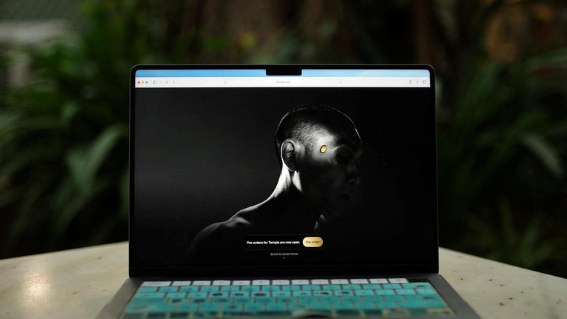
Temple is a small wearable device designed to be attached to the temple area of the head, between the forehead and the ear. It weighs less than two grams and is designed for continuous monitoring. According to the company, the device uses advanced sensor technology to collect information about the body’s physiological signals and provide users with insights into their health.
One of Temple’s key features is called BrainFlow, which reportedly measures changes associated with blood flow towards the brain. The company says this feature can help users understand how blood circulation to the brain changes under different conditions.
Another feature, called Entropy, is designed to measure the body’s ability to regulate temperature and maintain physiological balance. The company also promotes the device as a tool that can provide insights into several other bodily functions, including temperature regulation, immune activity, digestion and mental performance.
The device has attracted considerable attention because of its unusual approach to health monitoring. Unlike conventional smartwatches and fitness bands, which are generally worn on the wrist, Temple focuses on collecting signals from the side of the head.
However, its claims have triggered criticism from medical professionals who believe that more scientific evidence is required before such technology can be considered reliable.
Among the prominent critics is Indian hepatologist Dr Cyriac Abby Philips, popularly known as The Liver Doc. He has raised concerns about the scientific basis of the device’s claims and questioned whether its technology can accurately measure blood flow inside the brain.
Paediatrician and nephrologist Dr Sanjeev Bagai has also questioned the device’s claims and regulatory status. Medical experts have argued that consumers should be cautious about wearable technologies that make claims related to important physiological functions without sufficient independent clinical evidence.
A major point of disagreement concerns the technology used by Temple. The device reportedly relies on photoplethysmography (PPG), an optical sensing technique commonly used in smartwatches and other health-monitoring products.
PPG works by directing light towards the skin and measuring changes in light absorption caused by variations in blood volume. This information can be used to estimate certain physiological measurements, such as heart rate and changes in peripheral blood circulation.
However, doctors have questioned whether readings collected from the skin around the temple can accurately represent blood flow inside the brain. They argue that signals from superficial blood vessels may differ from those associated with cerebral circulation.
Measuring blood flow to the brain is a complex medical process that generally requires specialised equipment and validated techniques. Therefore, experts believe that the accuracy of Temple’s BrainFlow measurements needs to be established through independent scientific studies.
Responding to the criticism, Deepinder Goyal has maintained that Temple is not being marketed as a medical device. According to him, it is a fitness and wellness wearable designed to help individuals understand their bodies through continuous monitoring.
Goyal has defended the company’s technological approach and indicated that further research will help establish the usefulness of its measurements. The company has also maintained that BrainFlow and Entropy are emerging health metrics supported by ongoing scientific exploration.
Temple’s positioning as a wellness product is particularly important in the ongoing debate. Medical devices intended for diagnosing or treating health conditions are subject to different regulatory requirements compared with consumer fitness products. The distinction has become a central issue in discussions surrounding the device.
The wearable has also attracted attention because of its high price and association with prominent personalities. Indian cricket captain Shubman Gill and Olympic medallist badminton player PV Sindhu have reportedly been seen with the device, increasing public interest in the technology.
According to reports, Temple has also received significant business interest internationally. The company reportedly raised $54 million in funding in February, with a valuation of approximately $190 million. Goyal has stated that the company received orders from more than 62 countries between November 1 and the time of his announcement.
The project represents a major shift in Goyal’s professional focus. Earlier this year, he stepped down as chief executive officer of Eternal, the parent company of Zomato, to concentrate on developing Temple and its underlying technology.
The controversy highlights a wider challenge facing the rapidly expanding wearable technology industry. Companies are increasingly introducing products that promise to monitor different aspects of human health, from sleep quality and heart rate to stress levels and brain-related activity.
While these technologies can provide useful information, experts say that consumers must understand the difference between wellness tracking and medically validated measurements. A wearable device should not be treated as a substitute for professional medical examinations or clinical advice.
The debate surrounding Temple is likely to continue as researchers, doctors and technology developers examine the scientific validity of its claims. Independent testing, transparent research and peer-reviewed studies will be important in determining how accurately the device can measure the physiological indicators it promotes.
For now, Temple has emerged as an example of the growing intersection between technology, healthcare and entrepreneurship, while also raising important questions about scientific evidence, consumer awareness and accountability in the wearable health industry.