

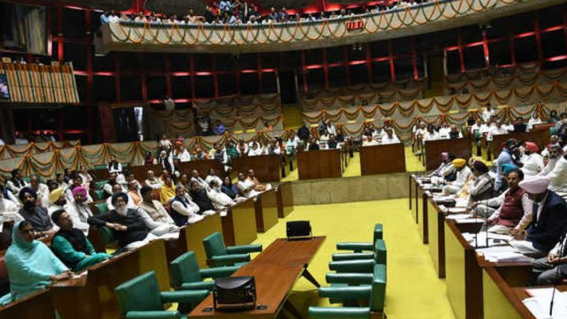
22 October 2026 Punjab Khabarnama Bureau : Political tensions are expected to rise in Punjab as the six-day Assembly session brings the ruling Aam Aadmi Party (AAP) government and opposition parties face-to-face over several key issues. The session, scheduled from October 22 to October 27, is expected to focus on drug trafficking, law and order, corruption allegations, farmers’ concerns, and matters concerning the state’s rights.
Chief Minister Bhagwant Mann’s government is likely to face questions from opposition parties over its performance on important public issues. Meanwhile, the ruling party is expected to defend its policies and highlight its actions against drug traffickers while raising concerns over the Centre’s role in matters affecting Punjab.
Drug Problem Likely to Dominate Assembly Proceedings
The drug problem in Punjab is expected to be one of the most prominent issues during the Assembly session. Opposition parties, including the Congress, have repeatedly questioned the government’s efforts to tackle drug trafficking and prevent the spread of substance abuse across the state.
The opposition is likely to demand answers from the Mann government regarding the effectiveness of its anti-drug campaign, the action taken against drug traffickers, and the steps being implemented to protect young people from addiction.
The AAP government, on the other hand, is expected to defend its anti-drug measures and highlight police action against those allegedly involved in the illegal drug trade.
The debate could also extend to the responsibilities of the state and central governments in addressing the problem. The proceedings will be closely watched to see whether the government announces additional measures or provides details about its ongoing campaign.
Parvinder Singh Jhota Case May Become a Major Flashpoint
The killing of Parvinder Singh Jhota, known for raising his voice against drugs, may also feature prominently in the Assembly discussions. The incident has intensified political debate over drug trafficking, public safety, and the protection of people who speak out against illegal activities.
Congress leaders, including Leader of Opposition Partap Singh Bajwa, have raised questions about the government’s handling of the situation and are expected to demand accountability.
The opposition may question whether sufficient measures have been taken to protect people opposing the drug trade and whether the authorities have acted effectively in investigating the case.
The government is likely to face demands for clarity regarding the investigation and action against those responsible. However, the details of the case and the findings of the investigation will be important in determining the course of further proceedings.
Law and Order and Corruption Allegations Under Scrutiny
Law and order is another issue that could lead to heated exchanges between the ruling party and opposition members. Opposition leaders may raise concerns about criminal activities, gangster-related incidents, and the safety of ordinary citizens.
The government could be asked to explain the measures taken to control crime and strengthen policing across Punjab.
Corruption allegations may also feature in the debate. The opposition could raise questions regarding matters involving government officials and allegations connected with Chief Minister Bhagwant Mann’s Officer on Special Duty, Rajbir Ghuman.
Any discussion of such allegations will require the government to clarify its position, while the relevant investigative findings and verified facts will remain important in establishing the details of individual cases.
With several politically sensitive issues expected to come up, the Assembly session could witness sharp exchanges and demands for answers from both sides.
AAP May Raise Punjab’s Rights and the Centre’s Role
While opposition parties prepare to target the state government, the AAP leadership is also expected to highlight issues involving the Centre and Punjab’s interests.
Matters related to river-water rights, dam safety legislation, and farmers’ concerns could feature in discussions during the session.
The state government has frequently raised questions about Punjab’s rights and the Centre’s approach to issues affecting the state. These subjects could provide the ruling party with an opportunity to challenge opposition parties to clarify their positions on matters of regional importance.
Farmers’ demands and agricultural concerns may also attract attention, given the importance of agriculture to Punjab’s economy. Any discussion on these matters could involve demands for policy support, protection of farmers’ interests, and a clearer approach to outstanding disputes.
The extent to which these issues are discussed will depend on the Assembly’s agenda, the proposals introduced, and the demands made by members during the proceedings.
Possible Welfare Measures and Legislative Proposals
Apart from political confrontations, the session may also draw attention to possible welfare announcements and legislative proposals.
There has been speculation about additional relief measures for women, although the details, eligibility conditions, and implementation timeline would need to be confirmed through an official announcement.
The Assembly may also consider proposals relating to state administration, development, and other public-interest matters.
The session will therefore be significant not only for the political exchanges between the government and opposition but also for the legislative business undertaken during the six days.
Who Will Have the Upper Hand in the Six-Day Session?
The upcoming Punjab Assembly session presents an important political test for both the AAP government and the opposition.
The opposition is likely to focus on drug trafficking, law and order, and corruption allegations to question the government’s record and demand accountability. The ruling party, meanwhile, will seek to defend its policies, highlight its achievements, and raise issues concerning Punjab’s relationship with the Centre.
The effectiveness of each side will depend on the strength of its arguments, the evidence presented, and the government’s responses to questions raised in the House.
As proceedings continue, attention will also be on whether the session produces concrete legislative outcomes, new policy announcements, or resolutions concerning the state’s major concerns.