

13 October 2026 Punjab Khabarnama Bureau : India has called for terrorist acts that meet the required legal threshold to be recognised within the framework of crimes against humanity, urging the United Nations to ensure that atrocities committed by terrorist groups are appropriately addressed under a proposed international convention.
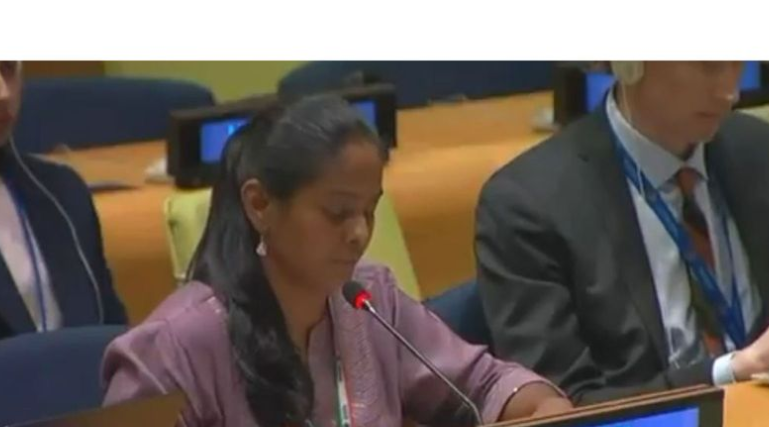
The Indian position was presented by R. Mythili, a counsellor at India’s UN Mission, during a meeting of the United Nations General Assembly’s Sixth Committee on October 12, 2026. The discussions form part of the international process to develop a convention on the prevention and punishment of crimes against humanity, with a conference scheduled for 2028.
India Calls for Terrorist Atrocities to Be Included
India argued that the grave nature of terrorist acts and their impact on individuals and communities warrant appropriate consideration in the proposed international legal framework.
Mythili said that terrorist crimes meeting the requisite threshold should be reflected within the framework of crimes against humanity. She also emphasised that the approach must remain consistent with the overall structure of the proposed convention rather than simply transferring existing legal regimes into a new agreement.
The intervention highlights India’s position that the international community should ensure accountability for serious terrorist atrocities while developing a legally coherent framework that can be accepted by participating countries.
India has repeatedly called for terrorism to be condemned without distinctions based on the perpetrators’ stated motivations. It maintains that deliberately targeting civilians cannot be justified under any circumstances.
Why the Legal Threshold Matters
Crimes against humanity are a distinct category of international crimes. Under the framework established by the Rome Statute of the International Criminal Court, such crimes include acts such as murder, extermination, enslavement, deportation, torture and persecution when committed as part of a widespread or systematic attack directed against a civilian population, with knowledge of the attack.
Consequently, an act of terrorism does not automatically qualify as a crime against humanity. Whether particular conduct meets the legal requirements depends on the circumstances, the nature of the acts and the applicable legal framework.
India’s proposal calls for terrorist atrocities that satisfy the necessary threshold to be appropriately reflected in the proposed convention. This would require careful consideration of how the treaty defines the relevant crimes and how its provisions interact with existing international law.
The distinction is important because international criminal law contains different categories of offences, each with its own legal requirements. Clear definitions can help countries investigate and prosecute serious crimes while ensuring that the rights of accused persons are respected.
UN Convention on Crimes Against Humanity
The United Nations is working towards a legally binding international convention focused on preventing and punishing crimes against humanity. The initiative is intended to strengthen international cooperation and establish a clearer framework for addressing such crimes.
The General Assembly’s Sixth Committee, which deals with legal matters, is central to the negotiations. Its discussions involve questions about the definition of crimes, the obligations of states, jurisdiction and the relationship between national legal systems and international law.
India has participated in these deliberations and has previously called for terrorist acts and the use of nuclear weapons to be considered in discussions on crimes against humanity. In its October 2024 statement to the committee, India argued that terror-related acts meeting the relevant criteria should be included in the definition.
The latest intervention continues that position while stressing that terrorism-related provisions must fit within the proposed convention’s overall legal structure.
India’s Broader Position on Terrorism
India has consistently described terrorism, including cross-border terrorism, as a serious threat to international peace, security, human rights and democratic institutions.
During a separate address to the Sixth Committee on October 6, 2026, Indian MP Biplab Kumar Deb highlighted the right to life and the need to hold perpetrators, organisers, financiers and sponsors accountable. He also referred to the April 2025 Pahalgam terror attack as an example of the human cost of terrorist violence.
India has also advocated progress towards a Comprehensive Convention on International Terrorism, an initiative intended to strengthen the international legal response to terrorist activities.
However, negotiations over a universally accepted definition of terrorism have remained challenging. Countries have differing views on the scope of the term, the treatment of particular forms of violence and the relationship between counterterrorism measures and existing international legal obligations.
The proposed crimes-against-humanity convention presents a separate but related opportunity to address the most serious atrocities through a clearly defined legal framework.
Balancing Accountability With International Law
India’s intervention also raises broader questions about how international law should respond to mass atrocities committed by terrorist organisations.
Any new convention would need to establish clear definitions and jurisdictional rules while respecting due process and the legal responsibilities of individual states. Effective accountability depends not only on identifying serious crimes but also on ensuring that investigations and prosecutions comply with established legal standards.
For countries negotiating the convention, the challenge will be to develop provisions that address grave crimes without creating unnecessary conflicts with existing international agreements.
India has previously argued that national sovereignty and the role of domestic judicial systems must receive due consideration in the proposed treaty. Its position also emphasises that a new convention should not simply reproduce provisions from other legal frameworks without examining whether they are appropriate for its purpose.
What Happens Next?
The discussions will continue as UN member states work towards the planned international conference on crimes against humanity in 2028. India’s proposal is part of the broader debate over the convention’s scope, definitions and enforcement mechanisms.
Whether terrorist acts will be expressly addressed in the final text will depend on negotiations among member states and the wording ultimately agreed upon.
India’s latest intervention underscores its push for international recognition of terrorist atrocities that satisfy the legal criteria for crimes against humanity. The outcome of the negotiations could influence how countries cooperate in preventing, investigating and punishing some of the gravest crimes under international law.