

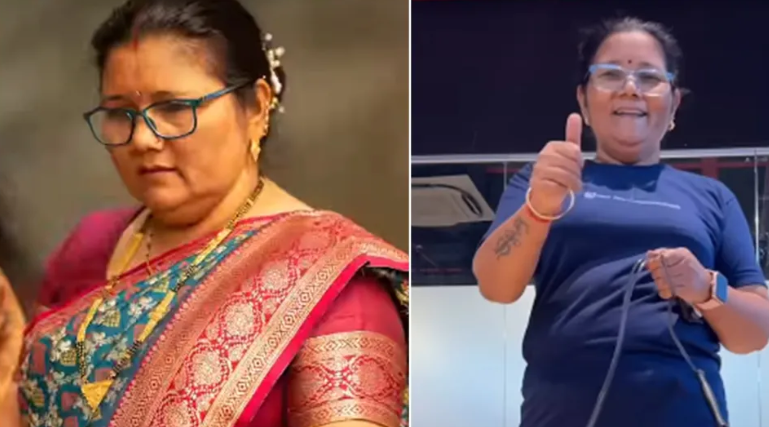
4 September 2026 Punjab Khabarnama Bureau : At 61, Kalavati Thakur, popularly known online as “Barbell Aunty,” has become an inspiration for people looking to improve their fitness later in life. The fitness enthusiast reportedly lost 18 kg in one year, while also improving her prediabetic condition and experiencing relief from severe knee pain.
Her transformation has drawn attention because it challenges the idea that major improvements in strength, fitness and metabolic health are possible only at a younger age.
Who Is ‘Barbell Aunty’?
Kalavati Thakur is a 61-year-old fitness enthusiast who shares her exercise and fitness journey online.
Her transformation was highlighted through a social media post describing how she lost 18 kg over a year and improved her prediabetic status. She has since gained attention as “Barbell Aunty.”
18 Kg Weight Loss in a Year
According to the account shared online, Thakur lost 18 kg over 12 months while working on her fitness.
The transformation involved a sustained focus on exercise and lifestyle changes rather than viewing age as a barrier to becoming physically stronger.
Her story has particularly resonated with people who may assume that weight loss and strength training become increasingly difficult after 60.
Prediabetes Also Improved
One of the most notable claims surrounding Thakur’s transformation is that her prediabetic condition improved alongside her weight loss and fitness routine.
However, individual experiences should not be interpreted as evidence that strength training or weight loss will automatically reverse prediabetes for everyone.
Prediabetes management generally depends on factors including diet, physical activity, body weight, genetics and overall health, and people should discuss their blood-sugar levels with a healthcare professional.
Severe Knee Pain Reportedly Improved
The social media post also claimed that Thakur got rid of severe knee pain during her transformation.
This is another area where individual outcomes can vary. Strengthening muscles around the joints can support mobility and function for some people, but persistent or severe knee pain should be evaluated by a medical professional before starting an intensive exercise programme.
Why Strength Training Matters After 60
Strength training becomes increasingly important with age because adults naturally tend to lose muscle mass and strength over time.
Resistance exercises can help older adults maintain muscle, improve functional strength and support everyday activities such as climbing stairs, carrying groceries and getting up from a chair.
For beginners, however, exercises should be introduced gradually and adapted to individual fitness levels.
Age Does Not Have to Mean Inactivity
Thakur’s story highlights an important principle: getting older does not automatically mean becoming inactive.
Older adults can benefit from appropriately designed combinations of strength training, aerobic activity, mobility work and balanced nutrition.
The intensity and type of exercise should depend on a person’s existing fitness, injuries, medical conditions and experience.
A Reminder About Sustainable Weight Loss
Losing 18 kg in a year represents a substantial change, but the broader lesson is consistency rather than a quick-fix approach.
Sustainable weight management generally involves long-term changes in eating habits, physical activity, sleep and other lifestyle factors.
Extreme diets or aggressive exercise programmes are not necessary for everyone and may not be appropriate for older adults.
What Older Adults Should Keep in Mind
Anyone beginning strength training later in life can start with manageable resistance and focus on correct technique.
Useful steps include:
- Starting gradually rather than exercising intensely from day one.
- Allowing adequate recovery between challenging sessions.
- Combining resistance exercise with regular walking or other aerobic activity.
- Prioritising adequate protein and a balanced diet.
- Getting professional guidance when dealing with significant pain or medical conditions.
- Tracking health markers such as blood glucose when advised by a doctor.
An Inspiring Fitness Message
The “Barbell Aunty” story has attracted attention because it presents fitness as something that can continue to evolve throughout adulthood.
Her reported transformation demonstrates what a sustained commitment to exercise and lifestyle changes can look like at 61, while also highlighting the importance of approaching health claims on an individual basis.
The Bigger Picture
Thakur’s journey is ultimately less about a particular number on the weighing scale and more about maintaining strength, mobility and independence with age.
Her experience can serve as motivation for older adults to explore appropriate physical activity, while remembering that fitness programmes should be tailored to individual health needs.