

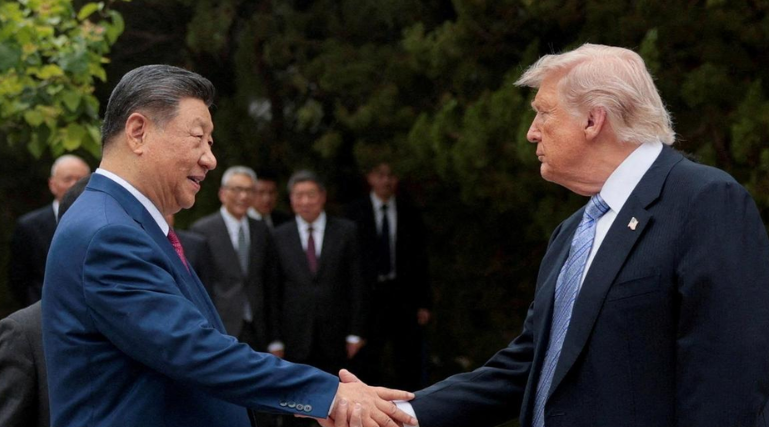
25 Aug 2026 Punjab Khabarnama Bureau : U.S. President Donald Trump is moving toward imposing a new tariff on Chinese goods, with his administration accusing China of flooding global markets with underpriced products. The proposed measure is being considered as Washington seeks to address concerns over China’s excess industrial capacity while avoiding a major disruption to the fragile U.S.-China trade truce.
New 7.5% Tariff Under Consideration
According to people familiar with the internal discussions, the Trump administration is considering a 7.5% additional tariff on Chinese imports.
Officials are reportedly viewing that level as low enough to avoid jeopardising the one-year trade truce between Washington and Beijing or a planned meeting between Trump and Chinese President Xi Jinping later this year. The proposal has not yet been finalised.
China Accused of Excess Production
The proposed tariff is linked to U.S. concerns over Chinese industrial overcapacity.
Washington argues that heavy Chinese investment and production in sectors such as automobiles, steel and solar products can result in excess goods being sold overseas at very low prices, putting pressure on manufacturers in other countries.
China has rejected accusations of overcapacity and has called for trade disputes to be addressed through dialogue.
Tariff Would Come on Top of Existing Duties
The proposed measure would add to tariffs already imposed on Chinese products.
The U.S. imposed new 10% and 12.5% tariffs on goods from China and dozens of other economies in July over allegations involving trade in products made with forced labour.
The administration is therefore trying to balance additional pressure on Beijing with the need to avoid an uncontrolled escalation in the wider trade relationship.
Trade Truce Complicates Trump’s Move
The potential tariff comes at a sensitive point in U.S.-China relations.
Washington and Beijing have been operating under a fragile trade truce, while Trump and Xi are expected to hold another high-level meeting later this year.
A larger tariff could risk disrupting negotiations, which is reportedly one reason officials are considering a more limited 7.5% duty rather than a much broader increase.
China’s Record Trade Surplus in Focus
The debate over Chinese exports has intensified as China’s trade surplus reached a record $1.2 trillion last year, according to the Associated Press report.
U.S. officials argue that China’s export-heavy economic model is contributing to global trade imbalances and putting pressure on industries outside China.
Solar and Semiconductor Sectors Already Targeted
The proposed China tariff comes alongside other U.S. measures aimed at competing with China’s industrial strength.
Earlier this month, the Trump administration imposed a 15% tariff on products made from polysilicon, along with price floors, targeting a material widely used in solar panels and semiconductors and primarily produced by China.
The measures are part of a broader U.S. effort to strengthen domestic supply chains in strategic industries.
Why the Move Matters
A new tariff could have consequences beyond the U.S. and China.
If Chinese manufacturers face higher barriers in the American market, they could redirect more exports towards Europe, Asia and other regions. That could intensify competition for manufacturers in those markets.
Higher tariffs could also raise costs for U.S. importers and businesses that depend on Chinese components and finished products.
What Happens Next?
The proposed 7.5% tariff is still under consideration and could change before any formal announcement.
Markets and businesses will be watching for details on which Chinese products would be covered, how the additional duty would interact with existing tariffs and whether Beijing would respond with countermeasures.
U.S.-China Trade Tensions Continue
Trump’s latest move highlights the continuing tension between Washington and Beijing despite efforts to stabilise their economic relationship.
The proposed tariff represents a more targeted approach to China’s export strength, but it also shows that concerns over industrial overcapacity remain a major obstacle in the broader U.S.-China trade relationship.