

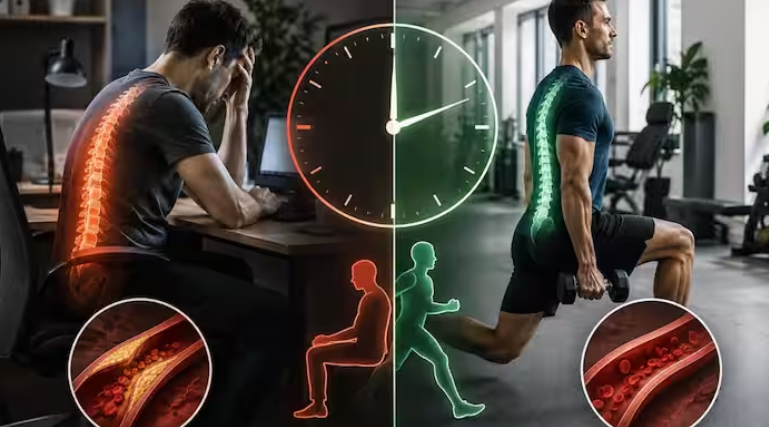
18 Aug 2026 Punjab Khabarnama Bureau : Spending most of the day sitting can affect heart health even if you exercise regularly. Cardiologists say a long workout can provide important health benefits, but it cannot completely erase the effects of prolonged sedentary behaviour.
Exercise Helps, But Sitting Is a Separate Risk
Regular physical activity improves cardiovascular fitness, blood pressure, insulin sensitivity and overall health. However, exercising for a short period and then remaining seated for many hours is not the same as being active throughout the day.
As Johns Hopkins cardiologist Michael Blaha explains, people need both exercise and regular movement, rather than relying on one workout to compensate for prolonged sitting.
What Happens When You Sit for Too Long?
Extended sitting reduces muscle activity and can slow blood circulation. It can also affect glucose metabolism and insulin sensitivity, while prolonged inactivity is associated with several cardiometabolic risk factors.
The concern becomes particularly significant when sedentary time accumulates over many hours every day.
The 10.6-Hour Warning Sign
A large study involving nearly 90,000 UK Biobank participants found that spending more than about 10.6 hours a day sitting, reclining or lying down was associated with higher risks of heart failure and cardiovascular death.
Importantly, the increased risk was still observed among people who met recommended weekly exercise levels.
So, Can 2 Hours of Exercise Help?
Yes—but it should not be viewed as a complete reset.
Two hours of exercise can contribute significantly to weekly physical-activity targets and improve fitness. But if the remaining days involve prolonged sitting for much of the waking day, the benefits may not fully offset the risks associated with excessive sedentary behaviour.
The better strategy is to combine structured exercise with frequent movement breaks.
Break Up Long Periods of Sitting
Experts recommend getting up regularly instead of remaining seated for several hours at a stretch.
Simple habits can include:
- Walking for a few minutes every 30 minutes.
- Taking short walks after meals.
- Standing during phone calls.
- Using stairs when practical.
- Having walking meetings.
- Adding short movement or stretching breaks during desk work.
Weekend Exercise Still Matters
If someone cannot exercise every day, longer workouts on weekends can still be useful. Research supports the value of accumulating sufficient moderate-to-vigorous physical activity even when it is concentrated into fewer days.
But being a “weekend warrior” should ideally be combined with reducing prolonged sitting during the rest of the week.
The Bottom Line
A two-hour workout is far better than no exercise, but it should not be considered a licence to sit continuously for the rest of the week.
For better heart health, aim for regular exercise plus regular movement throughout the day. The goal is not simply to exercise more—it is also to sit less.