

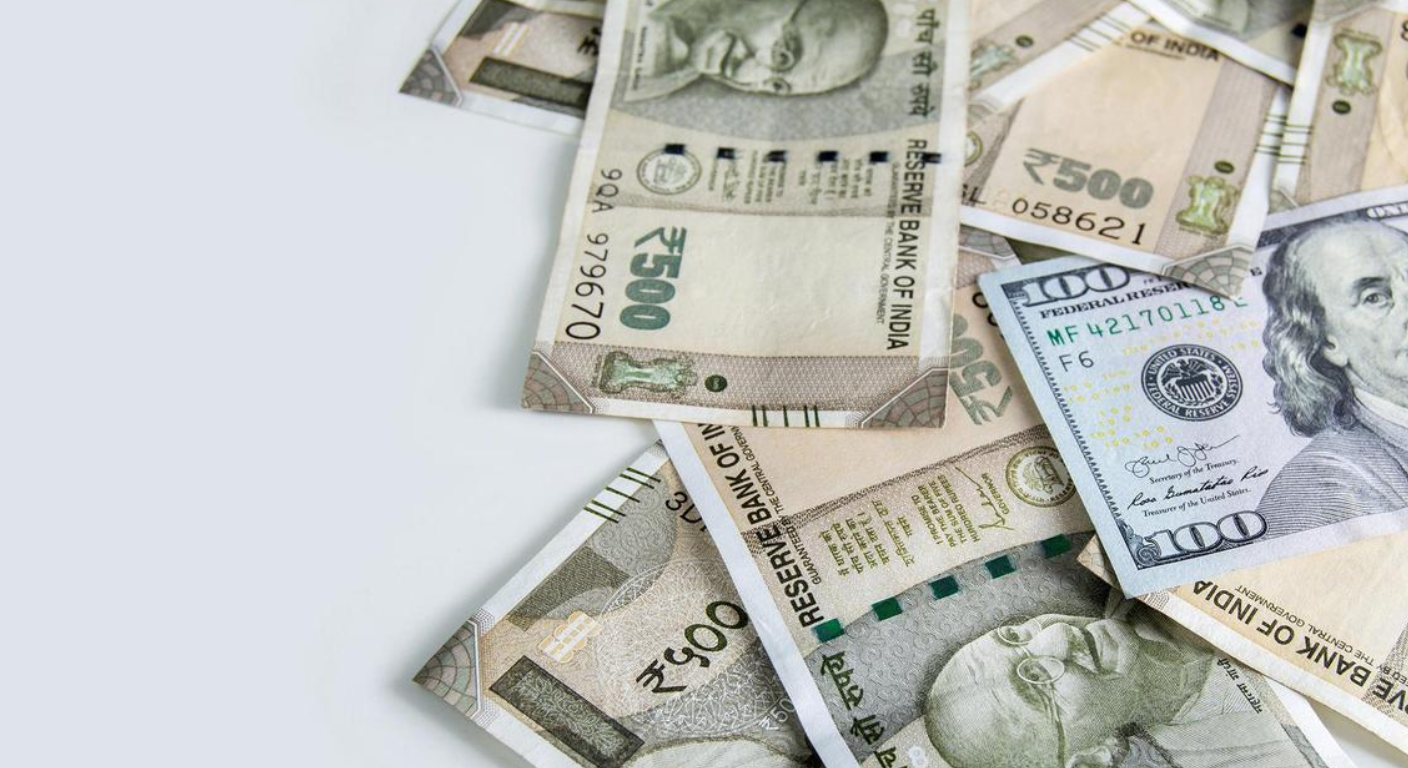
20 May 2026 Punjab Khabarnama Bureau : The Indian rupee weakened sharply in early trade on Monday, falling to a record low of 96.90 against the US dollar amid rising global uncertainty, surging crude oil prices, and sustained demand for the अमेरिकी currency in international markets.
Currency traders said the rupee came under intense pressure following escalating geopolitical tensions in the Middle East, which triggered concerns over global energy supplies and increased risk aversion among investors. The sharp decline in the domestic currency reflected broader weakness across emerging market currencies as the dollar strengthened globally.
According to forex market participants, the rupee opened significantly weaker and quickly touched the historic 96.90 mark during early trading sessions. Analysts attributed the decline to multiple external factors including rising crude oil prices, foreign capital outflows, and growing fears surrounding global economic instability.
One of the biggest reasons behind the rupee’s weakness has been the recent surge in international crude oil prices. India imports a large portion of its crude oil requirements, making the domestic currency highly sensitive to fluctuations in global energy markets. Rising oil prices increase the country’s import bill and create additional demand for dollars, placing pressure on the rupee.
The latest fall in the currency came amid escalating tensions involving Iran and the United States, which have raised fears of disruptions in oil supply routes, particularly through the strategically important Strait of Hormuz. Financial markets globally reacted cautiously as geopolitical uncertainty intensified.
Forex experts said strong demand for the US dollar from importers and oil marketing companies also contributed to the rupee’s sharp fall. Importers generally purchase dollars aggressively when crude prices rise, increasing pressure on domestic currency markets.
At the same time, foreign institutional investor outflows from Indian equity markets further weakened sentiment. Investors often move capital toward safer assets such as the US dollar during periods of global uncertainty, resulting in pressure on emerging market currencies including the rupee.
The strengthening of the US dollar index globally also played a major role in the rupee’s depreciation. Expectations surrounding US monetary policy, global bond yields, and safe-haven demand have supported the dollar against several major international currencies in recent sessions.
Market participants noted that the Reserve Bank of India may closely monitor currency volatility and intervene if required to prevent excessive fluctuations. The RBI has historically stepped into forex markets during periods of sharp rupee depreciation to maintain orderly trading conditions and stabilize investor sentiment.
Economists warned that a weaker rupee could increase imported inflation in India, especially if crude oil prices remain elevated for an extended period. Higher import costs can impact fuel prices, transportation expenses, and manufacturing input costs, potentially affecting consumers and businesses alike.
However, some sectors may benefit from rupee depreciation. Export-oriented industries such as information technology, pharmaceuticals, textiles, and certain manufacturing segments could gain due to improved competitiveness and higher earnings from overseas markets when converted into rupees.
Financial analysts stated that short-term currency movement will largely depend on geopolitical developments, global crude oil trends, foreign investment flows, and central bank actions worldwide. Continued uncertainty in international markets could keep the rupee under pressure in coming days.
Banking experts also observed that currency volatility may influence investor sentiment in stock markets, bond markets, and trade-related sectors. Companies with high import dependence may face increased operational costs if the rupee remains weak for a prolonged period.
Meanwhile, importers and businesses exposed to foreign exchange risks are expected to closely monitor the situation and increase hedging activity to protect themselves against further currency fluctuations.
The rupee’s fall to a record low has once again highlighted India’s vulnerability to external economic shocks, particularly those linked to energy prices and global geopolitical developments. Analysts noted that maintaining strong foreign exchange reserves and stable macroeconomic fundamentals will remain important for managing such pressures.
Government officials and financial authorities are likely to continue assessing global developments and market conditions carefully. Economists believe coordinated policy responses and stable investor confidence will be critical in limiting the long-term impact of currency depreciation.
Despite the sharp fall, experts pointed out that currency markets often witness temporary volatility during periods of international uncertainty. Much will depend on whether geopolitical tensions ease and whether crude oil prices stabilize in the near future.
For now, traders and investors remain focused on upcoming global economic developments, oil price movement, and signals from major central banks as the rupee navigates one of its most challenging phases in recent years.