

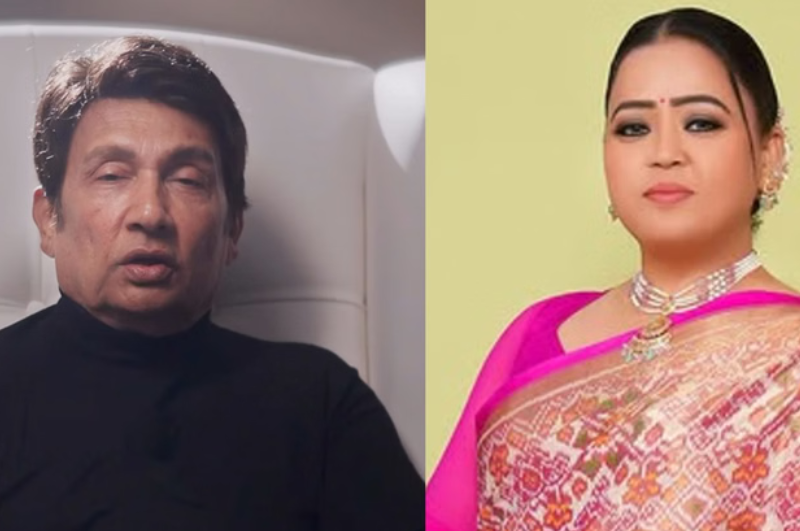
1 May 2026 Punjab Khabarnama Bureau : In a significant ruling reinforcing the boundaries between humor and hate speech, the Bombay High Court has quashed a First Information Report (FIR) filed against actors Shekhar Suman and Bharti Singh over a controversial ‘rasgulla’ joke. The court observed that the remarks, though potentially insensitive to some, did not meet the legal threshold required to constitute hate speech under Indian law.
The case originated after a complaint alleged that a joke made during a television program involving the popular Indian sweet rasgulla had offended sentiments and amounted to derogatory remarks against a particular community. The complaint led to the registration of an FIR under sections related to promoting enmity and hurting religious or community sentiments.
However, during the hearing, the court carefully examined the context, content, and intent behind the statements made by the actors. The bench emphasized that for speech to be categorized as hate speech, it must go beyond mere offensiveness and demonstrate a clear intention to incite hatred, discrimination, or violence against a specific group.
In its judgment, the court noted that the comments made by Shekhar Suman and Bharti Singh were part of a comedic act and lacked any malicious intent. The bench stated that humor, satire, and artistic expression are protected forms of speech, provided they do not cross into deliberate provocation or incitement.
The ruling is being seen as an important reaffirmation of the constitutional right to freedom of speech and expression under Article 19(1)(a) of the Indian Constitution. Legal experts point out that the judgment draws a clear distinction between “offensive speech” and “illegal speech,” a line that has often been blurred in recent years.
The court also expressed concern over the growing tendency to criminalize jokes and artistic expressions without thoroughly evaluating their context. It cautioned against the misuse of legal provisions to stifle creativity and free expression, noting that such actions could have a chilling effect on artists and performers.
“The law does not prohibit humor or satire merely because it may be distasteful to some,” the court observed. It added that the judiciary must ensure that legal standards are not diluted by subjective interpretations of offense.
The defense counsel representing the actors argued that the FIR was an overreaction and that the joke in question was neither directed at any specific community nor intended to insult anyone. They highlighted that comedy often involves exaggeration and wordplay, which should not be taken literally.
On the other hand, the complainant maintained that the remarks were hurtful and contributed to stereotypes. However, the court found that the complaint did not provide sufficient evidence to establish that the actors’ statements had caused public disorder or incited hatred.
This ruling comes at a time when debates around freedom of expression and the limits of humor are intensifying across the country. Several comedians, filmmakers, and artists have faced legal challenges over their content, raising concerns about censorship and self-censorship in the entertainment industry.
Industry voices have welcomed the decision, calling it a positive step toward protecting creative freedom. Many believe that the judgment will set a precedent for similar cases, ensuring that legal action is not used as a tool to suppress artistic expression.
At the same time, the ruling also underscores the responsibility of artists to be mindful of their audience and the potential impact of their words. While the court upheld the actors’ right to expression, it implicitly acknowledged the importance of sensitivity in a diverse society.
Legal analysts suggest that the judgment strikes a balance between protecting free speech and maintaining social harmony. By focusing on intent and context, the court has provided clarity on how hate speech laws should be applied in cases involving humor and satire.
The decision is also expected to influence how law enforcement agencies handle complaints related to speech and expression. Experts argue that authorities should exercise greater discretion before registering FIRs in such cases, ensuring that legal action is warranted and proportionate.
For Shekhar Suman and Bharti Singh, the ruling brings relief after a prolonged legal battle. Both actors have maintained that their intention was never to offend and that the joke was taken out of context.
In conclusion, the Bombay High Court’s decision to quash the FIR highlights the importance of safeguarding freedom of expression while also recognizing the nuances of humor. As India continues to navigate complex questions around speech, sensitivity, and legality, this judgment serves as a reminder that not all offensive content qualifies as hate speech under the law.
Summary:
Bombay High Court quashed an FIR against Shekhar Suman and Bharti Singh, ruling their ‘rasgulla’ joke lacked intent to incite hate, reinforcing protection of free speech and artistic expression.