

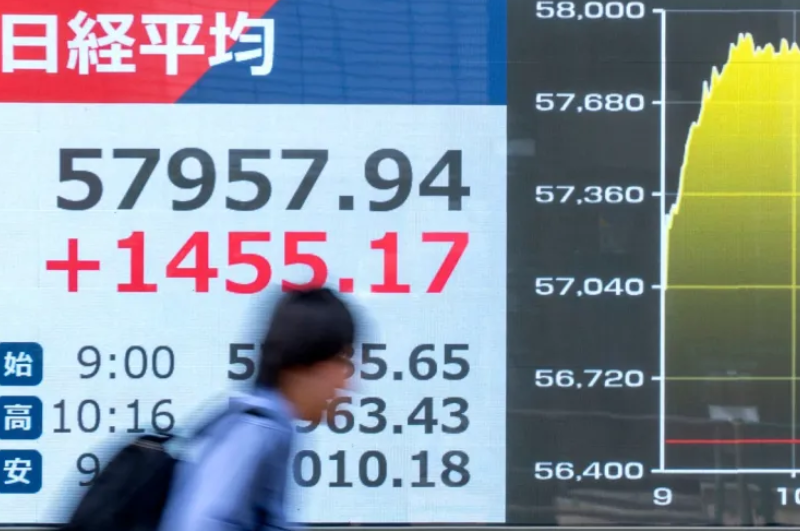
14 April 2026 Punjab Khabarnama Bureau : Asian stock markets surged on Tuesday while oil prices declined, as investors grew optimistic about the possibility of renewed diplomatic talks between the United States and Iran, raising hopes of easing geopolitical tensions.
Markets across the Asia-Pacific region posted strong gains, reflecting a shift in investor sentiment toward riskier assets. Japan’s benchmark index rose sharply, while South Korea, Hong Kong, and China also recorded notable gains, tracking a positive lead from Wall Street.
The rally comes after signals from U.S. leadership suggesting that Iran may be open to negotiations, sparking expectations that the ongoing conflict could move toward de-escalation. This change in tone has had an immediate impact on global financial markets, which have been highly sensitive to developments in the Middle East.
One of the most significant reactions was seen in oil markets. After recently surging above $100 per barrel amid fears of supply disruptions, crude prices fell back below that level. Brent crude dropped to around $98 per barrel, while U.S. crude also declined sharply.
The fall in oil prices reflects easing concerns over supply disruptions, particularly in the strategically critical Strait of Hormuz. The region has been at the center of tensions due to its importance as a key global oil transit route.
Analysts say the decline in oil prices is a direct response to reduced geopolitical risk premiums. When tensions rise, oil prices typically increase due to fears of supply interruptions. Conversely, any sign of diplomacy or stability tends to push prices lower.
The positive momentum in equities was broad-based. Investors moved back into stocks as the likelihood of a prolonged conflict appeared to diminish. Gains were seen across sectors, with technology, manufacturing, and financial stocks leading the rally.
European markets also opened higher, following the upbeat trend in Asia and the United States. Major indices in London, Paris, and Frankfurt recorded gains in early trading, reflecting global optimism.
Despite the rally, some underlying concerns remain. Economic data from China showed weaker-than-expected export growth, highlighting ongoing challenges in the global economy. However, investors appeared to overlook these concerns in favor of the more immediate geopolitical developments.
The broader market reaction underscores how closely global financial systems are tied to geopolitical events. Even the possibility of renewed talks—rather than a confirmed agreement—has been enough to trigger significant market movements.
Experts caution that the current optimism may be fragile. While talks could lead to de-escalation, there is still uncertainty about whether a lasting agreement can be reached. Previous attempts at negotiations have failed, and tensions could rise again if talks break down.
Oil markets, in particular, remain volatile. Although prices have fallen, analysts warn that supply disruptions are still a reality, and any escalation could quickly reverse the trend.
The situation also has implications for inflation and global economic stability. Lower oil prices can ease inflationary pressures, benefiting consumers and businesses alike. This, in turn, supports stock market growth.
For countries like India, which are major oil importers, the decline in crude prices offers some relief. Lower energy costs can help reduce import bills and stabilize domestic inflation.
Currency markets also reacted to the developments. The U.S. dollar weakened slightly against major currencies, reflecting improved risk appetite among investors.
Meanwhile, commodities such as gold and silver saw modest gains, indicating that some investors are still hedging against uncertainty.
Market strategists describe the current phase as a “relief rally,” driven by expectations rather than concrete outcomes. The coming days will be crucial in determining whether this momentum can be sustained.
Investors are closely watching for any official announcements regarding talks between the United States and Iran. Confirmation of negotiations or a ceasefire could further boost markets, while setbacks could lead to renewed volatility.
In conclusion, the surge in Asian stock markets and the decline in oil prices highlight the powerful influence of geopolitical developments on global markets. While optimism over potential US–Iran talks has provided a boost, uncertainty remains, and markets are likely to stay sensitive to further updates.
Summary
Asian markets surged and oil prices fell as hopes for US–Iran talks improved sentiment, easing supply fears, though analysts warn volatility may persist amid ongoing geopolitical uncertainty.