

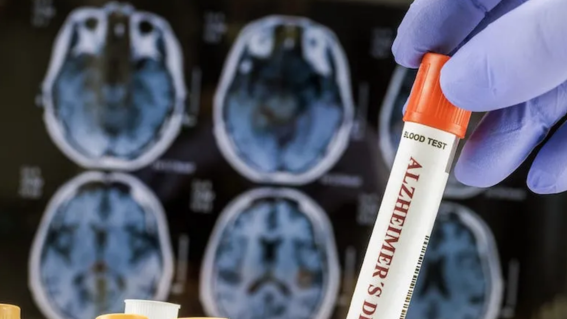
21 January 2026 Punjab Khabarnama Bureau : In a major breakthrough for healthcare and medical technology in India, researchers have developed an AI-enhanced blood test capable of detecting Alzheimer’s disease at an early stage, potentially transforming how the condition is diagnosed and managed across the country. The innovation combines advanced artificial intelligence with biomarker analysis, offering hope for earlier intervention, improved patient outcomes, and reduced burden on families and healthcare systems.
Alzheimer’s disease, a progressive neurological disorder, affects millions worldwide and is one of the leading causes of dementia. In India, where the ageing population is growing rapidly, the number of people living with dementia is expected to rise significantly in the coming decades. Early diagnosis has long been a challenge, as symptoms often appear only after significant brain damage has already occurred.
A Breakthrough in Early Detection
The newly developed blood test uses artificial intelligence algorithms to analyze specific biological markers present in the blood. These biomarkers are linked to changes in the brain associated with Alzheimer’s disease, such as the accumulation of abnormal proteins and early neurodegeneration.
Traditionally, Alzheimer’s diagnosis relies on clinical assessments, cognitive tests, brain imaging, and in some cases, invasive procedures like spinal fluid analysis. These methods can be expensive, time-consuming, and inaccessible to large sections of the population. A simple blood test, enhanced by AI, could dramatically change this landscape.
Researchers involved in the project say the test is designed to detect the disease before severe symptoms appear, enabling doctors to begin treatment and lifestyle interventions much earlier.
How Artificial Intelligence Improves Accuracy
The key innovation lies in the use of AI. Instead of relying solely on a single biomarker, the system processes large amounts of data simultaneously. Machine learning models identify complex patterns that may not be visible through conventional analysis.
By studying thousands of patient samples, the AI system “learns” to distinguish between healthy individuals, those with mild cognitive impairment, and those at risk of developing Alzheimer’s. This approach improves diagnostic accuracy and reduces the chances of misdiagnosis.
Experts believe that such AI-driven diagnostics represent the future of personalized medicine, where treatment plans can be tailored based on early and precise detection.
Why This Matters for India
India faces unique challenges in dealing with neurological disorders. Access to specialized neurologists, advanced imaging facilities, and memory clinics is limited in many parts of the country, especially in rural areas. As a result, many cases of dementia go undiagnosed or are detected too late.
A low-cost, accessible blood test could bridge this gap. If widely implemented, it could allow primary healthcare centres to screen patients at risk, refer them for further evaluation, and initiate early care.
Public health experts say this innovation could significantly reduce the emotional and financial burden on families, who often struggle to manage long-term caregiving without adequate support.
Impact on Patients and Families
An early diagnosis does not yet mean a cure, but it can make a substantial difference. Patients diagnosed in the early stages can benefit from medications that slow progression, cognitive therapies, and lifestyle changes that support brain health.
Families also gain valuable time to plan care, make informed decisions, and access support networks. For many, uncertainty is one of the most painful aspects of Alzheimer’s; early clarity can help reduce anxiety and improve quality of life.
Challenges Before Widespread Use
While the results are promising, experts caution that further validation is required before the test can be rolled out nationwide. Large-scale clinical trials, regulatory approvals, and cost assessments will be necessary to ensure accuracy, safety, and accessibility.
There are also ethical considerations. Early diagnosis raises questions about psychological impact, data privacy, and how information is communicated to patients. Medical professionals stress the importance of counseling and support systems alongside diagnostic advances.
A Step Toward the Future of Healthcare
The development of this AI-powered blood test highlights the growing role of technology in Indian healthcare. From telemedicine to AI-driven diagnostics, innovation is increasingly shaping how diseases are detected and treated.
Researchers believe this is just the beginning. Similar technologies could soon be applied to other neurological conditions such as Parkinson’s disease, depression, and even brain injuries, opening new avenues for early intervention.
Experts Call It a Game-Changer
Many in the medical community have described the development as a potential “game-changer” for dementia care. While they emphasize the need for cautious optimism, there is widespread agreement that such innovations could redefine preventive healthcare in India.
As the population ages and lifestyle-related diseases rise, solutions that combine affordability, accessibility, and advanced technology will be critical to building a more resilient healthcare system.
Hope for Millions
For families affected by Alzheimer’s, the promise of early detection represents hope — hope for more time, better care, and improved dignity for those living with the disease. While challenges remain, the emergence of AI-based diagnostics marks an encouraging step forward.
Summary
Researchers in India have developed an AI-enhanced blood test that can detect Alzheimer’s disease early, offering hope for timely diagnosis, improved treatment outcomes, and greater accessibility to advanced healthcare across the country.