

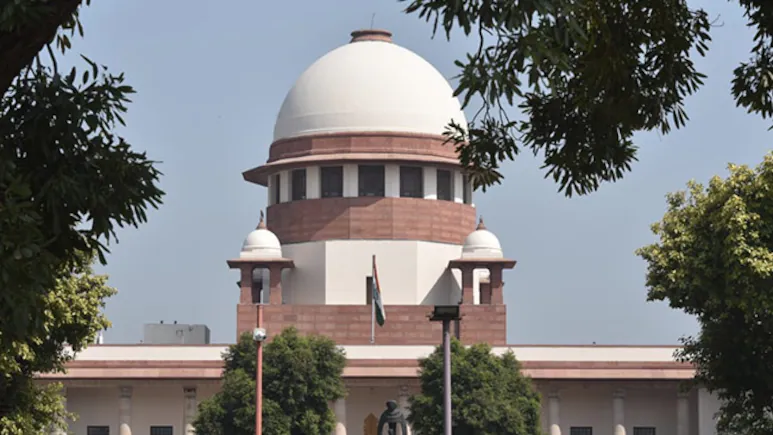
24 December 2025 Punjab Khabarnama Bureau : Raising serious concerns over jurisdictional gaps in Delhi-NCR that allow organised criminals to exploit the criminal justice system, the Supreme Court has flagged the urgent need for an effective legal mechanism to address inter-state complications that derail trials in serious cases under Central laws.
While hearing a petition on creation of special exclusive courts, a Bench led by Chief Justice of India Surya Kant pointed out that in matters of grave offences under Central penal laws, “organised professional/hardcore criminals” took undue advantage of territorial jurisdictional issues in the National Capital Region (NCR).
“Sometimes the offence is committed in ‘A’ State and its trials are traceable in ‘B’ or ‘C’ State also,” said the Bench, which also included Justice Joymalya Bagchi.
“However, which police or agency should take cognisance of the matter for prompt investigation or which court should be the competent jurisdictional court becomes a debatable issue in the ensuing criminal trial. The eventual benefit goes to the unscrupulous criminals, which may not be in the interest of society or the nation,” the Bench said.
The issue, including desirability of an effective law for optimum utilisation of the existing legal architecture, required consideration by relevant quarters, the Bench said, posting the matter for further hearing on February 10, 2026.
Additional Solicitor General Aishwarya Bhati told the Bench that 16 special courts were likely to be established in the NCT of Delhi within three months.
“We are hopeful that with the commitment shown by the Union of India for providing infrastructure and the recurring expenditure, necessary steps for the establishment of the Special Courts shall be taken. We expect all stakeholders to do the needful within four weeks,” it said in its December 16 order.
Summary:
The Supreme Court has observed that criminals are exploiting jurisdictional gaps across the Delhi-NCR region to evade law enforcement. The court highlighted coordination issues among different state police forces and stressed the need for better inter-agency cooperation to effectively tackle crime. The remarks came during a hearing related to law and order challenges in the region.