

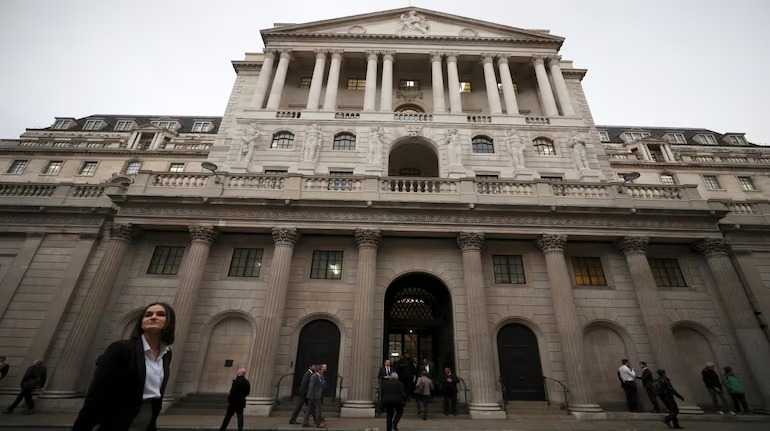
24 June 2024 Punjab Khabarnama : While the Sunak government has not hesitated in claiming credit for the return of the UK inflation rate to 2 percent after three years of exceeding that target, the Bank of England has proven notably reserved despite the country now having fewer price pressures than France, Germany and the US. Part of this modesty reflects concern that the rate of inflation may go back up by the end of the year.
But there is also a cultural aspect at play. The Bank tends to be humble in highlighting its accomplishments, despite these being at the forefront of central bank practice and despite some already having been replicated by other central banks. Sounds strange? It shouldn’t. Here are five ways in which the Bank has outperformed many others in recent years:
For starters, it was the first to recognize that it had been a mistake to describe the 2021-22 inflation surge as transitory, and it was quick to publicly share an assessment of what led to the mischaracterization.
Second, the Bank aptly handled the critical risk of financial disorder during the Liz Truss period while limiting the moral hazard risk. I certainly will not forget when, in the face of hedge funds stubbornly declining to close out their overleveraged positions at a loss, Governor Andrew Bailey stood firm on that famous Tuesday in reminding the funds that the Bank’s exceptional financial support would end on the Friday – and it did, with the funds backing down.
Third, rather than signal false precision as the Federal Reserve repeatedly does via its dot plot, the Bank is clear about the unusual uncertainty facing policymaking these days. The message is further reinforced by the publication of the voting results of the Monetary Policy Committee, the top policymaking body, which more than once has included split votes with members on both sides of the majority decision.