

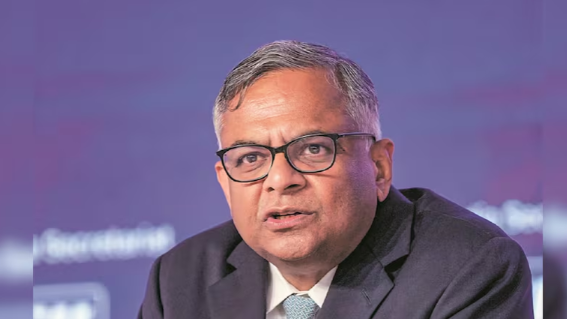
26 November 2026 Punjab Khabarnama Bureau : The ongoing leadership dispute within the Tata Group has taken a major legal turn after two prominent Tata Trusts moved the Bombay High Court challenging the reappointment of N Chandrasekaran as executive chairman of Tata Sons for a third five-year term. The legal action has intensified the differences between Tata Trusts and the board of Tata Sons over corporate governance, voting rights and the future leadership of one of India’s largest business groups.
The Sir Dorabji Tata Trust (SDTT) and the R.D. Tata Trust (RDTT) have filed separate suits against Tata Sons and six of its directors, questioning the validity of the board resolution passed on September 17, 2026, which approved Chandrasekaran’s reappointment.
The trusts have argued that the decision violated the company’s Articles of Association (AoA), particularly Article 121, which specifies voting requirements for certain board decisions.
The development comes ahead of an important Tata Sons board meeting scheduled for November 30, where directors are expected to discuss significant matters, including the proposed stock market listing of the holding company.
Why Have Tata Trusts Challenged Chandrasekaran’s Reappointment?
At the centre of the dispute is Article 121 of Tata Sons’ Articles of Association. The provision deals with voting requirements for board decisions and gives special importance to the views of directors nominated by Tata Trusts.
Tata Trusts, which collectively hold approximately 66 per cent of Tata Sons, have argued that certain board resolutions require affirmative support from a majority of the trust-nominated directors.
During the September 17 board meeting, the two trust-nominated directors, Noel Tata and Venu Srinivasan, expressed different positions on Chandrasekaran’s reappointment.
Noel Tata voted against the proposal, while Venu Srinivasan supported it. Following the disagreement, independent director Harish Manwani, who was chairing the relevant proceedings, exercised his casting vote in favour of Chandrasekaran’s reappointment.
The trusts have challenged this procedure, arguing that a casting vote cannot replace the affirmative support required under Article 121.
They maintain that the resolution was therefore invalid and should have no legal effect.
₹65 Crore Damages Sought by Two Tata Trusts
The two charitable trusts have also sought financial compensation from Tata Sons and its directors.
The Sir Dorabji Tata Trust is seeking ₹50 crore in damages, while the R.D. Tata Trust has claimed ₹15 crore.
Both trusts have additionally sought annual interest of 18 per cent on their respective claims.
Through their legal proceedings, the trusts want the September 17 board resolution declaring Chandrasekaran’s reappointment to be invalid, illegal and legally ineffective.
They have also sought an injunction preventing Tata Sons and its directors from implementing the disputed resolution.
The legal challenge names Chandrasekaran and five other directors, including executive director and chief financial officer Saurabh Agrawal, independent directors Harish Manwani and Anita George, and nominee directors Noel Tata and Venu Srinivasan.
Trusts Seek Restrictions Before November 30 Board Meeting
One of the immediate concerns raised by the trusts relates to the upcoming Tata Sons board meeting scheduled for November 30.
The trusts have requested urgent interim relief to prevent the chairman from exercising a casting vote if the two trust-nominated directors disagree on important decisions.
They fear that a similar voting arrangement could be used to pass other significant resolutions despite objections from a trust nominee.
The November 30 meeting is particularly important because the proposed stock market listing of Tata Sons is among the key matters expected to be discussed.
The trusts want the company’s governance provisions to be properly followed before any major decisions are taken.
Noel Tata and Venu Srinivasan at the Centre of Dispute
The disagreement between Noel Tata and Venu Srinivasan has become a significant part of the ongoing corporate dispute.
Noel Tata, who chairs Tata Trusts, opposed Chandrasekaran’s reappointment. Venu Srinivasan, another nominee director, supported the decision.
Their differing positions have raised questions about how the special voting provisions in Tata Sons’ Articles of Association should be interpreted.
Tata Trusts believes that the support of its nominated directors is an independent requirement for certain board decisions.
However, Tata Sons maintains that the September 17 resolution was validly passed through the board’s voting process.
The legal proceedings will now bring the interpretation of these provisions before the Bombay High Court.
Tata Sons Listing Dispute Adds to Corporate Tensions
The disagreement over Chandrasekaran’s reappointment is also connected to a larger debate about the future structure and ownership of Tata Sons.
Tata Sons is the holding company of the Tata Group, which has businesses across automobiles, aviation, information technology, steel, consumer products and several other sectors.
The question of whether Tata Sons should remain a privately held company or pursue a stock market listing has become another major point of disagreement.
The Reserve Bank of India has reiterated that Tata Sons must comply with regulations applicable to upper-layer non-banking financial companies, with listing being the regulatory route indicated for the company.
Tata Trusts has raised concerns about the proposed listing and has reportedly favoured discussing the company’s restructuring before proceeding with the listing process.
The November 30 board meeting is therefore expected to be important for determining the direction of the company’s future corporate structure.
What Happens Next?
The Bombay High Court is expected to consider the legal challenge and the interim relief sought by the two trusts.
The outcome could have significant implications for Tata Sons’ boardroom decision-making process, particularly regarding the interpretation of special rights granted to trust-nominated directors.
If the court accepts the trusts’ interpretation of Article 121, it could affect the validity of the September 17 resolution and potentially influence other important board decisions.
However, the final outcome will depend on the court’s examination of the company’s Articles of Association and the arguments presented by both sides.
The dispute marks another important chapter in the governance challenges facing the Tata Group. With the November 30 board meeting approaching, attention is now focused on the Bombay High Court proceedings and the future leadership and ownership structure of Tata Sons.