

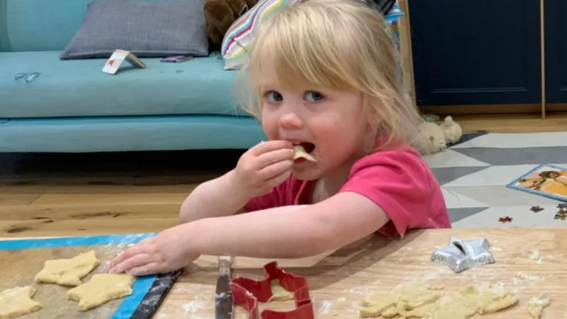
20 November 2026 Punjab Khabarnama Bureau : Children sometimes do things they know they are not supposed to do, such as secretly taking chocolates, biscuits or other snacks from the kitchen and then denying it when questioned. Although parents may see such behaviour as dishonesty, child development experts suggest that small childhood lies can reveal important stages of emotional, cognitive and social development.
The familiar situation of a child secretly eating a snack and insisting that they did not touch it may seem amusing. However, psychologists explain that these small lies can be connected to the development of a child’s understanding of rules, consequences, privacy and other people’s thoughts.
Rather than immediately treating every minor lie as a serious behavioural problem, parents can use these moments to understand how their children are learning to navigate the world.
Why Do Children Lie About Snacks?
Young children often begin experimenting with lying when they realise that other people do not automatically know everything they are thinking or doing. For example, a child who eats a chocolate bar secretly may understand that admitting the action could lead to losing access to more sweets or receiving a telling-off.
This behaviour is connected to the development of what psychologists call theory of mind. It refers to a child’s growing ability to understand that other people have different thoughts, knowledge, feelings and beliefs.
As children develop this ability, they gradually learn that they can influence what another person believes by choosing what information to share.
A simple denial about stolen snacks can therefore demonstrate that a child is beginning to understand how information and communication work in social situations.
Lying Can Reflect Cognitive Development
Research into child development suggests that lying requires several mental abilities. Children need to remember what happened, understand what another person knows and create an alternative explanation that sounds believable.
These abilities involve memory, planning, self-control and perspective-taking.
Young children may not always be successful at maintaining a lie because they can struggle to remember their original story or control their facial expressions and reactions.
As they grow older, their ability to create more convincing explanations generally improves. This does not mean that parents should encourage dishonesty. Instead, it highlights how lying can sometimes provide insight into developing cognitive skills.
Researchers have found that the ability to tell lies and the ability to understand other people’s perspectives are connected aspects of childhood development.
Why Children Hide Their Mistakes
Fear of punishment is one of the most common reasons children deny doing something wrong. A child who knows that taking snacks without permission is against household rules may worry about being scolded or losing privileges.
Sometimes, children also lie because they feel embarrassed or want to avoid disappointing their parents.
For younger children, the difference between a mistake and deliberate wrongdoing may not always be clear. They may understand that an action was forbidden without fully understanding why the rule exists.
Children can also experiment with boundaries to discover how adults respond. Taking an extra biscuit or chocolate may become a small test of independence.
Understanding these motivations can help parents respond more effectively instead of focusing only on the lie itself.
How Parents Should Respond to Small Childhood Lies
Experts generally encourage parents to create an environment where children feel safe admitting mistakes. If every minor mistake results in an angry reaction or severe punishment, children may become more likely to hide their behaviour.
Parents can respond calmly by explaining why honesty matters and encouraging children to take responsibility.
For example, instead of immediately accusing a child of stealing chocolate, a parent could say that it is okay to enjoy a treat but important to ask before taking something that belongs to someone else.
Parents can also praise children when they admit the truth, even if they have broken a rule. This helps children understand that honesty is valued and that mistakes can be corrected.
Setting clear and consistent boundaries is equally important. Children should understand that being honest does not mean there are no consequences, but it does mean they can discuss their actions without fear of humiliation.
Small Lies Can Teach Important Life Lessons
Childhood is a period of continuous learning. Children develop their understanding of honesty, responsibility, empathy and social relationships through everyday experiences.
A small incident involving secretly eaten snacks can become an opportunity to discuss trust, respect and decision-making.
Parents can explain that taking food without permission may upset others, while telling the truth helps build trust within the family.
These conversations can help children understand that their actions affect other people and that honesty plays an important role in maintaining relationships.
It is also important to distinguish occasional, age-appropriate fibbing from persistent dishonesty. Repeated lying, particularly when accompanied by other behavioural concerns, may require a closer look at what a child is experiencing.
Understanding Childhood Behaviour
The occasional denial about a missing chocolate bar is unlikely to indicate a serious behavioural problem on its own. In many cases, it is simply part of a child’s growing understanding of rules, consequences and social interactions.
For parents, the key is to respond with patience while continuing to teach honesty and accountability.
Instead of viewing every small childhood lie as a failure of parenting or character, families can treat these moments as opportunities for learning.
As children mature, they gradually become better at understanding the importance of honesty and the impact their actions have on others.
Ultimately, a secretly eaten snack may be a small incident, but the conversation that follows can teach children valuable lessons about trust, responsibility and growing up.