

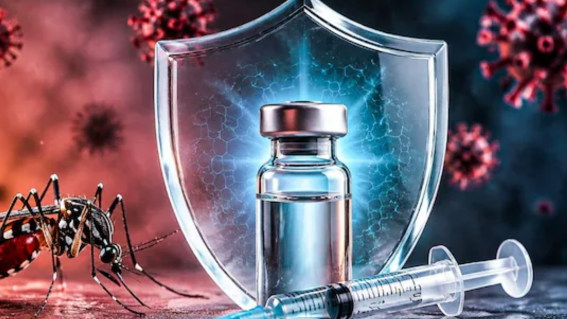
4 November 2026 Punjab Khabarnama Bureau : India is moving closer to developing its first indigenous dengue vaccine, with the country expecting a potential breakthrough in 2027. The development could mark an important step in the fight against dengue, a mosquito-borne viral disease that affects thousands of people across the country every year. However, the progress is also bringing renewed attention to concerns surrounding an earlier dengue vaccine and the challenges associated with ensuring its safety and effectiveness.
Dengue remains a significant public health concern in India, particularly during and after the monsoon season. The disease is transmitted through the bite of infected Aedes mosquitoes, which commonly breed in stagnant water around residential areas. Patients can experience high fever, severe headaches, muscle and joint pain, nausea, skin rashes and extreme weakness.
Although most dengue infections are mild, some patients develop severe complications, including internal bleeding, plasma leakage and shock. Severe dengue can become life-threatening without timely medical attention.
India’s Dengue Vaccine Development Progress
Indian researchers have been working towards developing a vaccine that can provide protection against all four dengue virus serotypes. These are commonly identified as DENV-1, DENV-2, DENV-3 and DENV-4.
Developing a dengue vaccine is particularly challenging because immunity against one serotype does not necessarily provide complete protection against the others. In certain circumstances, a subsequent infection with a different serotype can increase the risk of severe disease.
India’s vaccine development programme has involved collaboration between research institutions and pharmaceutical organisations. The indigenous vaccine candidate, known as DengiAll, has been developed through research involving the Indian Council of Medical Research (ICMR) and Panacea Biotec.
The vaccine is designed to target all four dengue serotypes. Its development has involved different stages of clinical testing to evaluate safety, immune response and its potential to prevent dengue infections.
The 2027 timeline represents an anticipated development milestone rather than a confirmed date for nationwide availability. Regulatory approval, clinical trial findings and manufacturing arrangements will determine when the vaccine can be introduced for public use.
Why the Previous Dengue Vaccine Raises Concerns
The development of a new dengue vaccine has also brought attention to the experience of Dengvaxia, an earlier dengue vaccine developed by Sanofi.
Dengvaxia faced major controversy after evidence indicated that its benefits and risks differed depending on whether an individual had previously been infected with dengue.
The vaccine was found to provide benefits to people with a previous dengue infection. However, individuals who had never been infected could face an increased risk of severe dengue and hospitalisation following a subsequent infection.
This created significant public health concerns, particularly in countries where dengue infections are widespread and determining a person’s previous infection status can be difficult.
The experience highlighted the importance of conducting extensive clinical trials and understanding how vaccines interact with different immune responses.
It also changed the way researchers approach dengue vaccine development, with greater attention being given to protection against all four virus serotypes.
Clinical Trials Will Be Crucial
The upcoming vaccine will need to demonstrate that it can provide meaningful protection without increasing the risk of severe disease.
Researchers must examine how effectively the vaccine produces an immune response against all four dengue serotypes. They must also assess how long the protection lasts and whether the vaccine performs consistently across different age groups.
Clinical trials are essential for identifying possible side effects and evaluating the vaccine’s overall safety profile.
Experts also emphasise that dengue vaccine development cannot rely solely on laboratory findings. Large-scale clinical evidence is necessary to establish whether a vaccine can reduce infections, hospitalisations and severe dengue cases.
The experience with earlier vaccines has made regulatory evaluation particularly important.
Dengue Prevention Remains Important
Until an effective vaccine becomes widely available, public health authorities continue to emphasise mosquito control and preventive measures.
People are advised to avoid stagnant water around homes, regularly clean water containers, use mosquito repellents and wear clothes that cover exposed skin.
Early diagnosis is also important. Anyone experiencing persistent fever or symptoms associated with dengue should seek medical advice rather than relying on self-medication.
Doctors generally recommend adequate fluid intake and medical monitoring for suspected dengue patients. Medicines such as aspirin and ibuprofen should be avoided unless specifically advised by a doctor because they can increase bleeding risks.
India’s efforts to develop an indigenous dengue vaccine represent an important part of its broader public health strategy. However, the experience with Dengvaxia demonstrates why safety, clinical evidence and careful regulatory assessment must remain central to the process.
If the ongoing development programme produces successful results and receives the necessary approvals, the vaccine could provide an additional tool in India’s fight against dengue. Until then, mosquito control, early diagnosis and public awareness will remain essential.