

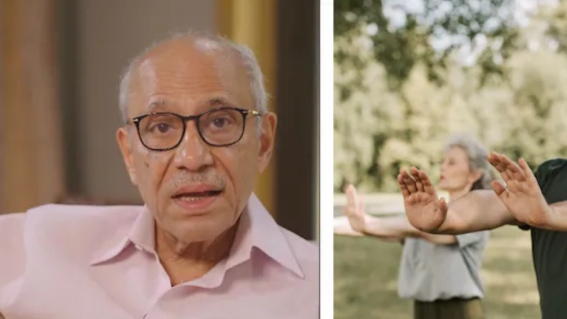
2 November 2026 Punjab Khabarnama Bureau : Tai Chi, an ancient Chinese practice that combines gentle movements, controlled breathing and meditation, is gaining attention as a way to improve physical fitness and mental well-being. While it may look like a slow and simple exercise, health experts say it engages several muscle groups and can support balance, flexibility, coordination and overall health.
Renowned cardiologist Dr Alok Chopra has recently shared his personal experience with Tai Chi and Qigong, revealing that he has been practising both for the past six to eight months. In a video shared on Instagram, he explained that the practice has made him feel good and has become an important part of his fitness routine.
Dr Chopra also revealed that he had moved away from traditional gym equipment after discovering the benefits of these mind-body exercises. According to him, Tai Chi offers a combination of physical activity, breathing techniques and mental focus.
What is Tai Chi?
Tai Chi is a traditional Chinese mind-body practice that originated as a martial art. It involves a sequence of slow, controlled and continuous movements performed alongside deep breathing and focused attention.
Often described as “meditation in motion”, Tai Chi encourages people to coordinate their breathing with their body movements. Unlike high-intensity workouts, it places relatively little stress on muscles and joints, making it an accessible physical activity for people with different fitness levels.
The practice involves shifting body weight, maintaining controlled postures and moving the arms, legs and upper body in a coordinated manner.
Qigong, another traditional Chinese practice, also combines movement, breathing and mental concentration. Both activities are commonly used to support physical and mental well-being.
Why Dr Alok Chopra prefers Tai Chi
In his Instagram video, Dr Chopra explained that he had been practising Tai Chi and Qigong for six to eight months and had noticed positive changes in how he felt.
He highlighted that the exercise works on several parts of the body, including the legs, hips, ankles, core and back. Even though the movements appear gentle, maintaining balance and controlling body posture requires continuous muscular engagement.
He also pointed out that Tai Chi is not limited to physical fitness. The coordination of breathing, movement and concentration makes it a mind-body activity that can help people become more aware of their bodies.
Dr Chopra believes that as people grow older, exercises that improve mobility, balance and flexibility become increasingly important. He suggested that fitness does not always have to involve faster, harder or more demanding workouts.
Five potential health benefits of Tai Chi
1. Improves balance and coordination
One of the most recognised benefits of Tai Chi is its ability to improve balance and body coordination. The practice involves shifting weight from one leg to another while maintaining controlled movements.
This can help strengthen the muscles involved in stability and improve confidence while walking. Research suggests that regular Tai Chi practice may also reduce the risk of falls among older adults.
2. Supports muscle strength and flexibility
Tai Chi may look effortless, but holding different postures and shifting body weight requires muscular strength.
The legs, hips, abdomen and back remain engaged throughout the movements. Regular practice may help improve lower-body strength, flexibility and the ability to perform everyday physical activities.
3. Helps improve posture and mobility
Many Tai Chi movements encourage people to maintain an upright posture and move their joints through controlled ranges of motion.
This can support mobility and body awareness, particularly among people who spend long hours sitting. Regular practice may also help reduce stiffness and improve movement in daily life.
4. Supports mental well-being and stress management
Tai Chi combines physical movement with breathing exercises and concentration. Focusing on coordinated movements may help people relax and temporarily shift their attention away from everyday worries.
Some research suggests that Tai Chi may help reduce anxiety and improve mood and quality of life. However, the results can vary depending on the individual and the duration of practice.
5. May support heart health and blood pressure
Research has also examined the possible cardiovascular benefits of Tai Chi. A 2026 systematic review and meta-analysis published in Scientific Reports, which included 60 studies, reported reductions in systolic and diastolic blood pressure among participants practising Tai Chi.
The findings suggest that it may be a useful form of physical activity for supporting cardiovascular health. However, Tai Chi should not be considered a replacement for prescribed medication, medical treatment or other recommended forms of exercise.
Can older adults and beginners practise Tai Chi?
Tai Chi is generally considered a low-impact activity and can be adapted to different fitness levels. Beginners can start with simple movements and gradually learn more complex sequences.
Older adults may find it particularly useful because it focuses on balance, controlled movement and flexibility. Some exercises can also be modified for people who prefer to practise while sitting.
However, people with existing health conditions, mobility limitations or a history of falls should consult their healthcare provider before starting. Learning from a qualified instructor can also help ensure that movements are performed safely.
How to include Tai Chi in your daily routine
People interested in trying Tai Chi can begin with short, beginner-friendly sessions. Choosing a comfortable space, wearing loose clothing and practising gentle movements can make the experience easier.
It is important to focus on breathing, posture and controlled movements rather than trying to perform complicated techniques immediately. Consistency is more important than intensity.
Tai Chi can be included alongside walking, strength exercises and other activities recommended by healthcare professionals.
The takeaway
Dr Alok Chopra’s experience has brought renewed attention to Tai Chi as an accessible way to combine physical movement with mental focus. Research suggests that regular practice may support balance, flexibility, strength, stress management and certain aspects of cardiovascular health.
Its biggest appeal is that it does not require high-intensity movements or expensive gym equipment. However, it works best as part of a balanced lifestyle rather than a substitute for medical care or other necessary physical activities.