

30 October 2026 Punjab Khabarnama Bureau : The United States and Japan have agreed to establish a missile production facility in Japan under a joint defence initiative called ‘Operation Supercharge’. The agreement aims to strengthen the defence capabilities of both countries and increase the supply of advanced weapons amid growing security concerns in the Indo-Pacific region.
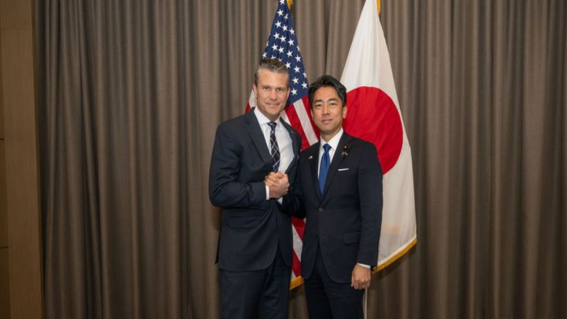
Japanese Defence Minister Shinjiro Koizumi announced the agreement following a meeting with US Defence Secretary Pete Hegseth in Cebu, Philippines, on October 28. The discussions took place on the sidelines of the ASEAN Defence Ministers’ Meeting-Plus, which brings together defence leaders from Southeast Asia and other major countries.
Under the agreement, the two countries will establish a facility for the final assembly and inspection of AIM-120 Advanced Medium-Range Air-to-Air Missiles, commonly known as AMRAAM. These missiles are used by several military aircraft, including the US-made F-35 fighter jets operated by both countries.
What Is Operation Supercharge?
Operation Supercharge is a US-Japan initiative aimed at strengthening cooperation in defence equipment and technology. The missile production agreement represents an important step in expanding joint manufacturing capabilities and improving access to critical military equipment.
Koizumi said the agreement would help ensure the availability of essential defence equipment for both countries while strengthening Japan’s domestic defence industrial base.
He described the AMRAAM missiles as essential for the F-35 fighter aircraft but did not disclose the proposed facility’s location, construction schedule or expected production capacity.
The agreement follows more than two years of discussions between the two countries regarding the possibility of joint missile manufacturing. A feasibility study involving US defence company Raytheon and Japan’s Mitsubishi Electric had also been undertaken.
Why Are AMRAAM Missiles Important?
The AIM-120 AMRAAM is an advanced, radar-guided air-to-air missile designed to engage enemy aircraft beyond visual range. It is an important weapon for modern fighter jets and is used by several countries operating Western military aircraft.
The missile is compatible with the F-35 fighter aircraft, which is operated by the United States and Japan. It is also used by other platforms, including F-15 fighter aircraft.
In addition to air-to-air operations, AMRAAM missiles are used in ground-based air defence systems such as the National Advanced Surface-to-Air Missile System, or NASAMS.
The weapon has been used in different conflict zones, including Ukraine, where air defence systems have employed AMRAAM missiles to intercept incoming threats.
Its growing importance has increased demand among the United States and its military partners, making additional production capacity a priority.
US Seeks to Increase Missile Production
The agreement comes as Washington looks to expand its production of advanced weapons and replenish military stockpiles.
US defence contractor RTX, through its subsidiary Raytheon, secured a multiyear contract worth up to $20.7 billion to manufacture AMRAAM missiles. The production programme is aimed at increasing annual output to at least 1,900 missiles.
The proposed Japanese facility is expected to contribute to the broader effort to strengthen the supply chain. However, officials have not yet announced how many missiles will be assembled at the facility or when operations will begin.
Setting up a new production facility will require trained workers, specialised equipment, technical approvals and access to essential components. The final production capacity will depend on the responsibilities assigned to Japanese and American companies.
US and Japan Discuss Stronger Regional Security
The agreement was announced at a time of growing security concerns in the Indo-Pacific region, particularly over China’s expanding military capabilities and maritime activities.
During his meeting with Koizumi, Hegseth discussed strengthening the defence partnership between Washington and Tokyo. The Japanese defence minister said both sides shared concerns about the increasingly challenging regional security environment.
Koizumi said the two countries had agreed to strengthen their deterrence and response capabilities with greater speed and intensity.
He also reiterated the importance of maintaining a free and open international order based on international law. However, he clarified that the discussions were not directed at any particular country.
The United States has repeatedly stated that it will support its regional allies in maintaining security and responding to potential threats.
Japan Strengthens Its Defence Manufacturing Industry
Japan’s participation in the programme also reflects its efforts to expand its domestic defence manufacturing capabilities.
The country has already been involved in producing certain missile systems and components in cooperation with American defence companies. It also manufactures Patriot missile interceptors under a licensing arrangement.
In April 2026, Mitsubishi Electric and Raytheon were involved in discussions regarding possible Japanese participation in AMRAAM production, including the manufacturing of electronic circuit assemblies.
However, the Japanese government has not yet announced which domestic company will be selected to participate in the proposed facility.
What the Agreement Means for the Indo-Pacific
The joint missile production initiative is expected to improve defence cooperation between the United States and Japan while creating additional manufacturing capacity for weapons used by their armed forces.
For Washington, involving Japan in missile production could help diversify supply chains and bring manufacturing capabilities closer to important operational regions.
For Tokyo, the agreement could strengthen its domestic defence industry and improve access to equipment required by its military.
Although the two governments have not announced a production timeline or specific output targets, the agreement marks another step in expanding their defence partnership.
As regional security concerns continue to influence military planning, Operation Supercharge is likely to remain an important part of discussions about joint defence manufacturing and military preparedness in the Indo-Pacific.