

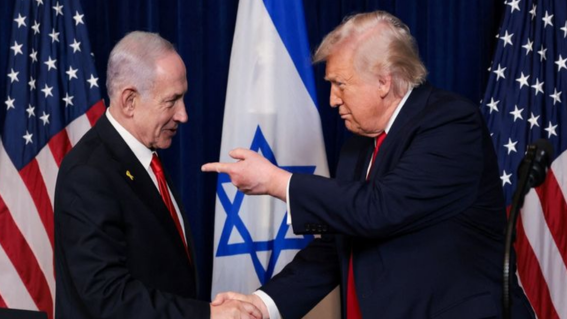
29 October 2026 Punjab Khabarnama Bureau : US President Donald Trump has said Israeli Prime Minister Benjamin Netanyahu is in “pretty good shape” following an election that left the country facing political uncertainty and difficult coalition negotiations. Trump made the remarks after receiving what he described as “horror reports” about Netanyahu’s electoral prospects, before subsequent vote projections showed the prime minister’s political bloc moving ahead of its rivals.
Speaking to Axios on Wednesday, October 28, Trump suggested that his endorsement had helped Netanyahu perform better than initially expected. However, the preliminary results left neither the governing coalition nor the opposition with the 61 seats required to secure a majority in Israel’s 120-member parliament, the Knesset.
The outcome has raised questions about how the next government will be formed and whether Israel could face another election if political leaders fail to reach an agreement.
Trump Credits His Endorsement for Netanyahu’s Performance
Trump said he had initially received worrying reports about Netanyahu’s chances in the election. As vote counting progressed, however, the results appeared more favourable to the Israeli prime minister’s bloc.
“He’s in pretty good shape now,” Trump said, adding, “I heard my endorsement made a big difference for Bibi.”
Trump was referring to his public endorsement of Netanyahu ahead of the election. The US president had backed the Israeli leader on October 18, describing him as an important partner and expressing support for his continued leadership.
Netanyahu had also highlighted his close relationship with Trump during the election campaign, presenting cooperation between the two leaders as important for Israel’s security and its approach to Iran.
Although Trump credited his endorsement with helping Netanyahu, the extent of its influence on voters has not been independently established.
Netanyahu’s Bloc Moves Ahead but Falls Short of a Majority
Preliminary results reported on Wednesday showed Netanyahu’s Likud-led coalition ahead of the opposition alliance led by Gadi Eisenkot.
With most votes counted, projections placed Netanyahu’s bloc at approximately 53 seats, compared with 48 for Eisenkot’s opposition bloc. Arab-led parties were projected to win a combined 19 seats, potentially giving them significant influence over negotiations to form the next government.
Despite moving ahead of the opposition, Netanyahu’s bloc remained eight seats short of the 61 required for a parliamentary majority. The opposition also lacked sufficient seats to form a government independently.
The result therefore left both sides facing difficult political choices. Netanyahu could seek support from opposition lawmakers to establish a broader coalition, while Eisenkot would need support from other political groups to assemble a viable alternative.
Hundreds of thousands of ballots, including votes cast by soldiers, diplomats and other eligible voters, were still awaiting counting in reports published on October 28. The final distribution of seats could change, although early projections suggested that neither main bloc had an easy route to a majority.
Trump Open to Helping Form a Unity Government
Asked whether he would intervene to help broker a national unity government led by Netanyahu, Trump said he had not yet considered the proposal.
“I will take a look,” he said.
A unity government could potentially bring together Netanyahu and some of his political rivals in an effort to end the parliamentary deadlock. Such an arrangement would require negotiations over leadership, policy priorities and the composition of the governing coalition.
However, several opposition leaders have publicly rejected serving in a Netanyahu-led government. Netanyahu, meanwhile, has expressed a preference for a strong right-wing administration.
Trump’s comments indicated that he was open to considering a role in the negotiations, but they did not amount to a commitment to intervene. The immediate responsibility for forming a government remains within Israel’s constitutional and parliamentary process.
Israeli President Urges Parties to Avoid Another Election
Israeli President Isaac Herzog has urged political leaders to approach the negotiations with flexibility and make every effort to avoid another election.
Herzog is expected to consult political parties after the official results are finalised before deciding which lawmaker should receive the opportunity to form a government.
The process could involve several weeks of discussions as rival parties attempt to secure the necessary parliamentary support. If no candidate can establish a governing majority, Israel could face another election as early as April, according to reports.
Netanyahu would remain caretaker prime minister during the negotiations, continuing to oversee the government while the political parties work towards an agreement.
The prospect of another election adds pressure on political leaders to find a workable arrangement. However, differences between Netanyahu’s allies and opposition parties could make a compromise difficult.
Arab-Led Parties Gain Greater Parliamentary Influence
The projected performance of Arab-led parties has emerged as another important factor in the election outcome.
With a combined projected total of 19 seats, these parties could influence whether either major political bloc can assemble a parliamentary majority. Their increased representation could give them greater leverage in discussions over the next government.
However, political differences and opposition to certain coalition arrangements complicate the possibility of their joining or supporting a government.
Netanyahu’s Likud party has also raised allegations of electoral irregularities involving Arab-led parties. Israel’s Central Elections Committee has said it is examining complaints submitted by political parties. The allegations remain claims and have not, by themselves, established that election fraud occurred.
The final results and any official findings concerning the complaints could affect the political atmosphere as negotiations continue.
What Happens Next?
Netanyahu’s improved position in the preliminary count has reduced the likelihood of an immediate, decisive opposition victory, but it has not resolved the question of who will govern Israel.
Trump’s public support has reinforced the close relationship between Washington and Netanyahu, while the Israeli election has exposed the difficulties of forming a majority government in a divided parliament.
The coming negotiations will determine whether Netanyahu can attract additional partners, whether Eisenkot can build an alternative coalition or whether political deadlock leads to another vote.
For now, Trump’s assessment that Netanyahu is in “pretty good shape” reflects the prime minister’s improved standing in the partial results rather than a confirmed victory. Israel’s next government will depend on the final seat distribution and the ability of political parties to reach an agreement.