

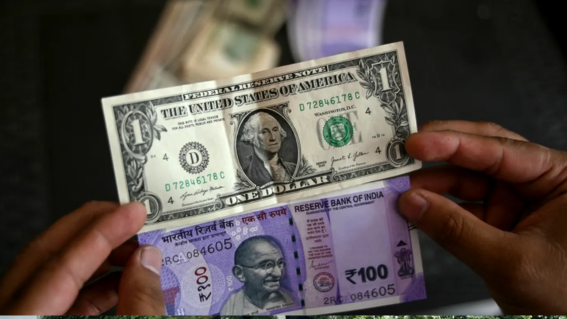
16 October 2026 Punjab Khabarnama Bureau : India’s rupee is facing continued pressure against the US dollar, with analysts warning that the currency could weaken toward the psychologically significant level of ₹100 per dollar over the coming months, even as the Reserve Bank of India (RBI) steps up efforts to slow its decline. The outlook reflects concerns over elevated energy prices, foreign investment outflows and challenging global financial conditions.
The rupee has recently recovered from levels near ₹96.79 per dollar to around the ₹95 mark following measures introduced by the RBI. However, analysts caution that this recovery may provide only temporary relief if the underlying pressures on the currency persist. S&P Global Market Intelligence expects the rupee to trade around ₹97 per dollar by the end of 2026 and ₹98 by mid-2027, while a move toward ₹100 cannot be ruled out, according to the report published by CNBC.
Why is the rupee under pressure?
One of the main factors affecting the rupee is the cost of energy imports. When international oil prices rise, Indian importers need more dollars to pay for crude oil and other energy supplies. This can increase demand for the US currency and put additional pressure on the rupee.
Foreign investment flows are another concern. When overseas investors withdraw money from Indian financial markets, they often convert rupees into foreign currencies, adding to dollar demand. Higher US Treasury yields can also make dollar-denominated investments more attractive, potentially limiting capital inflows into emerging markets such as India.
A weaker rupee can increase the cost of imported goods, including crude oil, electronics and industrial inputs. If businesses pass these higher costs on to consumers, depreciation can also contribute to inflation. Companies that have to pay overseas suppliers may face higher expenses, while Indian travellers and students paying costs in dollars could need more rupees for the same payments.
RBI steps in to support the currency
The RBI has introduced several measures to reduce pressure on the rupee and manage demand for dollars. These include directing oil-related dollar demand through a special facility, tightening certain foreign-exchange hedging rules and requiring banks to maintain cash reserves against specified forward-dollar contracts.
The central bank has also intervened in currency markets to support the rupee. According to Reuters, bankers and economists estimated that the RBI had used around $75 billion to $80 billion through spot dollar sales and dollar-rupee swaps since June 8. These interventions have helped limit the currency’s decline, although their effectiveness depends partly on wider market conditions.
The new rules have also raised concerns among some market participants about higher hedging costs and uncertainty in foreign-exchange trading. While tighter rules may discourage speculative positions and excessive hedging, they cannot fully eliminate genuine demand for dollars from importers or offset persistent capital outflows.
Can the rupee reach ₹100 per dollar?
The ₹100-per-dollar level is a possible downside scenario discussed by some analysts, not a confirmed outcome. The currency’s future path will depend on several factors, including international oil prices, foreign investor activity, US interest rates, global geopolitical developments and the RBI’s policy response.
The outlook is not uniform across the market. A Reuters poll published earlier in October found that currency strategists expected the rupee to remain weak, with a median forecast of ₹97.50 per dollar in a year. The poll did not show strategists expecting the currency to cross ₹100 within that period.
The RBI’s interventions may help moderate volatility and provide short-term support, but sustained improvement will also depend on the availability of foreign capital and the country’s external financing conditions. For now, the possibility of the rupee moving toward ₹100 highlights the challenges facing India’s currency rather than a certainty about where it will trade.