

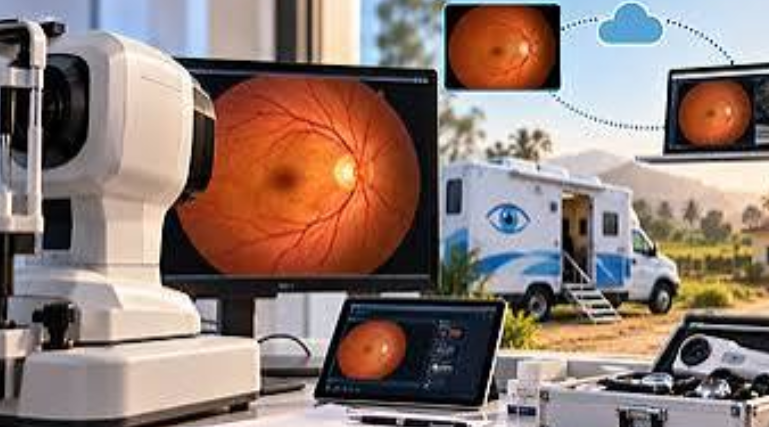
9 October 2026 Punjab Khabarnama Bureau : World Sight Day highlights the importance of accessible eye care and early detection of vision-threatening conditions. Technology-enabled screening and community-based healthcare services are emerging as important ways to bring retinal examinations closer to patients, particularly those living in rural areas and communities with limited access to specialist eye care.
Retinal diseases such as diabetic retinopathy, age-related macular degeneration and other conditions affecting the back of the eye can cause significant vision impairment if they are not detected and managed in time. Many conditions develop gradually, sometimes without noticeable symptoms during their early stages. Regular screening can help identify abnormalities before substantial vision loss occurs.
By combining digital retinal imaging, artificial intelligence (AI), telemedicine and trained community health workers, healthcare providers can make screening more convenient and improve the chances that patients receive timely specialist attention.
Why Retinal Screening Matters
The retina is a light-sensitive layer at the back of the eye that converts visual information into signals sent to the brain. Damage to this tissue can affect central or peripheral vision, depending on the condition and the part of the retina involved.
Diabetic retinopathy is a major concern for people living with diabetes. Persistently elevated blood glucose levels can damage the small blood vessels in the retina, potentially leading to bleeding, swelling and vision loss. Because early disease may not cause obvious symptoms, screening is important even when a person feels that their vision is normal.
Age-related macular degeneration primarily affects central vision and can make activities such as reading, recognising faces and driving more difficult. Other retinal disorders may also require prompt evaluation and treatment to prevent further damage.
Routine eye examinations and condition-specific screening can help detect problems earlier. The appropriate screening interval depends on factors such as a patient’s age, medical history, diabetes status and previous eye examination findings.
Technology Can Bring Screening Closer to Communities
Traditional retinal screening often requires patients to visit an eye specialist or a suitably equipped healthcare facility. For people living far from hospitals, travel expenses, time away from work and limited transport can create barriers to regular examinations.
Portable fundus cameras offer one way to address these challenges. These devices capture images of the retina and can be used in selected primary healthcare centres, community clinics, mobile eye-care units and other outreach settings.
The images can then be reviewed by qualified eye-care professionals, either locally or remotely. Teleophthalmology enables clinicians to assess retinal images from a distance, potentially reducing the need for every patient to travel to a specialist facility.
This approach can be particularly useful in areas where ophthalmologists are concentrated in major cities. Community-based screening programmes can identify people who need further evaluation and help prioritise specialist appointments for those with concerning findings.
Artificial Intelligence in Retinal Screening
Artificial intelligence is increasingly being explored as a tool for analysing retinal images. AI-enabled systems can help identify patterns associated with certain eye diseases, including diabetic retinopathy, and flag images that may require further clinical assessment.
When appropriately validated and integrated into healthcare services, these systems may support faster screening and help manage large numbers of retinal images. They can also assist healthcare teams working in settings where specialist resources are limited.
However, AI does not eliminate the need for clinical oversight. Image quality, patient characteristics and the specific disease being assessed can affect performance. Some images may be unsuitable for automated analysis, while other conditions may not be covered by a particular system.
Patients with abnormal or inconclusive screening results may need a comprehensive eye examination. AI-supported screening should therefore operate within a clearly defined referral pathway rather than being treated as a complete replacement for an ophthalmologist.
Community-Based Care Improves Access
Community health workers, nurses and trained screening personnel can play an important role in connecting patients with eye-care services. They can explain the benefits of retinal screening, identify people who may need an examination and help arrange appointments.
Integrating screening into existing health programmes can make services more accessible. For example, people attending diabetes clinics or primary healthcare centres could be offered retinal screening as part of their routine care, where appropriate facilities and referral arrangements are available.
Mobile screening units can also visit underserved communities, reducing travel requirements for patients. These programmes may be particularly valuable for older adults, people with disabilities and individuals who face financial or geographical barriers to specialist care.
Successful community-based services require more than access to imaging equipment. Staff training, reliable connectivity, image-quality checks, secure handling of medical information and timely referral to specialists are also essential.
Linking Early Detection to Treatment
Screening can improve outcomes only when patients who need further care are able to receive it. A photograph showing a possible retinal abnormality must lead to appropriate clinical assessment, diagnosis and treatment when indicated.
Healthcare providers can strengthen these pathways by establishing referral networks between community clinics, district hospitals and specialist eye-care centres. Digital systems may help track referrals, communicate results and remind patients about follow-up appointments.
Patient education is equally important. People should understand that normal vision does not always rule out retinal disease and that a screening result is not necessarily a definitive diagnosis.
For patients with diabetes, retinal screening should form part of a broader approach to health management that includes appropriate blood glucose control, blood pressure management and regular medical follow-up.
World Sight Day and the Future of Eye Care
World Sight Day provides an opportunity to raise awareness of preventable vision loss and encourage people to prioritise eye health. The campaign also highlights the need to make eye-care services available to communities that are often overlooked by traditional healthcare delivery systems.
Technology-supported screening and community-based programmes can help close gaps in access by bringing retinal imaging closer to patients and connecting them with specialists when needed.
Nevertheless, long-term progress depends on investment in trained personnel, affordable equipment, public awareness and sustainable healthcare infrastructure. Digital innovation must be supported by effective clinical services so that patients can move from screening to diagnosis and treatment without unnecessary delays.
By combining accessible screening, responsible use of technology and strong referral systems, healthcare providers can improve the early detection of retinal diseases and help more people protect their vision.
On World Sight Day, the central message is clear: bringing eye care closer to communities can help make early detection more accessible and reduce the risk of avoidable vision loss.