

1 October 2026 Punjab Khabarnama Bureau : Hair loss is one of the most common changes associated with ageing in men, with male pattern baldness affecting a substantial proportion of the male population by middle age. While thinning hair is often viewed as a cosmetic concern, scientists have long examined why the trait is so widespread and why evolution has not eliminated it.
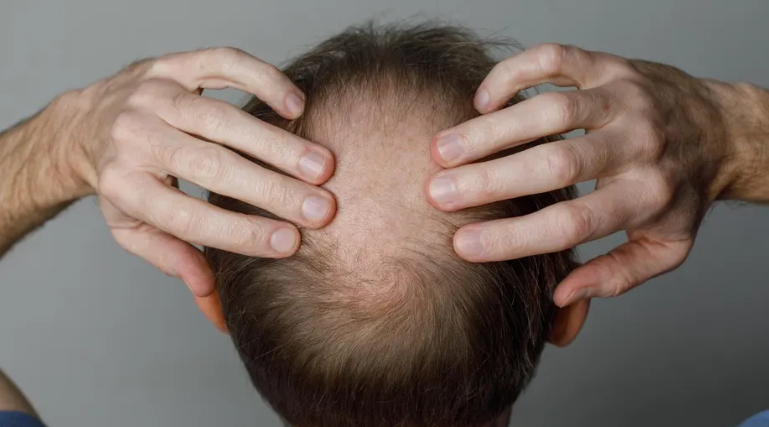
Male pattern baldness, medically known as androgenetic alopecia, typically begins with a receding hairline, thinning around the crown or gradual reduction in hair density. The pattern and timing vary considerably between individuals. Some men notice changes in their late teens or twenties, while others retain most of their hair well into later life.
An evolutionary perspective suggests that the persistence of male pattern baldness may be connected to the biology of ageing, reproductive selection and the complex role of male sex hormones. Rather than being caused by a single gene or a single evolutionary mechanism, hair loss results from an interaction between genetics, hormones and the sensitivity of individual hair follicles.
One of the central biological factors is dihydrotestosterone, or DHT, a hormone produced from testosterone. In genetically susceptible men, DHT can cause certain scalp follicles to become progressively smaller. The affected follicles produce thinner and shorter hairs until, in advanced cases, they may stop producing visible terminal hair.
Genetics plays a major role in determining who experiences this process. Researchers have identified numerous genetic variants associated with androgenetic alopecia, meaning that susceptibility is inherited through a complex combination of genetic factors rather than following a simple pattern.
The frequently repeated claim that baldness is inherited exclusively from the mother’s side is therefore misleading. Although the androgen receptor gene on the X chromosome has an important association with male pattern baldness, genetic influences come from both sides of the family.
From an evolutionary biology perspective, another important question is why a trait that can be highly visible has remained common. Evolution does not necessarily remove every characteristic that people may consider undesirable later in life. Natural selection operates most strongly on traits that influence survival and reproductive success, particularly during the periods of life when reproduction is most important.
If a characteristic generally develops after a substantial proportion of reproductive activity has already occurred, there may be weaker evolutionary pressure against the genes associated with it. Male pattern baldness often becomes more noticeable with increasing age, although its onset can occur much earlier.
Researchers have also explored whether baldness might have historically carried social or biological signals. Some evolutionary hypotheses have suggested that visible changes associated with ageing could potentially have influenced perceptions of maturity, age or social status. However, these ideas remain hypotheses rather than established explanations for why male pattern baldness is widespread.
The biology of hair itself also helps explain why the condition develops gradually. Hair follicles normally pass through cycles of growth, transition and resting phases. In androgen-sensitive follicles, repeated exposure to DHT can shorten the growth phase and progressively miniaturise the follicle. Over time, thick terminal hairs may be replaced by fine, barely visible hairs.
Ageing adds another layer to the process. Hormonal changes, cellular ageing and cumulative genetic susceptibility can all influence hair growth. As a result, two men of the same age can have dramatically different amounts of hair.
Male pattern baldness is also different from other forms of hair loss. Sudden or patchy hair loss can have different causes, including autoimmune conditions, nutritional deficiencies, medications, illness or significant physical stress. A rapidly changing pattern of hair loss should therefore not automatically be attributed to ordinary male pattern baldness.
Modern medicine has developed treatments that can slow or partially reverse androgenetic hair loss in some men. Minoxidil is widely used to promote hair growth, while finasteride reduces the conversion of testosterone into DHT. Both treatments have limitations and potential side effects, and medical advice is appropriate before starting prescription treatment.
Hair transplantation provides another option for people seeking a longer-lasting cosmetic solution. It involves moving follicles that are more resistant to DHT from one part of the scalp to areas affected by hair loss.
The evolutionary explanation does not mean that baldness is inevitable for every man or that genetics determines exactly when someone will lose hair. Instead, it highlights how human biology is shaped by many interacting factors and why a common age-related trait can persist across generations.
Ultimately, the prevalence of male pattern baldness reflects the complicated relationship between genes, hormones, ageing and evolution. For many men, losing hair is a normal biological change rather than a sign of poor health. The science behind it, however, continues to provide researchers with insight into human genetics, ageing and the evolutionary forces that shape physical traits.