

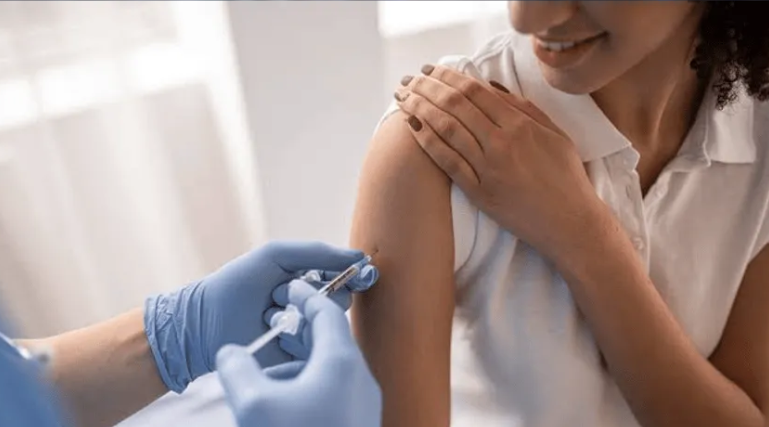
14 September 2026 Punjab Khabarnama Bureau : India has crossed a major public-health milestone by administering more than 80 lakh, or 8 million, doses of the Human Papillomavirus (HPV) vaccine under its nationwide cervical cancer prevention campaign launched earlier this year. The Union Health Ministry said the achievement reflects the expanding reach of preventive healthcare for adolescent girls.
Nationwide HPV Campaign Launched in February
The National HPV Vaccination Campaign was launched by Prime Minister Narendra Modi on February 28, 2026, with the aim of protecting adolescent girls against HPV infection, the primary cause of cervical cancer.
Under the programme, 14-year-old girls are eligible for voluntary, free vaccination at government health facilities, with parental consent. The campaign was designed to reach roughly 1.2 crore girls in the annual 14-year-old cohort.
Uttar Pradesh Leads Vaccination Drive
Among states, Uttar Pradesh has recorded the highest number of vaccinations, with more than 22 lakh adolescent girls receiving the HPV vaccine.
Several states have also reported strong progress. Gujarat, Uttar Pradesh, Madhya Pradesh and Mizoram have achieved 100% coverage of their identified target populations, while Bihar, Andhra Pradesh and Assam have crossed 90% coverage. Karnataka has crossed 85%, while Chhattisgarh, Sikkim, Kerala, Telangana and Odisha have crossed 60%.
Focus on Cervical Cancer Prevention
HPV infection is responsible for the vast majority of cervical cancer cases. Vaccination before exposure to the virus can substantially reduce the risk of HPV-related cervical disease.
India’s programme is therefore designed as a long-term prevention strategy, rather than a response to an immediate outbreak or infectious-disease surge.
The government has also emphasised that vaccination forms only one part of its broader cervical cancer strategy, alongside screening, early diagnosis and treatment.
Government Facilities Provide Free Vaccination
The HPV vaccine is being provided free of cost through designated government health facilities, including Ayushman Arogya Mandirs, primary health centres, community health centres, district hospitals and government medical colleges.
The programme has also involved extensive training of medical and paramedical personnel across all 36 states and Union Territories.
Safety Monitoring Built Into Campaign
The Health Ministry said vaccination sessions are conducted under the supervision of trained medical officers.
Government facilities are also linked with healthcare arrangements for the assessment and management of adverse events following immunisation (AEFI). The ministry said this mechanism is intended to ensure timely monitoring and treatment of rare vaccination-related adverse events.
U-WIN Helps Track Coverage
The government is using the U-WIN digital vaccination platform to monitor HPV vaccination coverage.
The system allows programme managers to track district-level progress, identify coverage gaps and missed beneficiaries, and plan targeted interventions to improve uptake.
Community Outreach Remains Important
Officials said states and Union Territories have adopted different approaches to reach eligible girls in rural, urban, tribal and geographically difficult areas.
Teachers, parents, healthcare professionals and frontline workers such as ASHAs and ANMs have been involved in awareness campaigns to address concerns and misinformation surrounding HPV vaccination.
India’s Cervical Cancer Challenge
Cervical cancer remains a major health concern in India. According to government and WHO-linked data cited in recent reports, India continues to record a substantial number of new cervical cancer cases and deaths each year.
Because cervical cancer is largely preventable through HPV vaccination and regular screening, expanding vaccination coverage among adolescents is considered an important part of reducing the disease burden over the long term.
Campaign Enters Final Phase
With more than 80 lakh doses administered, the government says the focus is now on reaching the remaining eligible beneficiaries and ensuring that girls who have not yet been vaccinated are not left behind.
The milestone also highlights the scale of India’s first nationwide HPV vaccination campaign and the importance of sustained public awareness to achieve high coverage.
A Major Preventive-Healthcare Milestone
The 80-lakh mark represents significant progress in India’s effort to strengthen cervical cancer prevention.
However, continued outreach, vaccination uptake and screening will be important to translate the campaign into a sustained reduction in HPV infections and cervical cancer deaths over the coming years.