

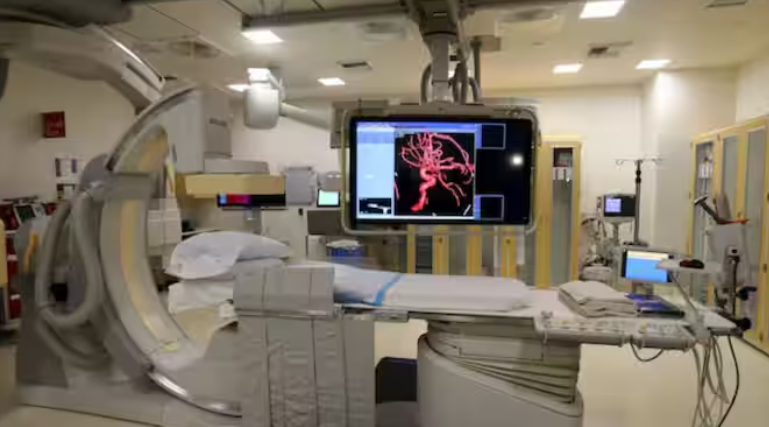
10 September 2026 Punjab Khabarnama Bureau : Radiotherapy is entering a new era in which artificial intelligence, image guidance and adaptive treatment technologies are making cancer treatment increasingly precise. For India, however, the bigger challenge is ensuring that these advances reach patients beyond major cities and remain affordable.
Recent developments show the pace of change. In July 2026, Manipal Hospital in Bengaluru became the first healthcare institution in India to install Elekta Evo, an AI-enhanced CT-linear accelerator platform designed to support online adaptive radiotherapy.
The technology could help doctors adjust radiation treatment to changes in a patient’s anatomy during the course of therapy, potentially improving precision while protecting surrounding healthy tissue.
How Radiotherapy Is Becoming Smarter
Modern radiotherapy is no longer limited to simply directing radiation at a tumour.
Technologies such as image-guided radiotherapy, intensity-modulated radiotherapy, volumetric modulated arc therapy, stereotactic radiotherapy and adaptive radiotherapy allow treatment teams to plan and deliver radiation with increasing precision.
In May 2026, the Army Hospital (Research & Referral) in Delhi commissioned a ring-gantry linear accelerator capable of delivering several of these advanced techniques, including VMAT, IMRT, IGRT, SBRT and stereotactic radiosurgery.
AI Could Change Treatment Planning
One of the most important developments is the use of AI in treatment planning.
AI-assisted systems can help analyse medical images, identify and outline treatment targets and organs at risk, and potentially speed up parts of the planning process.
This is particularly important in India, where shortages of specialised oncology professionals and medical physicists can limit the availability of advanced radiotherapy services.
A 2025 policy blueprint on radiation therapy in India specifically highlighted AI and remote treatment planning as potential tools for addressing workforce shortages.
The Access Gap Remains the Bigger Challenge
Advanced machines alone cannot solve India’s cancer-care problem.
A policy analysis published in JCO Global Oncology noted that radiotherapy services remain highly centralised, with access available in only about 120 of India’s 740 districts. The concentration of facilities creates a major rural-urban divide, particularly for India’s large rural population.
For patients living far from major cancer centres, treatment may involve repeated long-distance journeys over several weeks.
That creates additional expenses for transportation, accommodation, food and lost income—even when the medical procedure itself is covered.
Treatment Can Be ‘Affordable’ Yet Still Expensive
Recent research from public healthcare facilities in Tamil Nadu illustrates the problem.
A 2026 study of 500 patients undergoing modern radiotherapy found that non-medical and indirect costs contributed significantly to overall out-of-pocket expenditure. Greater travel distances were associated with higher costs, while some insured patients still faced substantial expenses because they did not use their insurance coverage.
This means affordability cannot be measured only by the price of the radiation procedure.
For many families, getting to the cancer centre and staying there during treatment can become a major financial burden.
Government Expanding Cancer Infrastructure
India is attempting to address the availability problem by expanding cancer services across different levels of the healthcare system.
As of July 2026, the government said 770 District NCD Clinics, 524 Day Care Cancer Centres and 6,410 NCD clinics at Community Health Centres had been established under the National Programme for Prevention and Control of Non-Communicable Diseases.
The government has also approved 19 State Cancer Institutes and 20 Tertiary Care Cancer Centres under its tertiary-care cancer infrastructure programme.
Tata Memorial Centre Expanding Reach
The Tata Memorial Centre has also expanded its geographic footprint, with hospitals established in Varanasi, Visakhapatnam, New Chandigarh, Guwahati, Sangrur and Muzaffarpur.
Cancer treatment services have also been extended to the country’s 22 new AIIMS, according to the Union Health Ministry.
Such decentralisation could reduce the need for patients to travel to a handful of metropolitan cancer centres.
The Workforce Must Grow Alongside Machines
Sophisticated radiotherapy equipment requires more than capital investment.
It needs trained radiation oncologists, medical physicists, radiotherapy technologists, dosimetrists and engineers. Facilities also require robust quality-assurance systems to ensure that highly precise radiation is delivered safely.
Without adequate staffing and maintenance, expensive technology may not deliver its full potential.
Can India Democratise Advanced Radiotherapy?
The next phase of India’s cancer-care strategy may therefore need to focus on technology plus accessibility.
That could mean deploying advanced machines in more regional cancer centres, creating shared specialist networks, expanding remote treatment planning, strengthening public insurance coverage and investing in training.
Indigenous manufacturing of linear accelerators and other equipment could also help reduce costs over time, although such expansion would require sustained investment and quality-control standards.
Precision Should Not Become a Privilege
The promise of AI-enabled adaptive radiotherapy is significant: more personalised treatment, potentially better targeting and reduced exposure of healthy tissue.
But if such technologies remain concentrated in a small number of expensive private hospitals and major metropolitan centres, their benefits will reach only a fraction of India’s cancer patients.
The real measure of India’s new radiotherapy era will therefore not simply be how advanced the machines become, but how many patients can actually access them.
A New Test for India’s Cancer Strategy
India is simultaneously facing a rising cancer burden and a persistent healthcare-access gap.
The country is now building more cancer centres, expanding public coverage and introducing sophisticated technologies. The challenge is connecting these efforts into a system in which advanced treatment is available closer to patients’ homes and does not create unaffordable indirect costs.
The future of Indian radiotherapy may be increasingly intelligent—but making that future equitable will require investment in infrastructure, people, financing and decentralised care alongside AI and advanced machines.