

9 September 2026 Punjab Khabarnama Bureau : A patient who had been battling Crohn’s disease for 15 years has reportedly recovered after undergoing a complex robotic surgery at MITR Hospital in Navi Mumbai.
The man, identified as “Rajesh” in the hospital’s account, had developed a rare complication in which his intestine formed an abnormal connection with the urinary bladder. Doctors say the condition had resulted in severe scarring and significantly complicated the surgery.
Rare Complication of Long-Standing Crohn’s Disease
According to the hospital, Rajesh developed an ileo-vesical fistula, an abnormal passage between the intestine and urinary bladder.
The complication reportedly became so severe that he was passing gas and faecal matter through his urine. Years of inflammation had also caused extensive scarring around the affected organs.
Ileo-vesical fistulas are recognised complications of Crohn’s disease, particularly in patients with long-standing or penetrating intestinal disease.
Robotic Surgery Used for Complex Reconstruction
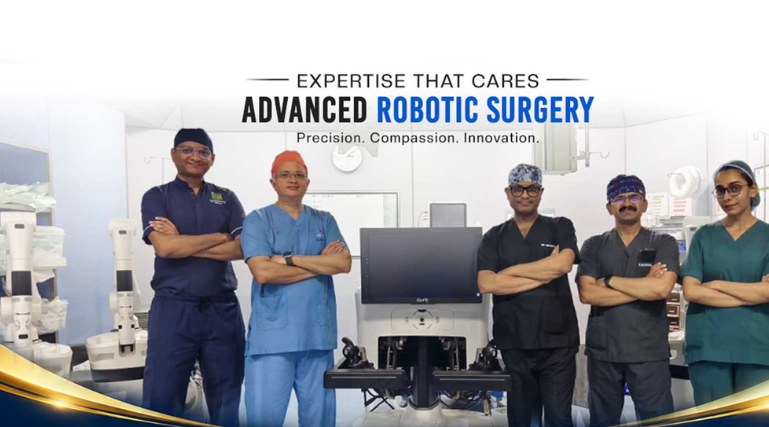
A joint team of urological and gastrointestinal surgeons at MITR Hospital performed the procedure using robotic-assisted surgery.
According to the hospital, surgeons removed the diseased portion of the bowel, closed the abnormal opening in the bladder and reconstructed the bladder wall during a single operation.
The procedure was performed through keyhole incisions rather than a large open abdominal incision.
Why the Case Was Challenging
Doctors involved in the procedure said the 15 years of Crohn’s-related inflammation had created extensive scar tissue, making conventional minimally invasive surgery more difficult.
The hospital said the robotic platform provided magnified three-dimensional vision and greater instrument flexibility, helping surgeons navigate the heavily scarred area and perform the bowel and bladder reconstruction.
Robotic-assisted surgery has increasingly been explored for complex inflammatory bowel disease cases, although its use in Crohn’s disease remains relatively limited compared with conventional laparoscopic approaches.
Patient Reportedly Recovers Within Days
According to the hospital, Rajesh was discharged after the procedure and is now pain-free and able to return to normal life.
Doctors described the outcome as particularly significant given the complexity of the fistula and the extensive scarring caused by the long-standing disease.
Multispecialty Team Played Key Role
The surgery required coordination between urology and gastrointestinal surgery, as both the bowel and urinary bladder were affected.
Dr Manish Dubey, senior urologist and robotic surgeon at MITR Hospital, said the collaboration was essential because of the severe scarring around the organs.
GI surgeon Dr Vijaykumar Malladi said resecting the diseased bowel and restoring intestinal continuity was technically demanding, particularly in a patient with extensive Crohn’s-related scarring.
What Robotic Surgery Can Offer
Robotic-assisted surgery allows surgeons to operate through small incisions while using a camera that provides magnified, three-dimensional views of the surgical field.
The robotic instruments can also provide greater range of movement than conventional straight laparoscopic instruments.
However, robotic surgery does not automatically guarantee better outcomes for every patient. The suitability of the approach depends on the disease, anatomy, surgeon expertise and overall clinical condition.
MITR Hospital’s Robotic Surgery Experience
MITR Hospital said it has performed more than 70 robotic urological and urogynaecological procedures since 2024, covering cancer operations as well as complex reconstructive procedures.
The hospital describes itself as a specialised surgical centre in Kharghar, Navi Mumbai, with departments covering urology, GI surgery, gynaecology and other specialties.
A New Option for Complex Crohn’s Cases
The case highlights how advances in minimally invasive and robotic surgery can potentially expand treatment options for patients with complex Crohn’s complications.
For patients with fistulas involving neighbouring organs, however, treatment remains highly individualised and may involve medicines, drainage procedures or surgery depending on the location and severity of the disease.
A Remarkable Recovery
For Rajesh, the reported outcome represents a major change after years of living with chronic illness and complications.
His case also illustrates the importance of multidisciplinary care when Crohn’s disease progresses beyond the intestine and affects nearby organs.